Range Rovers

The New York Post, December 21, 2025

Range Rovers

Why New Yorkers from all walks of life can put a gun on their holiday wish list

All I want for Christmas is a snub-nosed .38. Some .38 Special ammunition would be nice too. This holiday season, we should all be thinking of our firearms wish list.

A year ago, I never thought I would be one of those rare New Yorkers to navigate the city’s byzantine gun laws. Nor did I quite anticipate the peace of mind that comes with firearms ownership.

But I did it, earning my own license to carry a concealed pistol. I now practice weekly at the range just down the block from my office with my own registered revolver. You can do it, too.

Sure, we’ve heard the stories of onerous regulations, invasive questioning and endless delays. Compared with much of the country, the application process remains a burden. But I am here to tell you it is no longer impossible. As I found, it can even be a rewarding experience. And if you want that Centennial-style hammerless Airweight in your stocking, you first need a license to carry it. 


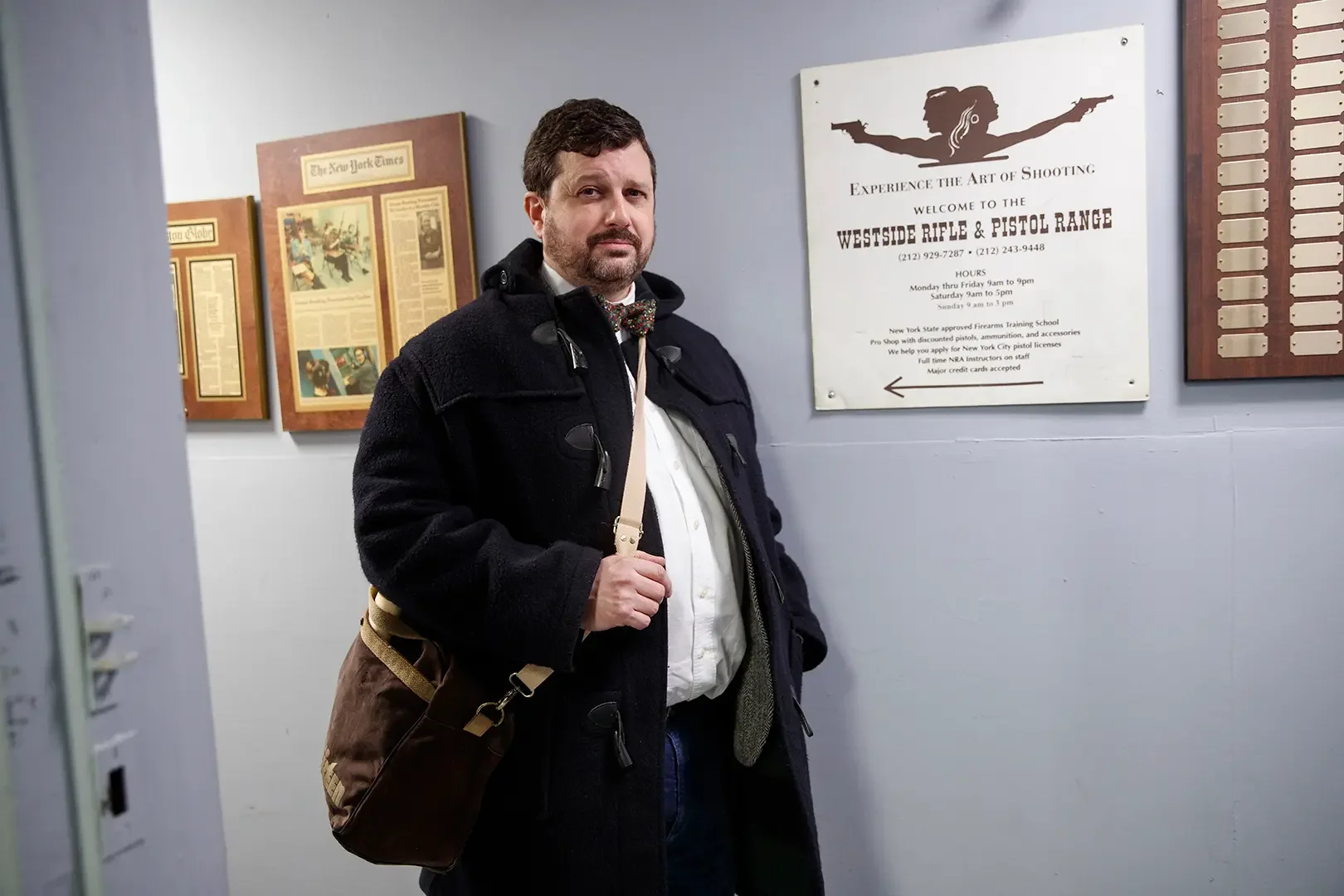
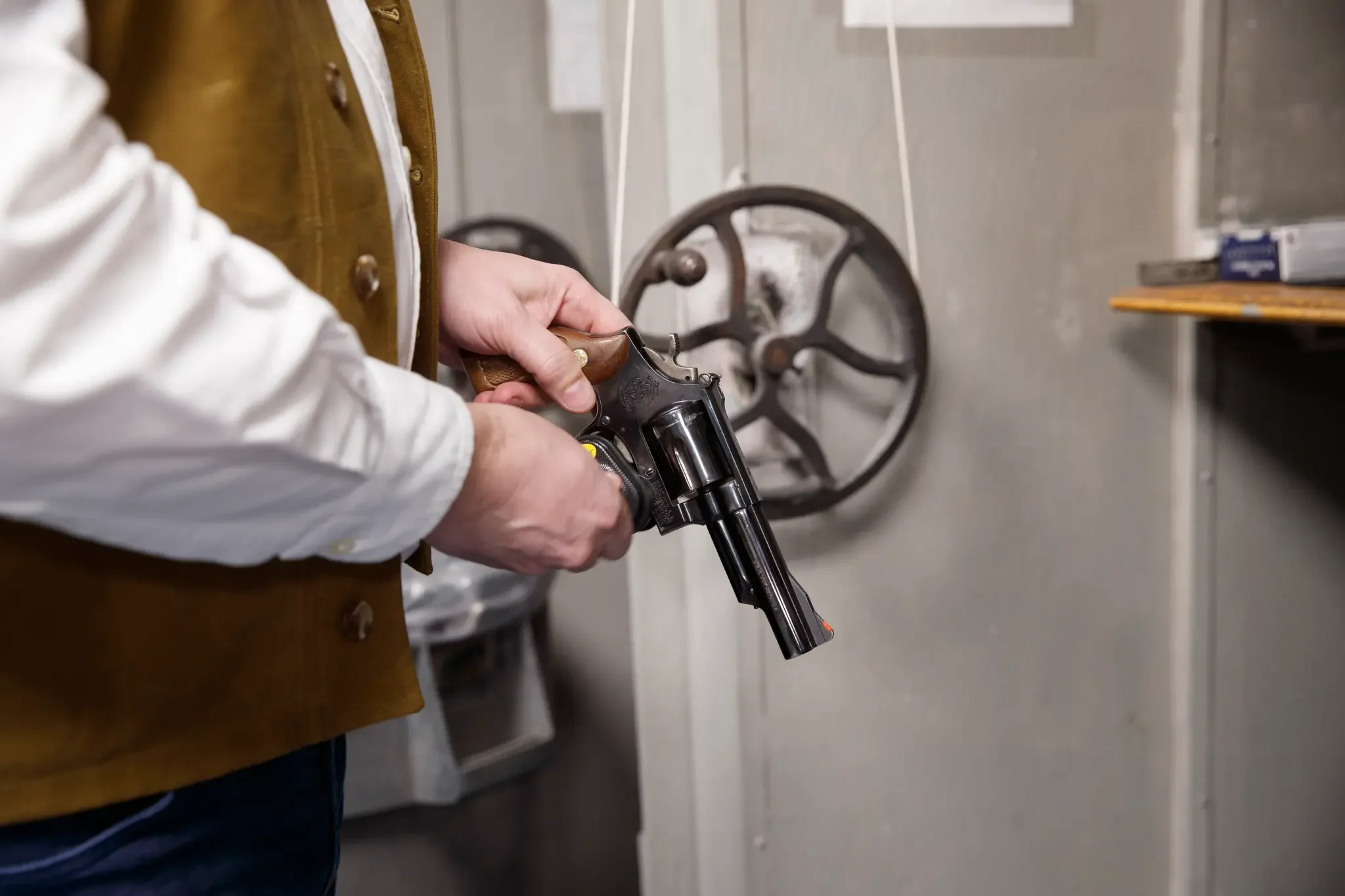
James Panero never thought he’d be one of those rare New Yorkers to navigate the city’s byzantine gun laws — but the process has gotten easier thanks to the Supreme Court. Tamara Beckwith/NY Post

My story began when I inherited an old service revolver from my father, Carl. A New York-based architect, one who had worked on designs for the World Trade Center and JFK Airport, he had taken to firearms when I was a teenager in the 1990s. He enjoyed the sport and comradery of the range, which he said reminded him of his time in Army basic training. He also saw it as a means for some father-son bonding and a reconnection with our Italian roots. 

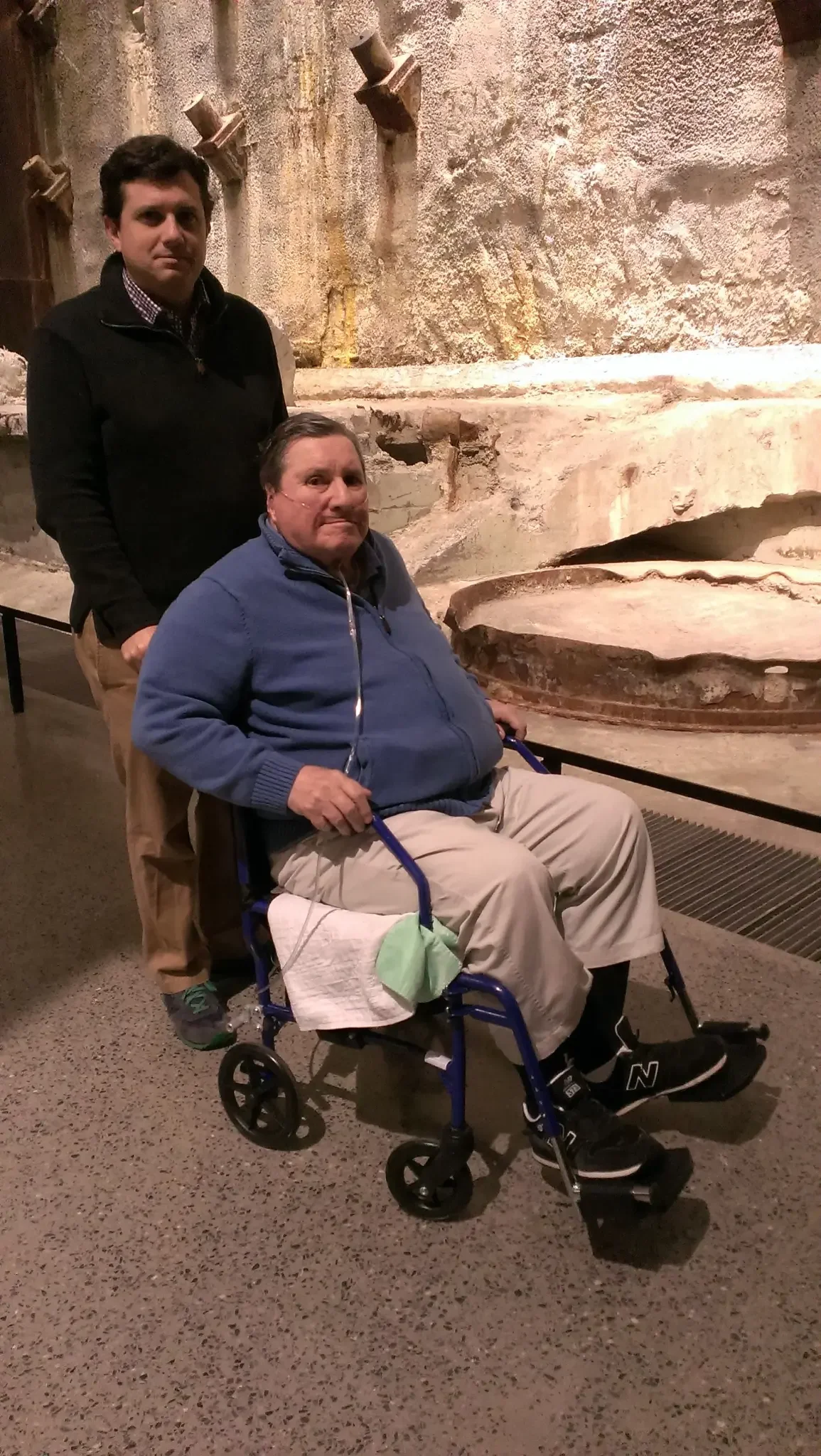
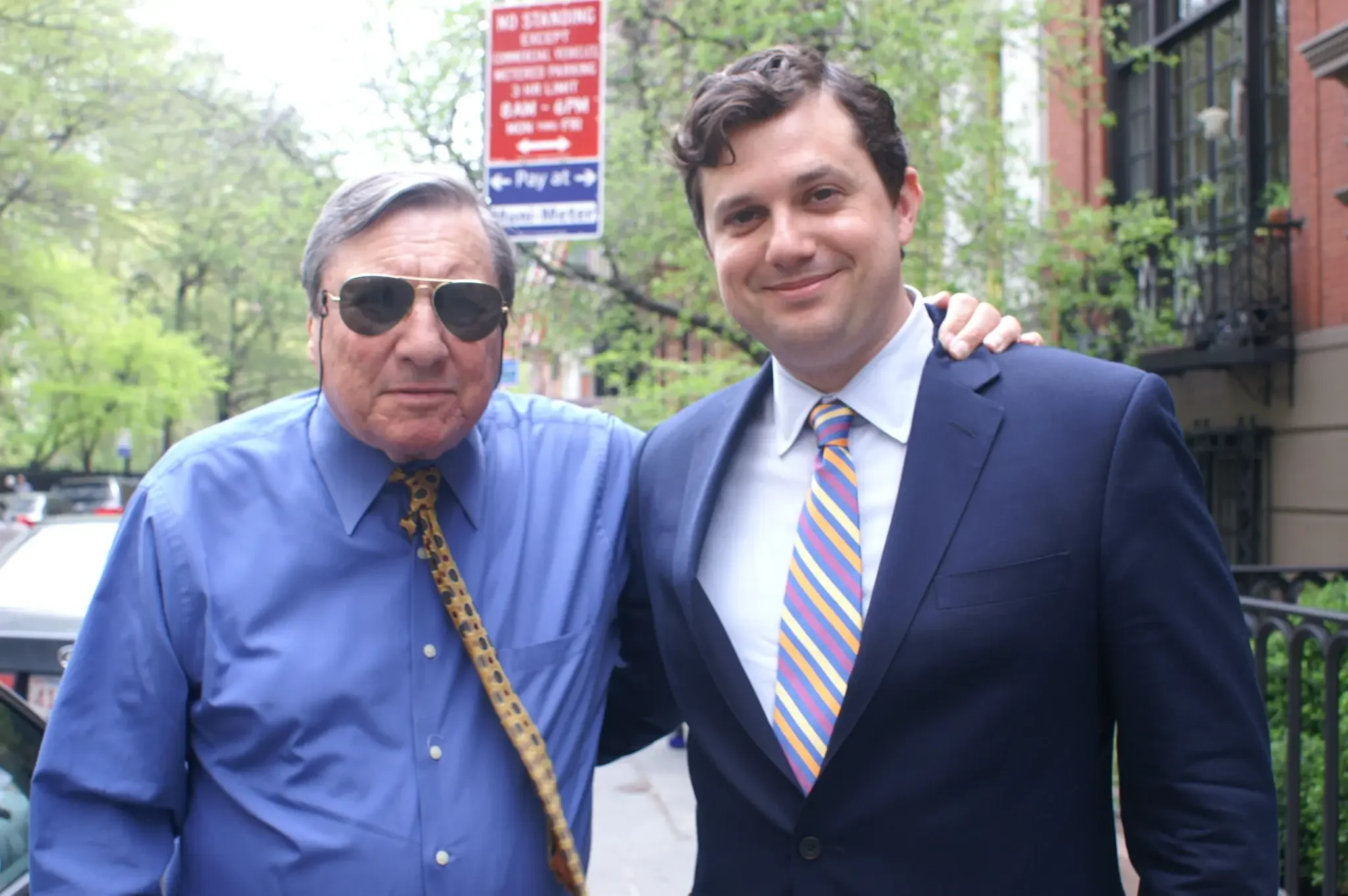
James Panero visits Ground Zero in 2014 with his father, Carl, who worked with Minoru Yamasaki as senior staff architect designing the World Trade Center. Courtesy of James Panero

I well remember the day he first took me to John Jovino Gun Shop. The storied retailer shuttered after 109 years during the 2020 lockdowns, but at the time, the store in Little Italy was thriving as it sported an oversized pistol hanging from its sign. Dad had me pick out my own bolt-action .22 rifle. He then slipped next door to resupply his homemade winemaking operation, another Italian pastime. At an upscale range near Wall Street, now long defunct, he shot his pistol while I practiced my aim with the small, rimfire rifle. All the while, a five-gallon glass carboy of red wine fermented in our highrise West Side apartment. 

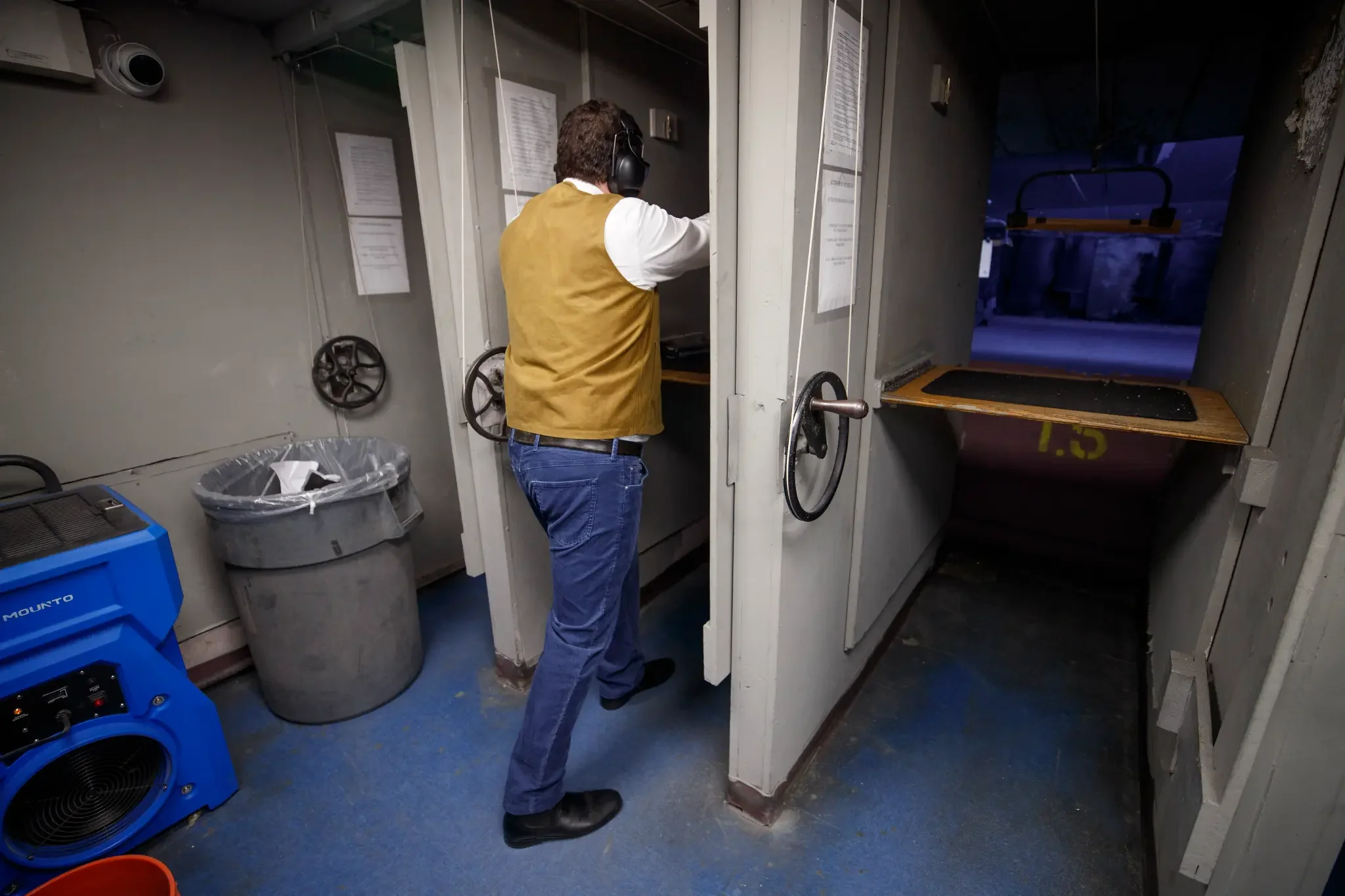
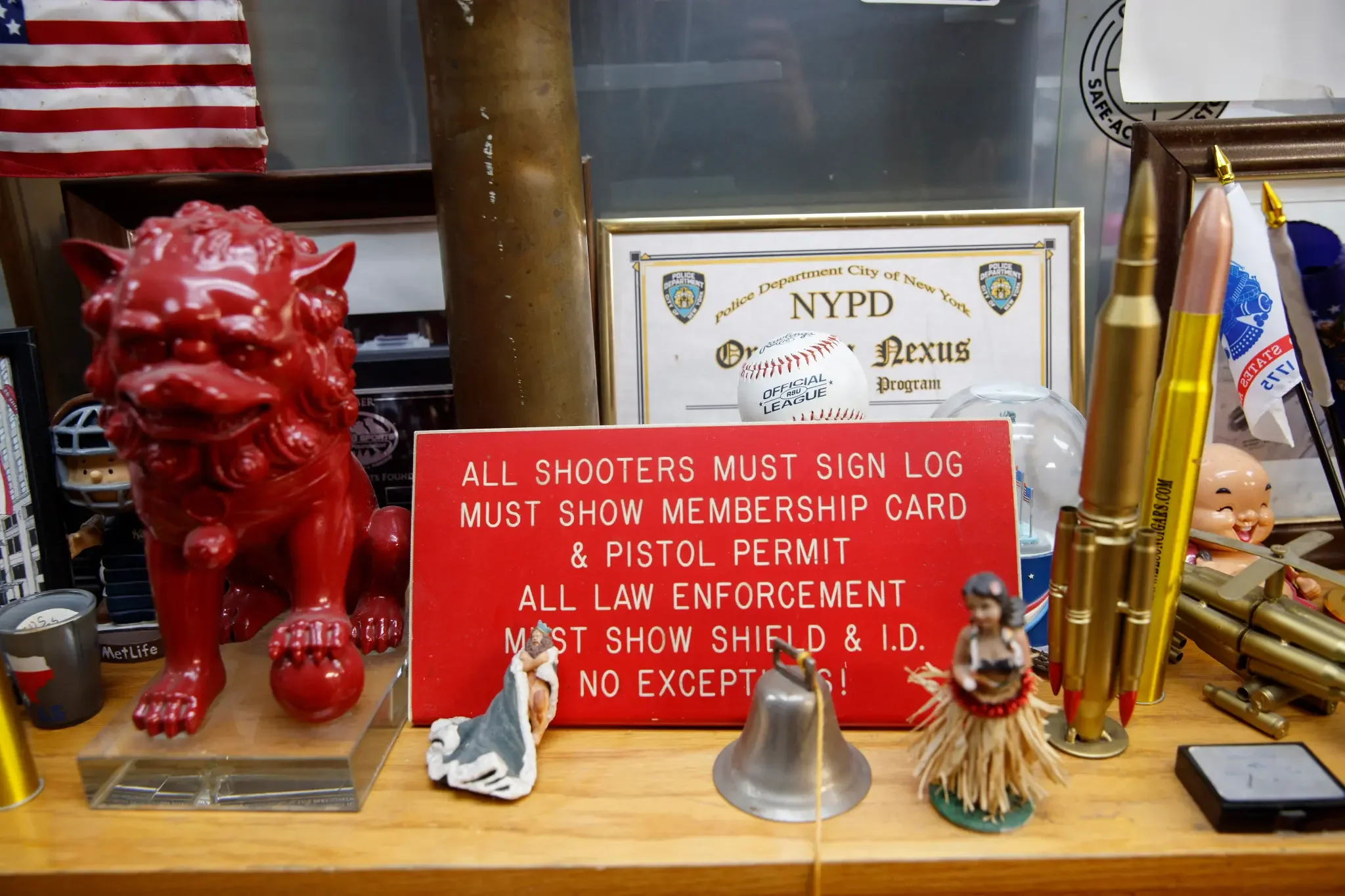
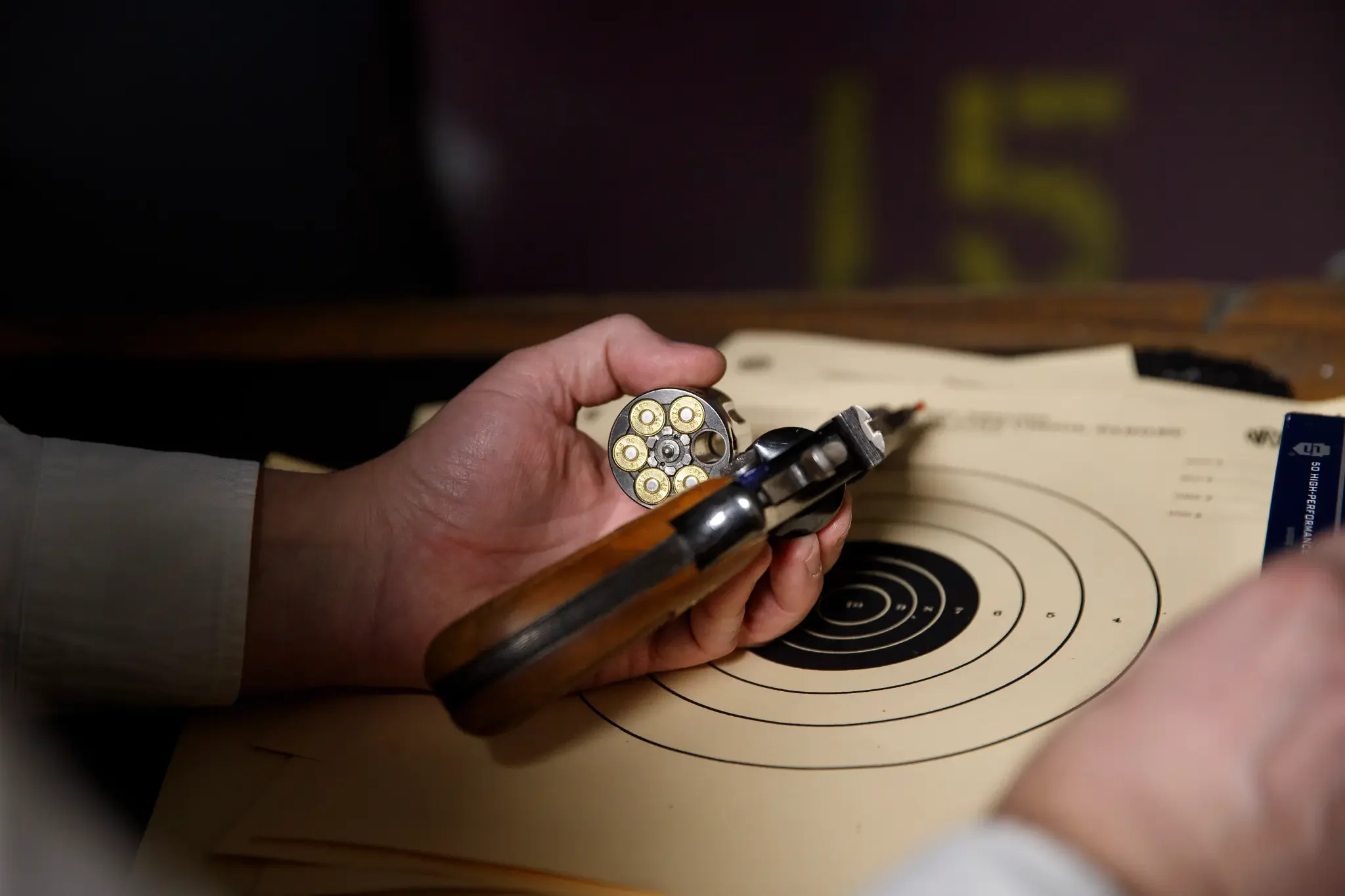
Decades later, when the time came to transfer his gun, a blued .357 Magnum manufactured by Smith & Wesson in the 1960s, I paid my first of many visits to the Westside Rifle and Pistol Range. Operating out of a basement space on West 20th Street since 1964, the range is an enduring lifeline for city gun owners. Here you can take training classes, join its shooting club, use its services as a federal firearms-licensed dealer (known as FFL) or simply try out one of its .22 rifles (no license required). 

I have done it all. But first, I sat down with Westside’s owner, Darren Leung. “I am amazed we survived,” he said of his holdout range in the heart of Gotham. “But by the good grace of God and some great members, we’re still here.”

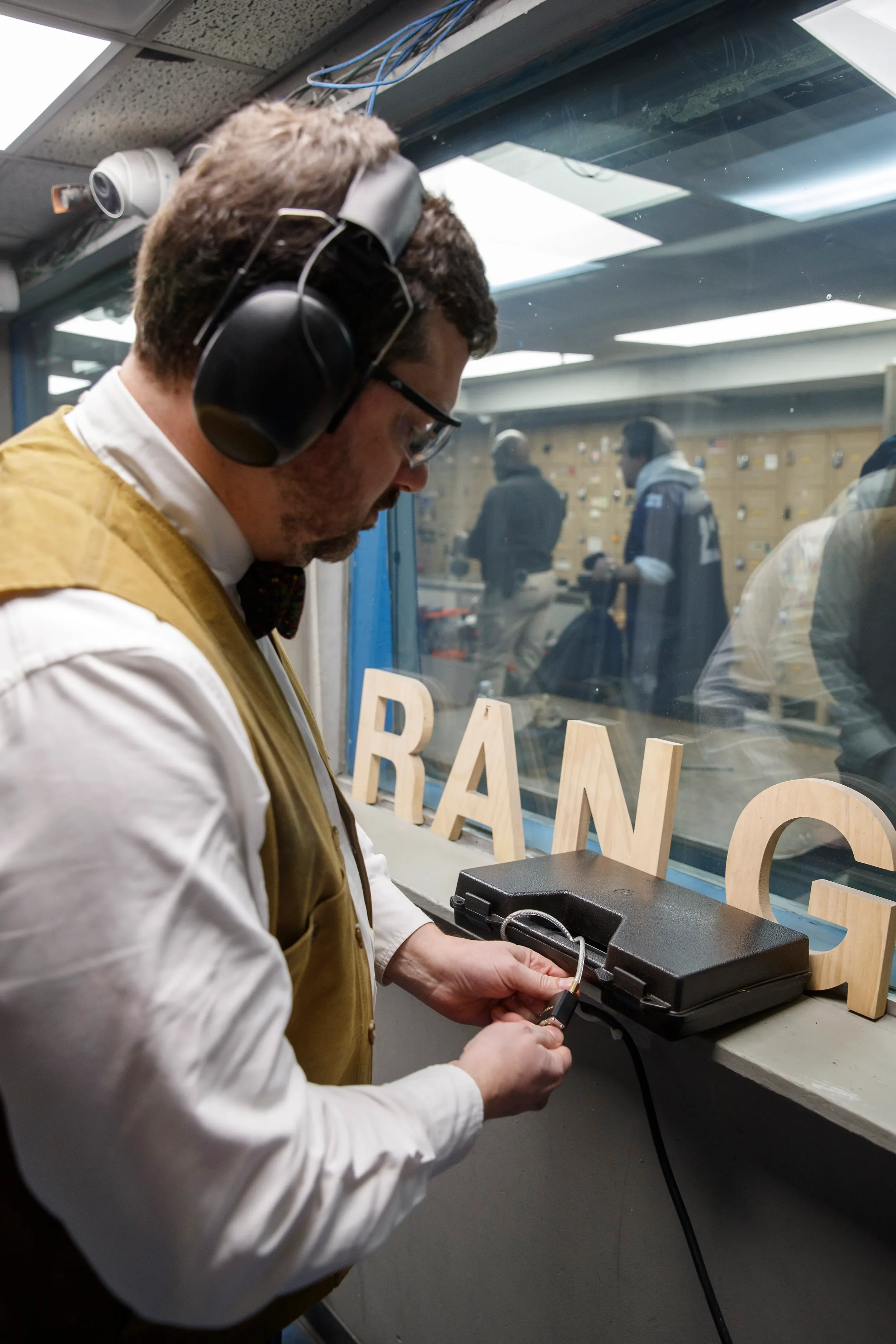
James brings his father’s gun — now his — to the range in a locked case. Tamara Beckwith/NY Post

Leung went on to explain the consequences of the landmark 2022 Supreme Court ruling in New York State Rifle & Pistol Association v. Bruen and what it meant for gun licensing in the city.

He also noted the uptick in interest in personal firearms following the 2020 riots, the attacks of Oct. 7, 2023, and the all-too-routine evidence that you cannot always rely on others to protect you and your loved ones. “Better to have a gun and not need it than to need it and not have it,” said Ze’ev Jabotinsky, the Russian founder of the Jewish Defense Organization and famous Zionist. That might well be the motto here too.

Back in my father’s day, most city gun owners could only expect to receive what was known as a premise permit. That meant you could take your firearm, unloaded in a locked container, to and from the range, and that was it. The Bruen decision changed that.

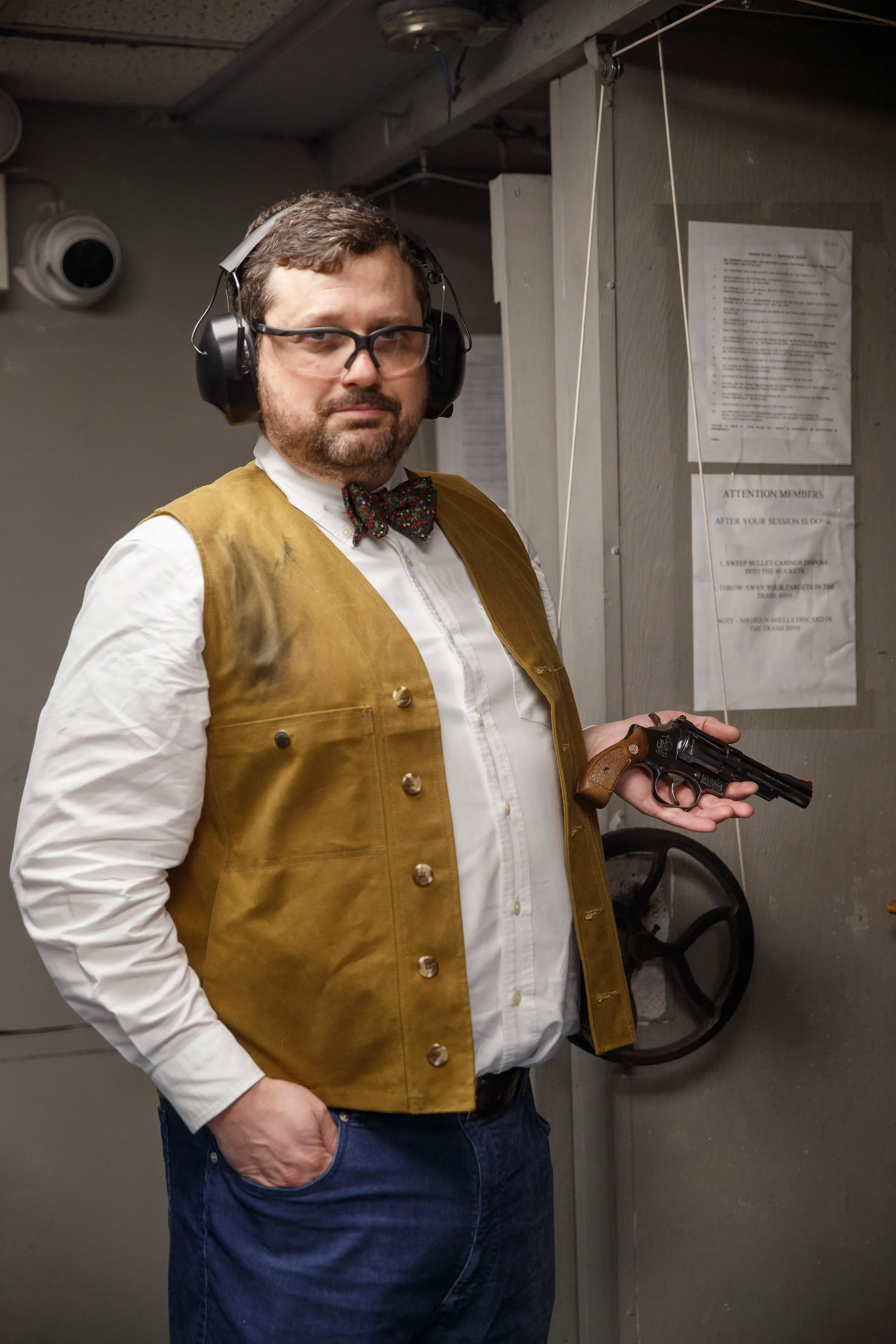
James’ story began when he inherited an old service revolver from his father. Tamara Beckwith/NY Post

Before Bruen, New York required its firearms applicants to show what it called “proper cause” to receive an unrestricted license. This effectively meant only diamond dealers and cash couriers could obtain anything beyond a premise permit. In 2022, the Supreme Court thought otherwise.

“We know of no other constitutional right that an individual may exercise only after demonstrating to government officers some special need,” wrote Justice Clarence Thomas, delivering the scathing opinion of the court in Bruen. 

“That is not how the First Amendment works when it comes to unpopular speech or the free exercise of religion. It is not how the Sixth Amendment works when it comes to a defendant’s right to confront the witnesses against him. And it is not how the Second Amendment works when it comes to public carry for self-defense.”

With the high court ruling that the “Second and Fourteenth Amendments protect an individual’s right to carry a handgun for self-defense outside the home,” tens of thousands of new firearms applications flooded in.

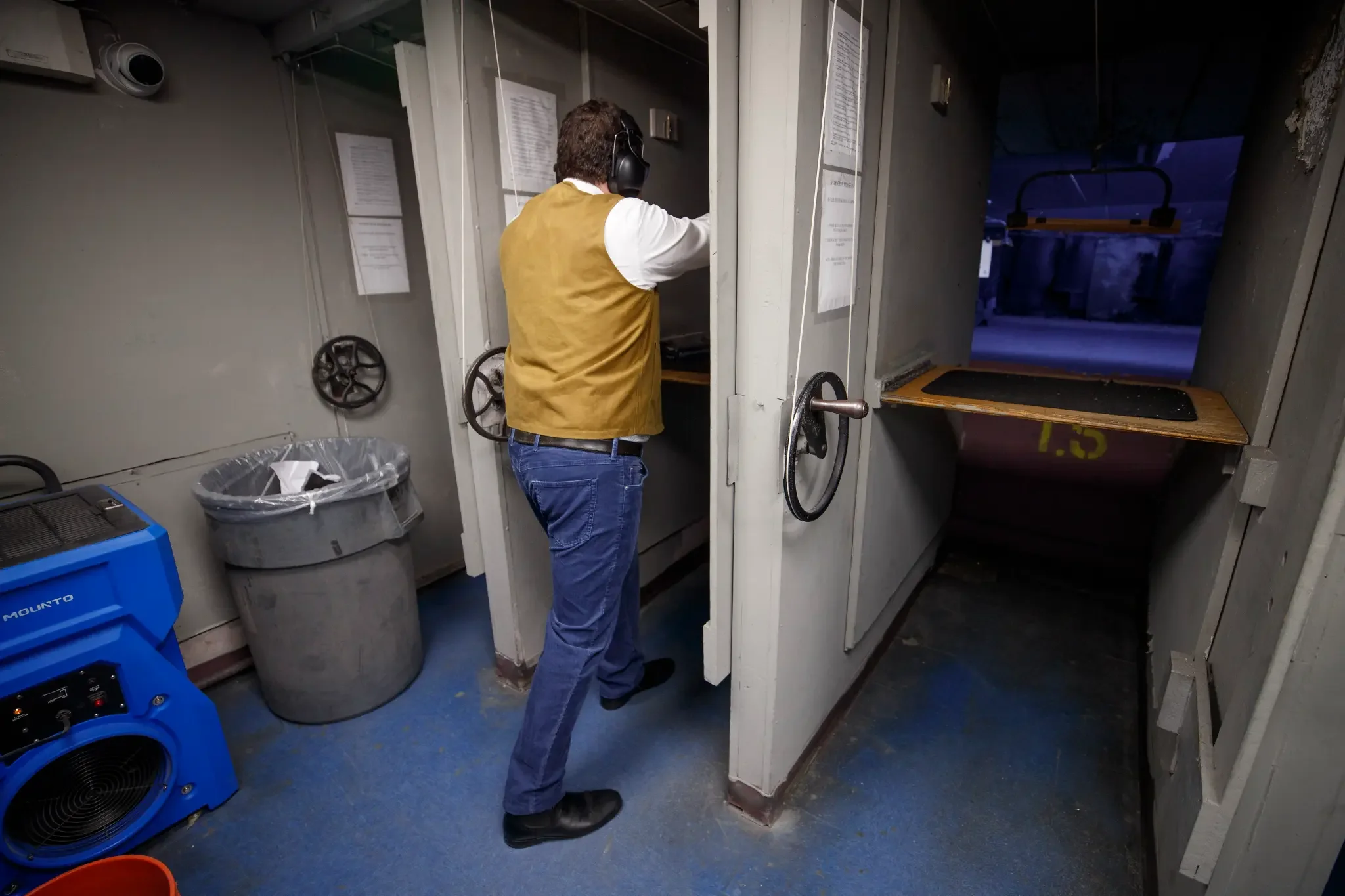
James practices weekly at the range just down the block from his Manhattan office with his own registered revolver. Tamara Beckwith/NY Post

Leung suggested to me that the premise permit would likely be phased out. New Yorkers should now apply for concealed carry. The NYPD licensing division handles all applications through its website. The system is an improvement over the old paper forms and the need for exact postal money orders hand-delivered to One Police Plaza. I should also add that the NYPD licensing officers who reached out to me as my application was in process were all friendly and professional.

Nevertheless, the online application has many, many steps, and it is best approached in stages. The biggest hurdle of the application process is the 18-hour training class. But here what might have been a challenge proved to be a highlight.

The author finished his weekend course with a paper test — and has gotten better since.Tamara Beckwith/NY Post

Each month, Westside offers sessions compacted into a single intensive weekend course. The spaces fill, so sign up early. Two dozen of us met in the cluttered Westside classroom. We sat on broken-down school desks with patriotic flags lining the walls.

The diversity of students there was a reflection of town. I sat next to the son of a police officer. Behind me was a young woman in a designer coat. Next to her, a man was speaking English as a second language. Some were longtime gun owners upgrading from premise permits. Others had never touched a firearm until the day we gathered. 

Our instructor was Glenn Herman, a wry, wiry native of Greenwich Village dressed head to toe in black (his website is appropriately titled newyorkcityguns.com). As he sprinkled in stories of his bar mitzvah, over two days we learned about the history of rifling, the relative advantages between revolvers and semi-automatics, the uses of hollow-point rounds versus full metal jacket, different holster options, sight pictures, misfires, hangfires, squib loads, the isosceles over the Weaver stance and the fundamentals of firearm safety (always point it in a safe direction, always assume it is loaded and always keep your finger off the trigger until ready to fire). 

Herman ended the first day by showing us the Glock he keeps in his black fanny pack. “I’m getting older and don’t care what I look like,” he explained.

10

A diverse group of New Yorkers take aim at the Westside range in the heart of Manhattan.Tamara Beckwith/NY Post

For day two, things got heavier, as we reviewed the true challenges of New York’s gun laws and the legal implications of concealed carry. In response to Bruen, the Legislature imposed a host of new restrictions under its so-called sensitive-place law. These regulations state that you cannot bring a licensed firearm, loaded or unloaded, through much of town, including parks, public transport, restaurants and the “Times Square Exclusion Zone.” Haven’t you seen the signs?

Such restrictions will almost certainly be challenged on constitutional grounds, as they effectively nullify the protections of Bruen. Nevertheless, until then, law-abiding New Yorkers must remain cognizant of the many new impositions. Of course, we should not assume the same cognizance of New York’s criminal class.

Tamara Beckwith/NY Post

Before we finished the weekend course with a paper test and a live-fire drill with a 9-millimeter semi-automatic, Herman went over the ethical challenges that come with concealed carry.

“The city will be different for you when you have a loaded firearm,” he explained. “You must train your mind first to be nonviolent. Cultivate a mindset where your instincts are good and deadly force is used only after all other options have been exhausted, where you have nowhere left to escape, and life is on the line.”

Herman guided us to further study with such gun gurus as Massad Ayoob. His online tutorials on the many nuances of firearms literacy, from grip and stance to legal implications and how to talk to law enforcement, are all must-see.

Tamara Beckwith/NY Post

With the testing done and paperwork submitted, I received my appointment for police fingerprinting.

A few months later, my temporary approval came in, which meant I could finalize the process of getting my dad’s revolver on my license.

In many states, you can simply walk into a gun shop and walk out with a pistol. You can also inherit a firearm like anything else.

Not so in New York. Each firearm must pass through a dealer and be registered to your license before it can be released.

You can also only register one firearm every 90 days. Again, Westside shepherded this process along for me and held onto my pistol until it was cleared.

Tamara Beckwith/NY Post

But I got it, and my concealed-carry license arrived in the mail.

The approval meant I could join the Westside range and shoot whenever I liked.

The old basement range, which has changed little since a scene from “Taxi Driver” was filmed there half a century ago, welcomes all with its donuts and coffee and bonhomie. 

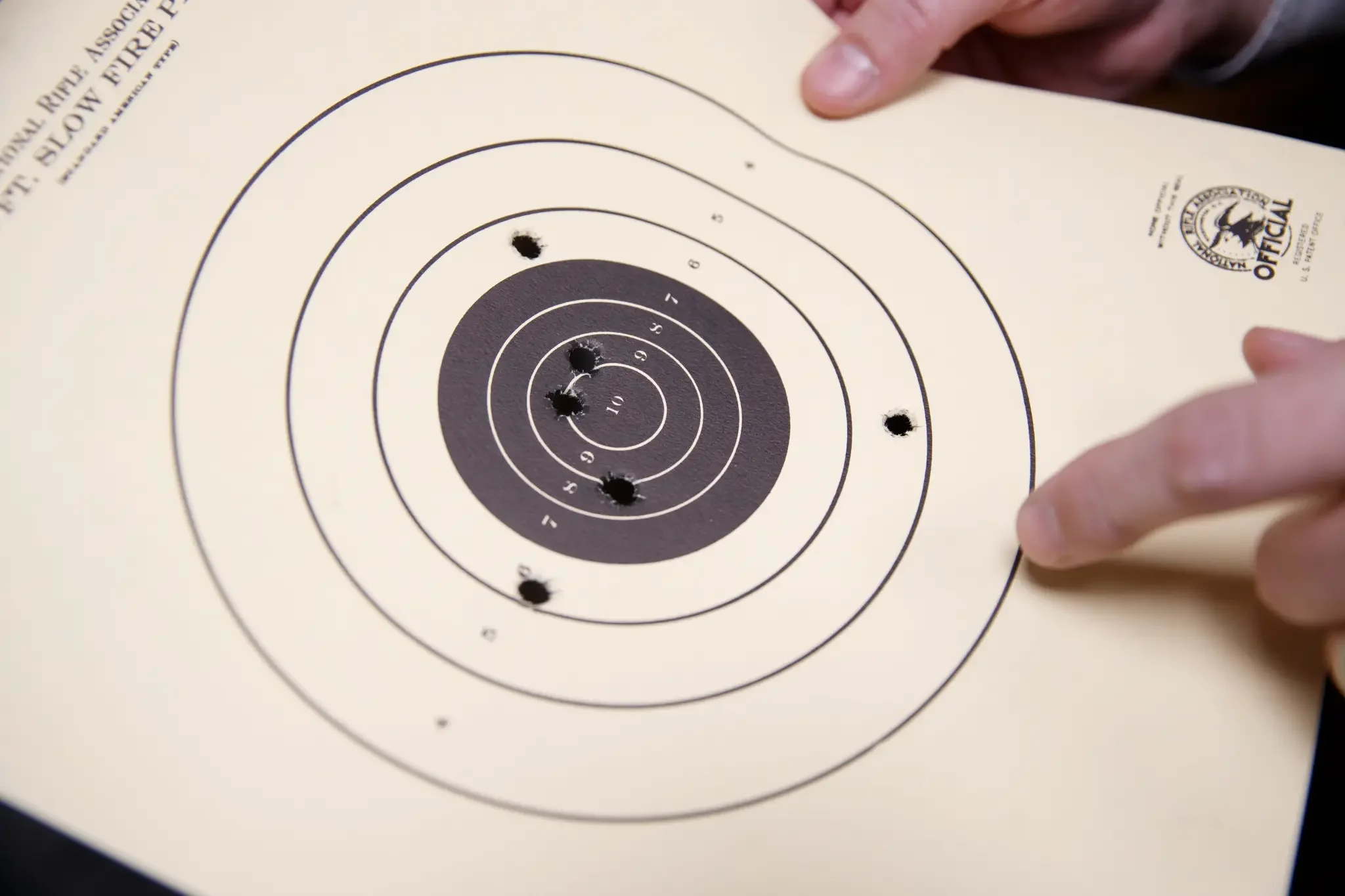
I am no great marksman, but I can see incremental improvements in my weekly practice.

Lining up a gun with a target is easy. Keeping it on target as you pull the trigger and handle its recoil, and doing this consistently, is the challenge.

I think of my father firing that same gun. The smell of the gunpowder takes me back to those teenage years with him on the range.

The author poses with his father, Carl Panero, on Gramercy Park after his daughter’s baby naming at the National Arts Club in 2010. Courtesy of James Panero

Still, I wouldn’t mind trying out a smaller pistol.

My Magnum is too large and heavy for pocket carry.

A smaller five-shooter might be in order. Or maybe I should go for a Colt 1911.

Most shooters have moved away from wheel guns altogether in favor of plastic semi-automatic 9-millimeters, such as the Glock.

In any case, it’s nice to have options on your holiday wish list. I’m sure Jabotinsky would agree.

Son of a Gun

THE SPECTATOR, WORLD EDITION

Son of a Gun

On the family gun club

In his late-middle age, my father cultivated more of the interests of the old neighborhood. His kitchen overflowed with pasta makers and deli slicers. His prep table was taken over by a home wine-making operation; we ate our meals beside a glass carboy as it bubbled up fermented gas. And scattered about the living room, tucked in the bookcases and stashed behind the coffee table, he positioned an array of locked cases and bags containing a growing collection of rifles, pistols and shotguns.

The acquisitions that came to fill our Upper West Side apartment mainly came from the shops around Little Italy. Home winemaking was once common among Italian Americans. So too was a well-developed sense for gun culture. There was a time when riflery and marksmanship were encouraged across America, after all. Look at any high school yearbook from a century ago and you will likely find a picture of the student gun club. For Americans of Italian descent, an affinity for firearms was a patriotic necessity. The Risorgimento, the fight for Italian reunification, remained a recent memory. In the 1850s, after a first unsuccessful effort, the Italian general Giuseppe Garibaldi had regrouped in Staten Island, bringing with him his partisan supporters, including, so the story goes, my great-great-great-grandfather, a Piedmontese from Cuneo in northern Italy. Loyalty, combat readiness and virtù, have long remained in the blood.

In our family lore, the Papal states and the Napoleonic empire were all variously to blame for giving Italy the boot. Our quarrel with Rome went back to the tale of Ugolino della Gherardesca, the Count of Donoratico and our Pisan progenitor, who became caught up in that unfortunate Guelph-Ghibelline business of the 13th century and was framed by a Popish plot. The denouement found Ugolino deposited in the lowest circle of Dante’s Inferno, where at least he got to nibble on his betrayer, Archbishop Ruggieri.

Such enmities were slight compared to the family loathing for the Austro-Hungarians and their incursions into Italian lands. At the outset of World War One, my great-grandfather and namesake Giacomo Panero, an American banker, voluntarily returned to Italy to join the Alpini, the mountain division of the Italian army. He successfully pushed the Germans out of the southern Dolomites— in the process, we were told, adorning his high-alpine bunker with Hun skulls. His Italian army portraits, in cloak and alpine hat, still adorn my bookshelf.

When I reached the age of 16, it was time for me to join the family ranks. My father brought me downtown to John Jovino Gun Shop to acquire my first firearm. The old gun shop was a small storefront in an alley behind the palatial former police headquarters at 240 Centre Street. An oversized pistol hung from its sign, a famous urban marker that made cameo appearances from Weegee to Serpico. Founded in 1911, the store was the oldest gun shop in New York, if not the country, before it was finally cut down by the Covid closures of 2020. Back in the early 1990s, as city residents turned to self-defense at the height of the last New York crime wave, business was booming.

Gun enthusiasts are some of the nicest people you will meet. The owners were happy to see a first-time family walk through the door. We selected a Marlin 882 SS, a .22 caliber Winchester magnum rimfire rifle. The gun’s bolt action, still to this day a joy to slide, must have reminded my father of Giacomo picking off those Germans high in the Dolomites. We mounted it with a magnifying scope. To this purchase my father added a .22 target pistol and .357 Magnum revolver.

It should be said that New York City’s gun laws are among the most punitive in the country — for law-abiding citizens, at any rate. Acquiring the license to safeguard a firearm in your home and to transport it in a locked bag to a range is an ordeal. Even during the Nineties crime wave, licensing your firearm was nearly as onerous as today, and my father did it by the book. At the time, it required months of paperwork, background checks and precise postal money orders that had to be filed with a clerk in the bowels of One Police Plaza. Unless you are in a business that transports large sums of cash or cash-equivalents, you can forget that concealed-carry license.

Fortunately at our range it was a different story. Since the owners ‘sold the bullets to the police’, the atmosphere in our tidy range, tucked two stories below the streets of Lower Manhattan, was more laissez-faire. I was more than free to practice with my father’s firearms. I could also try out any of the Glocks or other pistols they kept behind the counter. Want to test out a 12-gauge pump action shotgun against the ‘thug’ target? Fire away. The range came stocked with food catered from Chinatown and, understandably, quickly became my high-school hangout.

In his retirement, my father left the city for freer gun states. His collection came to include a vintage Browning Auto 5 and a Remington 581S. When my wife came to meet him, he gifted her a snub-nosed .38 special in the manner of Clemenza handing one to Michael Corleone, just without the tape on the butt.

In 2003, when the Smith and Wesson company debuted its .50 caliber five-shot revolver (the Model 500), my father was first in line to purchase one. He lived and died an avowed atheist, but he believed in stopping power. The gun was designed to stop a bear in its tracks. It could also ‘put a bullet through an engine block’, he liked to say. When we finally tested it together at a sandpit in the free state of Vermont, the pistol felt like a piece of personal artillery. A flaming shockwave emanated from the end of its barrel and expanded in a cone of heat and light. ‘This gun is your inheritance,’ he told me, more on target than I cared to realize. It was the last time we shot together.

The Smells of Commercial Success

Olivierrvb

The perfumer Oliver Cresp

THE WALL STREET JOURNAL
February 6, 2013

The Smells of Commercial Success
By James Panero

A review of "The Art of Scent 1889-2012"
Museum of Arts and Design
Through March 3

New York

Should "scent art"--perfume, that is--be critically considered alongside music and painting? In "Against the Grain," an influential 1884 novel by J.-K. Huysmans, the decadent character Des Esseintes makes a case that it should. "After all, he argued, it was no more abnormal to have an art that consisted of picking out odorous fluids than it was to have other arts based on a selection of sound waves or the impact of variously coloured rays on the retina of the eye."

Like much of what Des Esseintes says in Huysmans's fanciful and wonderful book, his case for perfume is both logical and absurd--an aestheticism taken to an extreme. But he is right to argue that scents should command a more respectful place alongside sights and sounds, with a critical language that includes more than merely "good" and "bad." By appreciating each sense on its own, says Des Esseintes, we better enjoy its harmony with others, "co-ordinating them to compose the whole that constitutes a work of art."

Just like food and wine, perfume has recently enjoyed a renaissance of sorts among latter-day Esseintes-ists. Independent perfumeries create their own blends. Professionals and amateurs write sophisticated perfume blogs. The 2008 book "Perfumes: The A-Z Guide," by Luca Turin and Tania Sanchez, has become something of an Oxford English Dictionary for scent.

Now add to the mix "The Art of Scent: 1889-2012" at New York's Museum of Arts and Design.

Claiming to be the "first major museum exhibition to recognize scent as a major medium of artistic creation," the show strips perfume of its extensive packaging and advertising and presents it as an "olfactory art" in a purpose-built white-cube gallery. Curated by Chandler Burr and designed by the architectural firm Diller, Scofidio + Renfro, the spare exhibition consists of 12 smelling stations seamlessly cast into the gallery walls, a side room with a table of perfume oils, and mouthlike formations sculpted into another wall that spit out scented cards.

The perfumes on exhibition begin chronologically with Jicky, an 1889 blend by the perfumer Aimé Guerlain--considered the first modern perfume for its use of synthetic aromatics and still in production--and concludes with Daniela Andrier's Untitled (2010, designed for Maison Martin Margiela). Along the way we encounter Ernest Beaux's magisterial Chanel No. 5 (1921), Pierre Wargnye's odious Drakkar Noir (1982, for Guy Laroche), Olivier Cresp's diaphanous Angel (1992, for Thierry Mugler) and Jean-Claude Ellena's Osmanthe Yunnan (2006, for Hermès), a scent that starts with an infusion of tea and finishes with a rinse of dental fluoride.

An exhibition of scent is a fresh idea. Too bad "The Art of Scent" is so fishy. With elaborate stagecraft, it is more interested in making the case for commercial perfume as high art, with the rights and privileges accorded therein, than in revealing the artistry of perfume design. For all the hoopla, the show conveys even less than what you would learn walking through the ground floor of Saks Fifth Avenue—which, unfortunately, might be the point.

The urinal-shaped smelling receptacles abstract perfume to absurdity. Paired with illuminated labels that fade to white the moment you want to read them, this is more a show of prestidigitation than olfaction. For a museum of design, MAD seems oddly contemptuous of the design elements that went into these commercial products. "The Art of Scent" gives only passing reference to perfume chemistry and history. It includes an all-too-narrow survey of well-known brands and ignores the independents. It disregards the packaging and advertising that is integral to what these products become. Until the day we have wall-mounted smelling stations in our homes, perfumes are high-end consumables with elaborate marketing campaigns and exotic packaging—a thriving multibillion-dollar industry--and there shouldn't be anything wrong in acknowledging that.

And therein lies the fallacy of this exhibition. Here, everyone is an "artist." Perfumers are "scent artists." Perfumes are "aesthetically influential works of olfactory art." Miuccia Prada, who in 2004 commissioned the perfumers Carlos Benaïm, Max Gavarry and Clément Gavarry to create Prada Amber, is not a fashion executive but a "patron of the arts."

"The Art of Scent" purports to strip away the commercial side of perfume. Instead, it merely adds another layer of packaging, covering over the existing labels and selling the elixirs as high art. At times these gimmicks are all too apparent. The room with the smelling table includes a museum staffer whose hawking of the fragrances is little different from a department-store floor-walker's. The "catalog" of the exhibition is a "limited edition box set" of fragrances that costs $285, with a text that is more sales pitch than scholarship.

Perhaps we shouldn't be surprised that "The Art of Scent is made possible by The Estée Lauder Companies--a Founding Major Donor--and other Major Donors, including Chanel, Inc., Givaudan, Hermès Parfums, International Flavors & Fragrances Inc, L'Oréal and P&G Prestige. Additional support for The Art of Scent is provided by Funders Arcade Marketing USA and Guerlain, as well as Diptyque and Women in Flavor and Fragrance Commerce Inc." There is nothing wrong with corporate sponsorship, but here the sponsorship seems to have gone to supporting a nonprofit front for Madison Avenue. With "The Art of Scent," the Museum of Arts and Design has left a good idea smelling rank. Des Esseintes would be the first to turn up his nose at that.