Pilgrim’s Process

Willis09_9
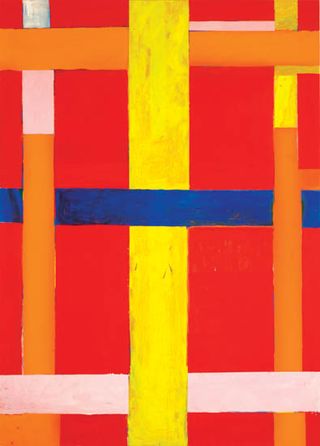
Thornton Willis, Convergence (2008)

CATALOGUE ESSAY


THORNTON WILLIS: THE LATTICE PAINTINGS


Elizabeth Harris Gallery, March 19-April 18, 2009

Pilgrim's Process

By James Panero

It is possible we understand abstraction less now than we did a hundred years ago. Every day, incrementally, we lose a little of our abstract consciousness. For most of us this process occurs without notice. We grow accustomed to a world less illuminated by abstraction’s peculiar light. Looking back over the last fifty years, art historians may one day speak of the counter-reformation staged by the zealots of literalness against the holdouts of the abstract vanguard. Thornton Willis has a particular sensitivity to what that loss may bring. He has never given up testing art’s abstract potential. He paints meditative objects as far removed from ordinary existence as were Kandinsky’s in his day.

Thornton is by now a Soho old-timer, a master painter with pigment under his nails and a lifetime of engagement with the history of art. He arrived in New York in a moment of abstract experimentation as part of the generation of post-minimalists and process artists. For forty years he has advanced by feel. “I like the smell of medium. I get it on my hands and paint with my hands,” he says. The loft studio where he lives with his wife, Vered, has changed little from the time he moved in decades ago. Why should it? Thornton knew what he wanted to do from the moment he put brush to canvas.

Today you may find Thornton in his studio mixing his own special dryers, acrylics, and oils. He uses the same mayonnaise-like medium he picked up from de Kooning that he keeps in a whiskey bottle: one part linseed oil, one part turpentine, one part stand oil, a dash of demar varnish, and a dash of water. He moves quickly from one canvas to another. He wants each painting to lead to the next. He uses an undercoat of acrylic to get down the basic colors and forms and then goes back in with oil, building up the surfaces. He says he has perfected his drying times: “I put in long hours when I’m really cooking. I work at night. When the juice is flowing I want to get it done.” Sometimes forward, sometimes around again, with roughness and grace he follows where his own paintings take him.

This is Thornton’s second exhibition at Elizabeth Harris Gallery. The rectangular structure of his latest work may strike some as an abrupt departure from the triangular facets he refined in his last show. Why not more of the same? The answer is that Thornton resists his own perfection. “I got to that point where I thought I had pretty much worked it through. I felt finished.” As Thornton labored over a large canvas he called “Entanglement,” which he expected to be the culmination of his triangular phase, the shapes started to change. “I had the painting to some point where it was finished, but I wasn’t happy with it. It was disappointing to me. For two years I had worked towards that painting and it was a letdown. And so I just opened it up again and boom, this is what happened. The bands started to be more dominant than the triangular shapes. It was moving me back to this.”

The result became “Conversion,” a painting made right on top of “Entanglement” that brings Thornton back to a theme he has been working on since his first forays in rectilinear shapes in the 1970s and 1980s. Thornton calls them his “lattice” paintings. “This particular idea really started with my earliest work in New York. I realized I never totally fleshed it out. I wanted to reinvestigate it. And that’s how this work came about. The grid has always been my orientation, so it feels natural to move back to this work.” “Conversion” inaugurates and “opens up” the body of work we see in the current show.

Thornton is more interested in the process of abstract art than in its completion. He wants to keep his paintings open and undone. This openness allows him to move from one painting to the next. It also elevates his work from mere design into objects of contemplation. “I’m seeking something that plays with the viewer. You want the viewer to take part in the process.” This approach accounts for the raw quality we see in Thornton’s paintings at first viewing. Once drawn in, however, we begin to interact with the technical dynamics that exist beneath the surface. This latest work calls upon Thornton’s full range of abstract abilities to undermine simple readings of figure and ground, forward and back, top and bottom. Thornton breaks down a painting’s illusion of deep space to energize his viewer’s full engagement. Ever since his wedge paintings in the 1970s, Thornton has played with the density of volumes, the interaction of colors to come forward and recede, and the character of the line. Thornton’s paintings begin and end with the line. Edges dissolve. Underpainting peeks through. Thornton plays his lines like the strings on an instrument.

Thornton’s road to abstract art began in the rural South. The son of a minister, he grew up in Alabama and Florida. Shake Thornton off and you can still see the earth clinging to his roots. His worldview was formed in the South by Gothic tragedy. Thornton’s father, in a horrific accident at age twelve, blinded his sister with a gun and ran into the woods. His family feared he would take his own life. Instead he had an epiphany. He dedicated himself to God. As an adult Thornton’s father worked as an itinerant minister in the Church of Christ. He preached in the Florida panhandle and the deep South while caring for his blind sister, his ailing wife, and his children. Before he died in a head-on collision on the road to Bible class, he taught Thornton to quote scripture in the small cotton towns of Alabama, the same ones that now supply Thornton’s canvases.

One of Thornton’s earliest visual fascinations was reading the comic pages on his father’s knee. The landscape of his childhood has never been far from his abstract work. “There are things growing up, these old back highways in the South. You would have billboards along the side of the road and they would get weathered and peeled and you would see broken up collage. It was part of my visual growing up and I identified it with Alabama. I grew up mostly in rural areas, and I remember things like old structures, a gravel pit, some big old structure. I would always be fascinated with these kinds of things.”

Thornton is not a religious man himself, but he has followed his own calling in paint. His awakening occurred at an exhibition of abstract art that passed through Alabama in the 1950s – a show of Hans Hofmann and his students. “That was like a punch in the face, a punch in the gut. A boom!,” he said of the effect. “Seeing that work was the epiphany that brought me to painting. I’ve been chasing that ever since.” Thornton has been chasing abstract painting for nearly half a century.

Now age 72, Thornton shows his genteel Southern slightness. He looks out at the world with rain clouds in his eyes and magnolias in his voice. He has come to resemble his paintings more and more, with skin the texture of brushstrokes, his spirit in bold colors, his honesty in the painted shapes that collapse illusions. Thornton’s unassuming path to the forward positions of art speaks to the truth of what he does. “There’s a naive place from where I want to work.” he told me. He never chose to be an abstract painter. Abstract painting chose him, instilling a single-mindedness that has a glaring honesty. “I’m a straightforward person,” he explains. In an art world destroyed by cleverness, he occupies the last avant-garde position. His honesty would put us to shame if it were not so embracing. As abstraction’s preacher he has never been more charismatic.

other links:
www.thorntonwillis.com

www.elizabethharrisgallery.com

"Comeback Kid" by James Panero (Art & Antiques)

Pictures at an Exhibition

Supper
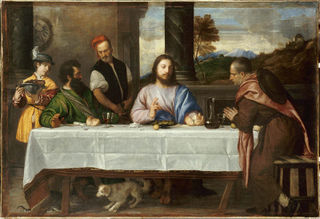
Titian, Supper at Emmaus, 1533-43

ART & ANTIQUES
March 2009

Pictures at an Exhibition
by James Panero

Behind the scenes at the MFA Boston's Titian, Tintoretto, Veronese

As the march 15 opening approaches for his exhibition “Titian, Tintoretto, Veronese: Rivals in Renaissance Venice,” at the Museum of Fine Arts, Boston, the curator Frederick Ilchman moves from conservation to design to exhibition space with an amiable twitter. Dressed in a natty three-piece suit, he looks as if he just stepped off a vaporetto on the Grand Canal. He is a specialist in Tintoretto—he spent five years in Italy researching the expressionistic cinquecento painter—and seems to know every painting and every person in Venice.

Curators are a museum’s ghostwriters; they write in pictures and let the pictures speak for themselves. A name on a wall, an essay in a catalogue, a voice on an audio guide—the curator works behind the scenes, but the choices someone like Ilchman makes in the conception, selection and execution of a show will leave an indelible impression on the way we see the work and on the story we take away. At 41 years old, Ilchman is about to mount the most important exhibition of his career.

With only weeks to go, Ilchman keeps busy with all aspects of his show’s preparation. The catalogue is done and off at the printers, but some of the loan guarantees are yet to be finalized. The museum’s own paintings destined for the exhibition are still up in the conservation lab for cleaning. An extensive X-ray analysis, undertaken by the conservator Rhona MacBeth, is revealing new secrets of the creation of one unusual work. Back at the design department, a model of the exhibition hall—a sort of curatorial dollhouse—is being fitted with foam-board walls and postage-stamp-sized printouts of paintings. “For the last room, I’m thinking of the autumn of their years. Fall colors,” Ilchman says to designer Keith Crippen while sticking a miniature wall up with putty. “This one you showed me a moment ago is way too Martha’s Vineyard. It’s preppy cranberry.”

Ilchman is the Mrs. Russell W. Baker assistant curator of paintings at the museum. After Princeton he did graduate work in art history at Columbia University under the advisement of the Renaissance scholar David Rosand. A visit to Italy at the completion of his master’s degree convinced Ilchman to focus on Tintoretto, the rebel painter of the late Venetian Renaissance. Although he was a favorite of John Ruskin, the artist has lacked for good modern scholarship. “Tintoretto occupies a special place in my heart, and I appreciate the underdog,” he says.

Ilchman immersed himself in Venetian painting for his on-site dissertation research. He also became an important player in cultural politics by working for the philanthropic organization Save Venice, and these connections have now helped him secure the loans for his show and even underwrite, through a donation to Save Venice, the restoration of one of the works destined for display (A Deposition of Christ, from Venice’s Accademia).

Upon arriving in the museum world, Ilchman says he first contemplated mounting a monographic exhibition of his dissertation subject. Then a major 2007 show of Tintoretto at the Prado in Madrid, to which he contributed, mitigated the necessity of such a project. “Incredible attendance, 400,000 people,” Ilchman recalls. “Tintoretto is smiling and looking down at that.”

So he began thinking about new ways of approaching the Renaissance master. Out of this emerged the present show, which is destined to make headlines through a comparative examination of the three-way rivalry between a grand Venetian patriarch (Titian) and his heirs at once repudiating (Tintoretto) and respectful (Veronese). “To understand Tintoretto you have to spend a lot of time considering Titian and Veronese,” Ilchman explains. “While there are other artists in Venice, these were the rivals. Here’s the important thing to remember: Titian was born 30 years before Tintoretto and 40 years before Veronese. These painters’ careers then overlapped for nearly four decades.” (Titian lived more than 90 years.)

“Instead of the usual effort to locate art within a political or social context,” says Rosand of the upcoming exhibition, “the Boston project makes the studio itself the context, that is, the art of painting is the subject of the exhibition. And this very focus—on the aesthetic and technical—testifies to the imagination of its curator. Frederick Ilchman envisioned an exhibition that would focus on the art, its materials and techniques, and by bringing these three painters together he is in effect reconstructing the artistic context of 16th-century Venice, its world of artistic competition.”

Ilchman’s focused survey will be his first exhibition as lead curator at the MFA, which he joined in 2001. The museum has pulled out all the stops for him, setting aside its Gund Gallery in the I.M. Pei-designed Linde Family Wing, sending paintings from its permanent collection abroad in order to secure important loans back home, even promoting the exhibition with a press lunch at Mario Batali’s Del Posto in New York.

The show is set to display many of the finest works by these artists ever to travel to the United States. In the fall it will go up at the Louvre, which signed on as an exhibition partner in 2007—quite late by museum standards—after being impressed by Ilchman’s initial plans for the Boston show. “My colleague George Shackelford, the head of the department, went to Paris with the binder to borrow two great Titians—The Supper at Emmaus and the Madonna and Child. They asked if we were looking for a partner,” Ilchman explains of the serendipitous collaboration.

A snowstorm is bearing down on Boston and about to knock out part of a day from the show’s tight advance schedule. Ilchman has spent the morning in the recording studio working on the audio guide. Settling into a corner booth in the museum’s Bravo restaurant, steps away from the future location of his show (where a blockbuster exhibition of Assyrian treasures from the British Museum is installed), the curator places a well-worn three-ring binder on the table and, with a close eye on his watch, begins flipping through the pages.

“This binder is the physical manifestation of the evolving exhibition in my head,” he explains. “I’ve been carrying this binder around for four years. It’s been on 20 airplane flights. The process of a show’s refinement is extremely complex. It’s easy to assume the curator tries to get the best things, and puts up what’s best, but there has to be a coherence to the show.”

The binder is made up of plastic sleeves, each containing a printout of a painting destined for the exhibition walls and the direct comparisons he hopes to make: in portraiture, ecclesiastical painting and even in three nudes regarding themselves in the mirror (Titian’s Venus With a Mirror, circa 1555; Tintoretto’s Susannah and the Elders, circa 1555–56; and Veronese’s Venus With a Mirror, circa mid-1580s). This is Ilchman’s hand, his deck of cards reshuffled and restacked. What was once 100 paintings has been whittled down to 56. In the front pocket are loose images—the paintings that didn’t make the cut.

“A lot of the work in the exhibition is about shuffling these cards,” says Ilchman. “Every painting in the exhibition has to justify its presence. The crate that a painting travels in costs a lot to make, and there is limited real estate on the walls. You can’t be sentimental because you like something. Then there’s negotiating, refining the checklist, getting the best things to make your point. A huge amount of time is spent writing the request letters. I have to make it clear that the painting we’re looking to borrow is the missing piece. And,” Ilchman continues, speaking of the intricacies of museum politics and the labor in securing loans, “you do favors for each other. In Italy I put on one of my best suits, speak Italian and take this binder and explain why this painting is essential for the show.”

The introductory painting in the exhibition is a Bellini and Workshop, Virgin and Child With Saints, one of two paintings in the show not by the three rivals. “This is the kind of painting that Titian could have painted and would have learned in Bellini’s workshop,” says Ilchman. “It’s from the Met. It’s been off view since 1974. The whole doesn’t come together very well. The saints look like they were Photoshopped in.” Ilchman explains his decision to edit down his initial plans for a longer introductory section. “A colleague warned me you are going to spend all your time borrowing one Giorgione,” he says of the great early Renaissance Venetian painter, “when you could borrow three Veroneses. And where Giorgione was a huge influence on Titian, it’s not the case for Tintoretto and Veronese. The thing is to keep the focus.”

Turning to Titian’s Supper at Emmaus, Ilchman compares Titian’s version of the subject (from the Louvre, dated 1533–34) with a 1542 version by Tintoretto from Budapest and one mid-1570s Veronese from Rotterdam. “Tintoretto’s energy is spinning out of control. Compare this to Veronese’s close focus. And for the Veronese we’re helping the museum in Rotterdam. We’re helping them restore this painting in time for the exhibition by splitting the cost of the treatment three ways.”

The show also includes a strange nativity scene that belongs to the MFA, a painting consisting of five different canvases stitched together and executed by what appears to be an equal number of different hands. Amid the crudely worked over imagery, three exquisitely painted figures stand out. They seem to have been painted by Tintoretto himself. “We did a battery of scientific tests, and we found a painting underneath it,” Ilchman says. A 72-negative X-ray analysis, which picks up the lead content in white underpainting, revealed hidden angels and the feet of Christon the cross. Upon seeing the X-rays, one of Ilchman’s colleagues made a startling realization: sections two and four—those most likely by Tintoretto himself—were once joined together. Ilchman now speculates that in an act of Renaissance recycling, common in the workshops of Venice, an original, vertical crucifixion by Tintoretto, set among the angels in a cloud, was taken apart and transformed (not too convincingly) into a nativity scene.

Behind all of Ilchman’s decision-making for Titian, Tintoretto, Veronese is the one technical fact that defines the Venetian Renaissance and makes such an exhibition as this a possibility outside of Italy. It is the development of oil on canvas. “You can never do a Michelangelo show,” the curator says. “His best work is fresco painting and monumental sculpture. There have been impressive shows of Renaissance Florence, but many of those artists are truly best defined by works that are not moveable. But you can approximate Venetian artists like Tintoretto accurately because you can move many of his key canvases.”

The consistent combination of oil with canvas was new in the early 15th century, Ilchman explains. Up until then, prestige paintings were made on wooden panel or as frescoes. The humid and saline climate of Venice finally encouraged artists and patrons to adopt a technique that up to that point had been used for banners and other forms of low art. In 1474 the Venetian government decreed that the redecoration of the main room of the Palazzo Ducale would be done on canvas. If Titian, Tintoretto and Veronese had been painting two centuries before, much of their work would have most likely been Venetian fresco, and given the climate, little of it would remain today.

But the development of oil on canvas did not just lead to work with a longer shelf life. It also encouraged the building up of textured surface. Paintings defined by layered coloring and expressionistic brushwork eventually became the hallmarks of Venetian art and defined it against the sharp contours and refined draftsmanship of Florence.

Finally, oil on canvas led to transportability and the birth of the secondary painting market. Titian became the first nonresident court artist by shipping work to two successive Spanish monarchs, Charles V and his son Philip II, largely without leaving home. It also created an art world of celebrity painters that we would have little trouble recognizing today. The artistic ego, the concept of the artist as something greater than an artisan for hire, took root in Venice, and it was nurtured in the competition of three great artists.

“In many of its aspects,” Ilchman writes in the exhibition catalogue, “our modern concept of painting, and the artistic self-determination it assumes, owes much to the rivalry between Titian, Tintoretto and Veronese in Cinquecento Venice.” It might also be said that the modern museum, with its library of moveable art, owes much to the developments these artists made half a millennium ago. It’s a story tailor-made for a museum exhibition, worth telling by the curator who can bring the paintings together to tell it.

Outside the frame

GoldLeaf

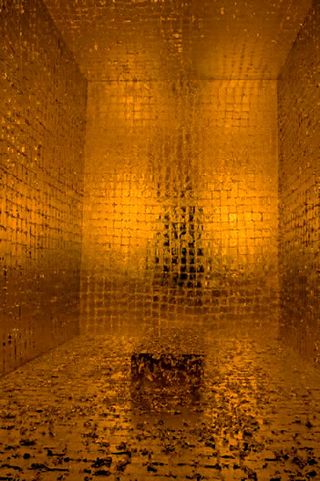
 The Death of James Lee Byars, 1982/1994, by James Lee Byars

HUMANITIES MAGAZINE
March/April 2009

"Outside the Frame"
by James Panero

How Asia changed the course of American Art

On July 8, 1853, four black warships under a cloud of smoke entered the waters around Edo, now known as Tokyo, the center of power in feudal Japan. The American commander, Commodore Matthew Perry, carried a letter from President Millard Fillmore for the Imperial Emperor. Under the policy of sakoku, or “closed country,” in effect since 1639, the ports of Japan had been forbidden to foreign transit but for a Dutch harbor in Nagasaki. Fillmore's long and even chatty letter, brimming with American optimism ("Great and Good Friend!" it announced to the Emperor), sought to overturn this policy and forever alter the United States' relations with the East.

“Friendship, commerce, a supply of coal, and provisions and protection for our shipwrecked people” were Fillmore's requests. His hope was to ensure the safe passage of the American whaling fleet, then fishing off the Japanese coast, and for American vessels en route to China.

Yet it wasn’t the persuasiveness of Fillmore’s letter so much as the intelligence of the American commander and armaments and technology of Perry’s gunboats, consisting of two steam frigates and two sloops, that guaranteed an audience with the Tokugawa Shogunate and Japan’s acquiescence less then a year later. With the signing of the Convention of Kanagawa, Japan was open.

Perry’s voyage, however, had a reciprocal effect. With the opening of Japan, the East began to exert its own cultural influence on the United States. For those who merely expected a one-way spread of the Christian gospel and Western culture to “heathen” lands, the result was unexpected. Nevertheless, as Perry approached Edo harbor, one might say a Japanese black fleet of its own, outfitted with Eastern philosophy and Oriental ornament, made its slow way to the cultural shores of the United States. The period of Asia’s colonization of American imagination was about to begin.

The influence of Eastern thinking over American artistic culture is now the subject of a sprawling 250-work exhibition at the Guggenheim Museum in New York entitled “The Third Mind: American Artists Contemplate Asia, 1860-1989.” The show sets out to survey the East’s cultural reflections in American art in the same dreamy manner that American artists often appropriated Eastern themes. A meditative peel of bells, courtesy of the artist Ann Hamilton, circles Frank Lloyd Wright’s spiraling rotunda and sets the tone for an exhibition that seeks to be both didactic and contemplative, Western and Eastern. The exhibition rises and falls on the same themes as the work it contains. The show “does not illustrate its textual sources; it embodies them,” announce the curators.

Cogito ergo sum,” or “I think, therefore I am.” Rene Descartes summarized a strain of Western classical thought when he wrote this maxim in 1644. His declaration of self-consciousness borrowed from Aristotle and the Nicomachean Ethics: “Whenever we think, we are conscious that we think, and to be conscious that we are perceiving or thinking is to be conscious that we exist.” For the arts of the West, this philosophy of self-awareness established formal boundaries between the artist or observer or conscious subject and the passive window-like art object.

Traditionally, the Western artist imposed an extension of the rational world on a painting through the illusion of perspective. The artist’s studied draftsmanship used the West’s particular knowledge of representational technique to translate the visual world to the picture plane, all the while concentrating almost exclusively on the positive space within the boundaries of the frame.

But what about the space outside the frame--not just the physical space, but the spiritual and relational space between art and artist and viewer? In the past hundred and fifty years, the philosophies of the East have exerted their strongest influence over this negative, numinous region. Meanwhile, the artists of the West have observed, imagined, and even made up what the East has to say about this liminal area, filling in with their own dreams, spirituality, meditations, and politics. Influenced by Hinduism, Buddhism, Taoism, and Asian art and performance, Western artists “deliberately abstained from European empiricism and utilitarianism and looked toward Asia to forge an independent artistic identity that would define the modern age--and the modern mind--in a new transcendentalist understanding of existence and consciousness,” writes Alexandra Munroe, the curator of the Guggenheim show.

Dream House (1962--present) by La Monte Young/Marian Zazeela and The Death of James Lee Byars (1982/94) by James Lee Byars, two of the most memorable works at the Guggenheim, both use Western means to affect this Eastern sensibility. Dream House came about in the early 1960s when Young combined his interest in North Indian classical raga music with Zazeela’s studies in light art. Both became followers of a North Indian vocalist named Pandit Pran Nath and lived with him as disciples in a traditional gurukula manner. The result of their work at the Guggenheim is a carpeted meditative room (no shoes allowed) off the side of the main gallery, filled with colored light and deceptive shadows and sounds that pulsate in deep, repetitive electronic tones. Young and Zazeela’s art cannot be isolated as single elements to be observed—a beam of light, strips of paper, a movement of music--but instead concerns itself with enlivening the spectator through acute sensory stimulation.

The Death of James Lee Byars operates through similar means. From 1958 to 1968, Byars lived in Kyoto, where he taught English to Buddhist monks and studied Noh theater, “a highly abstract spectacle whose dramas explore the intersection between the human and supernatural worlds,” writes Monroe. Through this Japanese influence Byars developed a metaphoric performance practice that carried meaning over to form. The Death of James Lee Byars, now on display in the first large gallery room of the Guggenheim, is composed of a monumental hollowed-out cube covered in glittering gold leaf. In the center is a platform on which the artist once performed as the dead figure of himself. Today, small shimmering crystals rest on the slab in his place. The work of art here is less concerned with sculpture in itself than in the resplendent gold void contained within it, a special space of its own that evokes the spirit of the artist.

The earliest American interest in Eastern expression emerged in New England, where the transcendentalists Ralph Waldo Emerson and Henry David Thoreau read Hindu texts in the 1840s. Here Eastern art connoisseurship arose out of the China trade, and a community of Asian scholars developed around Harvard University. The most influential of these was Ernest Fenollosa, who became the curator of Japanese art at the Museum of Fine Arts, Boston, in 1890 and wrote the canonical two-volume Epochs of Chinese and Japanese Art (1912).

The transcultural assimilation of Asian thought in Western art and culture was never merely an American phenomenon, however, and it did not begin with Commodore Perry. In 1827, Georg Wilhelm Friedrich Hegel linked Arthur Schopenhauer’s “cult of nothingness” to the Buddhist nirvana. In the latter half of the nineteenth century, in what was known as japonisme, the French Impressionists took up the formal qualities of Japanese wood-block prints, called ukiyo-e. The flattening of the picture plane, which became a central feature of modernism, owes much of its development to the styles found in this Japanese art.

Fenollosa directly influenced at least two important artists, Arthur Wesley Dow of Massachusetts and John La Farge of New York, who had both studied painting in Paris and taken an early interest in French japonisme. Dow worked with Fenollosa at the Museum of Fine Arts and published Composition: A Series of Exercises Selected from a New System of Art Education (1899) based on his interest in Japanese prints, which emphasized the rhythmic spacing of forms. Both artists traveled to Japan, and La Farge, through his wife, had a familial connection to Commodore Perry. His close-cropped images of flowers, in their high horizon lines and color choices, resemble Edo-period paintings. After traveling with Henry Adams through Japan, La Farge helped design a memorial, now in Rock Creek Cemetary in Washington, DC, for Adams’s wife with the sculptor Augustus Saint-Gaudens and the architect Stanford White. This important work, which evokes both Symbolist iconography and Eastern quietude, “is likely the most public artwork of the nineteenth century to refer in such significant ways to Eastern sources,” writes Monroe. There is a cast of it in the Guggenheim show.

It is appropriate that the Guggenheim Museum, with its renowned collection of abstract paintings by the Russian artist Wassily Kandinsky, should be the institution to hold this survey. Beyond a mere formal influence on the look and style of modern art, the East had its most profound effect on the philosophies of art, no more so than in the early development of abstract painting, which arrived in America in a roundabout way from Asia by way of European intermediaries (who themselves drew on the publications of New York-based spiritualist circles).

Kandinsky’s debt to Theosophy has been a long-standing source of embarrassment for those who prefer to see only a positivist, materialist origin to abstract art, often examined only through the lens of French modernism. The occultist practice of Theosophy, founded by Madame Blavatsky in New York in 1875 and continued by Annie Besant and C. W. Leadbeater, borrowed extensively from Eastern religious practices, in particular Hindu and Buddhist teachings and cosmograms used as visual tools for achieving greater consciousness. Besant and Leadbeater’s book Thought-Forms, which promised a “glimpse of the forms natural to the astral or mental planes” through the synesthetic mixing of the senses, visualized a Gounod chorus, for example, as an “oblate spheroid” of colors rising “six hundred feet” in the air. Kandinsky’s own book On the Spiritual in Art borrowed extensively from Thought-Forms, as did his formal experiments in paint.

Kandinsky’s abstract “compositions” did not set out to represent an external reality so much as “to effect a spiritual awakening in the viewer’s consciousness,” write Kathleen Pyne and D. Scott Atkinson in the Guggenheim catalog. “Kandinsky drew from Theosophy to develop his revolutionary claim that abstract art (the formless form) had the greatest potential for expressing cosmic laws,” adds Monroe. “The notion of art as a mystical inner construction charged with the power to transform the viewer’s state of mind had a profound impact on American vanguard artists, on whom Kandinsky’s debt to Asian logic for his theories of abstraction was not lost.”

The first generation of American artists to arrive at abstraction came through Kandinsky’s indirect Eastern influences. Marsden Hartley met Kandinsky in Berlin in 1913. Alfred Stieglitz, the center of New York’s early avant-garde, ran excerpts of Kandinsky’s On the Spiritual in Art in Camera Work that same year. Arthur Dove, Georgia O’Keeffe, and the Synchronists Morgan Russell and Stanton Macdonald-Wright reflected Kandinsky’s interest in synesthesia, an artistic belief, related to Richard Wagner’s “total work of art,” that the senses could be brought into harmony, with colors that can be heard and music that can be seen. These artists also absorbed Fenollosa’s books and Hindu and Buddhist texts (Hartley’s Musical Theme [Oriental Symphony] is a synthesis of all these influences). “The example of Kandinsky highlights the hybrid context of the introduction and reception of the East in American modern art,” writes Monroe.

One might think that the calligraphic brushstroke of the second generation of American abstract painters, the Abstract Expressionists, was equally Asian influenced, but these artists were on the whole less accommodating to Eastern roots. The critic Clement Greenberg insisted that Franz Kline, one of the more obvious candidates, has no more “than a cursory interest in Oriental art.” Robert Motherwell claimed he wanted “no fake Oriental work for me.” As occult practices became too closely associated with the rise of fascism and Nazism during the war (and Japan itself was, of course, an Axis power), across the board, abstract painting in the second half of the twentieth century sought to dry out and desacralize much of the mysticism that went into abstraction's origins.

American poetry took its own cue from Eastern sources from an early date, most importantly in Ezra Pound’s 1915 publication of Cathay, containing translations of Fenollosa’s notes on Chinese classical poetry. After the Second World War, the Beat writers took up the mantle of Eastern aesthetics, although often more philosophically than through actual textual interaction. The title of the show, “The Third Mind,” refers to a cut-up work by Beat writers William S. Burroughs and Brion Gysin that combines text and images in random collage.

Interestingly, in 1958, Alan Watts, the preeminent American advocate of Zen, distanced himself from his artistic cult followers, including the Beats. He accused them of using Zen to rationalize “sheer caprice in art, literature, and life [to] revolt against culture and social convention.” He went on: “Today there are Western artists avowedly using Zen to justify the indiscriminate framing of simply anything—blank canvases, totally silent music, torn-up bits of paper dropped on a board and stuck where they fall, or dense masses of mangled wire.”

The composer John Cage, whose 1952 composition “433 ” consists of three movements in which no notes are played, came in for his own criticism from Watts. Cage became famous for translating Eastern philosophy into twentieth-century Western music in what the Guggenheim calls “Cage Zen,” although Cage’s affinities for indeterminancy are closer to I Ching, a book of divination that is one of the five classics of Confucianism, than to Buddhist Zen. “What I do, I do not wish blamed on Zen,” responded Cage, whose approach to the East, as with the Beats, was predominantly philosophical. Nevertheless, even as his Eastern influences were not always directly drawn out, Cage found a way to articulate the Eastern importance of negative space better than anyone: “Formerly, silence was the time lapse between sounds, useful towards a variety of ends. . . . Where none of these or other goals is present, silence becomes something else—not silence at all, but sounds, the ambient sounds.”

Despite often dubious misappropriations of Eastern philosophy, and maybe even because of them, Western artists were drawn to produce some of the most important work of the modern period. “Misreadings, misunderstandings, denials, and imaginary projections emerge as important iterations of this individual, transcultural process,” admits Munroe. They also left plenty of second-rate examples, where the lessons of Eastern space failed to translate into the frame of Western art. For from the dreams of astral consciousness, this is what Western artists must make and what Western museums must display: works in frames. The work that endures in “The Third Mind” respects its Western demands. The art that fails holds out for a vision where none appears. In either case, the effect can be enlightening, in both an Eastern and Western way.