The Artist is Present in the Bronx


Thomas Hirschorn's 
Gramsci Monument; image: James Panero 

THE NEW CRITERION
September 2013

The Artist is present in the Bronx
by James Panero

On Gramsci Monument: A Work in Public Space by Thomas Hirschhorn at Forest Houses, the Bronx, New York.


Thomas Hirschhorn’s Gramsci Monument, a temporary public art work sponsored by the Dia Foundation now on view at Forest Houses in the Bronx, reportedly cost $500,000 to construct.1 If you try accounting for its material costs in plywood, nails, tarps, and packing tape, and still come up $490,000 short, you are not alone. The Swiss-born Hirschhorn is the type of Continental sophisticate who traffics in the naive. A regular on the Kunsthalle circuit, he knows how to work the levers of funding while enjoying the representation of a high-rolling Chelsea gallery, all in advancement of his phony patois. As a general contractor, he also deserves to be stripped of his license. Hirschhorn makes things that are worth less than the tape they are wrapped in. As it happens, obsessively wrapping junk in packing tape, thus furthering its decrepitude until it devolves intoHirschhorn junk, is his stock in trade. His shoddy constructions are poststructural manifestations representing the inverse of his own sense of greatness.

Hirschhorn has never shied away from turning global politics into his own personal sleaze. His exhibition some years ago at the Gladstone Gallery called “Superficial Engagement” mixed faux tribal statuary with photographs of corpses in the streets as some kind of commentary on the War on Terror. Or perhaps it was a meditation on the aesthetics of pipe bombs. In either case, the show made a lugubrious fetish out of violence and assaulted the dead by mutilating their bodies a second time in furtherance of a slick Chelsea gallery show.

When Hirschhorn announced his plans to construct, in the courtyard of a Bronx housing project, a “temporary monument” dedicated to Antonio Gramsci (1891–1937), a founder of the Italian Communist party and a patron saint of chic Marxists everywhere, the New York art world let out a collective groan. It does not help that Hirschhorn seems to have learned his English by reading the pages of October magazine. He generally communicates in a self-obsessive hauteur slathered with radicalized special sauce. “I have always understood ‘me’ or ‘I’—which I use often and with no bashfulness,” he writes.

Hirschhorn does not make just “art.” He creates capital-A “Art.” Similarly, his Bronx audiences are not merely other people. They are “the Other.” “I love to encounter the Other through an Idea,” he writes in the Gramsciexhibition brochure. “I love to do it through a mission I give myself and I love to do it through Art.” All of these statements are repeated on the Monument’s website (gramsci-monument.com), which continues the faux-naif schtick by looking as though it was designed in Geo-Cities circa 1995.


Thomas Hirschhorn, Gramsci Monument, 2013; Forest Houses, Bronx, New York; Courtesy Dia Art Foundation; Photo: Romain Lopez

Hirschhorn has a thing for placing “monuments” dedicated to esoteric theorists in underclass locales. Gramsci is the fourth in a series that has included Baruch Spinoza, Gilles Deleuze, and Georges Bataille. One gets the sense that the expeditionary vectors of these comp-lit colonizations are, to him, arbitrary. The residents of “Nychaland,” as some call the project islands of the New York City Housing Authority, are to him interchangeable with the residents of the Red Light District in Amsterdam or with the residents of a French banlieue—all of whom have now received Hirschhorn specials. They are all “the Other.”

In selecting Forest Houses, a project in the Morrisania section of the Bronx, Hirschhorn seems to have deployed all of the top-down metrics of Le Corbusier astride a cement mixer. Hirschhorn knew he wanted to doGramsci in the Bronx. Naturally. What won Hirschhorn over to Forest Houses after a thorough canvassing of the borough’s housing projects, however, was Erik Farmer, the wheelchair-bound President of the Forest Houses Resident Association, who, after hearing the artist’s presentation, asked Hirschhorn if he could borrow a book on Gramsci. That was a tough break for Castle Hill Houses, Soundview Houses, Monroe Houses, Patterson Houses, Bronx River Houses, and Claremont Rehab, the other finalists for the project—or perhaps that should be “the Other” finalists.

It was the book that got Forest Houses the monument, according to Hirschhorn. Farmer also won the golden ticket as the grandee to dole out the many $12-an-hour jobs that Dia commissioned for the Monument’s construction and security (Hispanics complained that only black residents got the gigs, an issue that Dia has now reportedly resolved).


"The point of modernity is to live without illusions, while not becoming disillusioned."—Antonio Gramsci; image: James Panero

What these residents have built, under Hirschhorn’s hard-driving direction, is a shantytown of plywood in the middle of the Forest Houses central green. The structure consists of a spongy, water-logged platform in two sections, accessible by ramps and stairs and connected by a rickety bridge (it is surprising that Dia doesn’t have you sign a liability waiver when setting foot in this accident-deliberately-waiting-to-happen).

Atop the platform are plywood rooms with tarpaulin roofs and signs that indicate each of their functions—a “Radio Studio,” a “Newspaper,” an “Internet Corner,” the “Antonio Lounge,” the “Gramsci Bar.” A Gramsci Museum features relics from Gramsci’s internment at the hands of Italian Fascists, a period of time from 1926 to his death in 1937 that turned out to be incredibly productive for the Communist theorist, resulting in over three-thousand pages of letters and notes that were collected and published soon after the war. A comb, a brush, and a pair of Gramsci’s prison slippers, on loan from the Casa Museo di Antonio Gramsci in Ghilarza and the Fondazione Istituto Gramsci in Rome, are displayed in Plexiglas cases alongside books on Communism, sofas wrapped in packing tape, and a looping film that, at least when I looked at it, featured the face of Joseph Stalin.


Thomas Hirschhorn, 
Gramsci Monument, 2013; Gramsci Archive and LibraryForest Houses, Bronx, New York; Courtesy Dia Art Foundation; Photo: Romain Lopez

The entire structure, meanwhile, is covered with an accretion of spray-painted agitprop and stapled-up flyers. One poster I saw on arrival featured the cover of the recent Gramsci Monument Newspaper, the project’s paper of record: “<QUOTE OF THE DAY>” it read. “‘The materialist doctrine that men are products of circumstances and upbringing, and that, therefore, changed men are products of other circumstances and changed upbrinding [sic], forgets that it is men that change circumstances and that the educator himself needs educating.’ Karl Marx.”

Similar signs are plastered throughout the structure and generally feature Gramsci’s esoteric Marxist exhortations. “I LIVE, I AM A PARTISAN. THAT IS WHY I HATE THE ONES THAT DON’T TAKE SIDES. I HATE THE INDIFFERENT,” reads one example, spray-painted on a bed sheet by the Monument’s entrance. Here is another: “This distinction between form and content is just heuristic because material forces would be historically inconceivable without form and ideologies would be individual fantasies without material forces.’ (Prison Notebook 7) A.G.” Also prominently displayed are statements from Marcus Steinweg, a German philosopher-in-residence who has been giving daily lectures at the Monument on “Adorno,” “Ontological Poverty,” and “The Uncanny (Heidegger) – The Real (Lacan) – The Outside (Blanchot).” In “What is Art,” Steinweg muses, “Art is pointing out the ontological inconsistency of the world of established consistencies. . . . As transcendence of ontological narcissism art applies the experience of the uncanny. . . . As the experience of the lack of subjectivity art affirms itself as affirmation of a world without beyond.”

Given the barnstorming excitement of these statements, it may be surprising to learn that the Gramsci Monument has not turned into the sleeper hit of the summer. It has also not become a rallying point for Communards or the relics of Occupy Wall Street, even as it presents the Disneyfied version of a radical occupation—a combination of grad-school treehouse and Mr. Toad’s Wild Encampment.


Signage at the 
Gramsci Monument; image: James Panero

Hirschhorn claims to be a Gramsci fanatic: “My love includes everything coming from him, without exception. I am a ‘Gramsci-Fan.’ As a fan—as every fan—there is no criticism, no distancing, and there is no limit.” Yet one feels that the subject matter of the Gramsci Monument is ancillary, icing on the cake, a good source for quotes and spray-painted murals but, like “the Other,” interchangeable with any number of other subjects and only as important, for Hirschhorn, as the next big public commission. Documenta, Manifesta, Mocumenta, here we come. Even Hirschhorn himself admits: “As with my other monuments to Spinoza, Deleuze, and Bataille, my competence to do the Gramsci Monument in the Bronx does not come from my understanding of Gramsci, but from my understanding of Art in Public Space today.”

The monument’s reduction of Gramsci to sloganeering is regrettable, in that it fails to engage, for or against in any meaningful way, with the profound if not profoundly unsettling ideas that Gramsci put forward. Leszek Kolakowski, in Volume III of Main Currents of Marxism (“The Breakdown”), his masterful 1978 atomization of socialist ideology, calls Gramsci “probably the most original political writer among the post-Lenin generation of Communists.” Through his prison writings, Gramsci articulated “an independent attempt to formulate a Communist ideology” that was not “merely an adaptation of the Leninist schema.” His writings contained a powerful if not altogether coherent “attempt at a Marxist philosophy of culture whose originality and breadth of view cannot be denied.”

Although Gramsci rejected the term, he was also a relativist. “The rightness of an idea is confirmed by, or perhaps actually consists in, the fact that it prevails historically,” Kolakowski explains, “a view irreconcilable with the usual one that truth is truth no matter whether or when it is known, or who regards it as true and in what way . . . it is not clear how he can be acquitted of being a historical relativist.”

What Gramsci’s theory of cultural relativity meant was that, in short, ultimate Revolution could not happen in the Soviet model from the top down. It had to emerge, culturally, from the bottom up. In this formulation, “Workers could only win if they achieved cultural ‘hegemony’ before attaining political power.” Gramsci therefore set about arguing for a “new proletarian culture” that might radicalize at the grassroots level. For this reason, the Gramsci name has been associated with everything from “community organization” to the tenured radicalization of the Academy. The Gramsci strategy has been to Revolutionize culture from within, to influence, if not infect, traditional democratic culture and faith, in his famous phrase, with a “long march through the institutions.”


Thomas Hirschhorn, 
Gramsci Monument, 2013; Gramsci Bar; Forest Houses, Bronx, New York; Courtesy Dia Art Foundation; Photo: Romain Lopez

Hirschhorn also gets his Gramsci Monument wrong in another profound way. With typical peacockery, he goes out of his way to claim solitary credit for the communally built structure. “I, the artist, am the author of the ‘Gramsci monument.’ I am entirely and completely the author, regarding everything about my work. As author—in Unshared Authorship—I don’t share the responsibility of my own work nor my own understanding of it, that’s why I use the term: ‘Unshared.’ ”

He refuses to see the monument outside of his own world view of “Me” and “Other.” “I never use the terms ‘educational art’ or ‘community art,’ and my work has never had anything to do with ‘relational aesthetics.’ The Other has no specific ties with aesthetics. To address a ‘non-exclusive’ audience means to face reality, failure, unsuccessfulness, the cruelty of disinterest, and the incommensurability of a complex situation. Participation cannot be a goal, participation cannot be an aim, participation can only be a lucky outcome.” In another place, he says, “I am an artist, not a social worker.”

Yet while Hirschhorn professes to see nothing but “Other” when he looks out over the Forest Houses courtyard, his work is much closer to the “relational aesthetics” of Marina Abramovi? or Tino Sehgal than he professes to admit.

Through her trumpeted connections with the pop star Lady Gaga and the rapper Jay Z, Abramovi? has emerged victorious from her MOMA staring contest and grown into an international cultural conglomerate wholly in the service of the celebrity police state. Abramovi? gave us “The Artist is Present.” Now, with Hirschhorn, we have “The Artist is Present in the Bronx,” and the result is ultimately—and entirely in spite of itself—compelling.


Artist Thomas Hirschhorn (left), creator of the 
Gramsci Monument, sitting at the Gramsci Bar speaking with residents and visitors; image: James Panero

Where the Gramsci Monument succeeds is not in bringing Gramsci to “the Other.” Instead it is in bringing “the Other” to the Bronx. In his interview with The New York Times, Erik Farmer offers a clear explanation of the Monument’s appeal: “There’s nothing cultural here at all. It’s like we’re in a box here, in this neighborhood. We need to get out and find out some things about the world. This is kind of like the world coming to us for a little while.” For Hirschhorn, Farmer says, “this is a work of art. For me, it’s a man-made community center. And if it changes something here, even slightly, well, you know, that’s going in the right direction.”

It is ironic that in this island of a housing project—a city-destroying idea imported from Europe—another European import has re-
introduced a cultural spectacle to reseed some life on the ground. Hirschhorn wants the results all to himself: “I am doing it because I authorize myself to do it. . . . Universality of Art is the condition granting to touch the Other, the Reality and the ‘Truth.’ As an artist, Universality is my belief and my will.” But the Monument works precisely because it no longer belongs to Hirschhorn. On one wall, Hirschhorn has stapled an article from the Village Voice stating the “Top 10 Reasons Why So Few Black Folk Appear Down to Occupy Wall Street.” Yet here, no one seems to care. TheGramsci Monument has not become an international attraction or an agent of radicalization. It has instead become something that the residents of Forest Houses can lay their hands on and call their own.

At the entryway to the “Internet Corner” there is a sign that warns “No Facebook!! If seen on Facebook, you’re getting off the computer.” But the children inside whom I observed were doing just that, if not playing computer games, and they seemed to be enjoying it. The same goes for the kids in the art studio, the busiest room in the facility. Their enjoyment mixed with the laughing of the children playing in the project playground outside, all giving the monument a decidedly homey feel.

The Gramsci Monument has not radicalized the residents of Forest Houses. The residents of Forest Houses have domesticated the Gramsci Monument. This seems especially true for the artist himself. Despite his own off-putting personality, Hirschhorn has clearly been taken by the residents of Forest Houses, and they have been taken by him. This fact gets reflected in the “Resident of the Day” wall and the resident photos that are reproduced in the Gramsci Monument Newspaper. It is also apparent in the way Hirschhorn can be seen interacting with the Monument’s visitors. To his credit, Hirschhorn has been present at the Monument throughout its run, updating the signage on the structure, chatting with visitors at the bar, and, of course, unrolling more packing tape on a regular basis. He is present even as few people show up for his talks. What if you gave a lecture called “Art school by Thomas Hirschhorn 11am to 3pm today. Energy=Yes! Quality=No!,” and nobody came? This is now Hirschhorn’s daily experience.

It may not be art, it certainly is not the art the artist intended, but theGramsci Monument has nevertheless found a place at Forest Houses—in particular for bringing a rich, theory-laced European with a Quixotic, hand-built habitat to these residents’ backyards.

1 Gramsci Monument: A Work in Public Space by Thomas Hirschhorn is on view at Forest Houses, the Bronx, from July 1 through September 15, 2013.
'I Am the Central Victim'

Ann Freedman

NEW YORK MAGAZINE
August 27, 2013

‘I Am the Central Victim’: Art Dealer Ann Freedman on Selling $63 Million in Fake Paintings
by James Panero

“I am as shocked as everybody, more shocked, as I am the central victim,” Ann Freedman, the gallerist at the center of an $80 million art forgery scandal, told me earlier this month. “Fifteen years. In my head, these paintings have been right up until five days ago. Horrible.”

Over the course of most of those fifteen years, Freedman had put all of her influence and credibility as the president of Knoedler & Company, until recently one of New York’s oldest and most respected art galleries, behind what she believed to be a treasure trove of newly discovered modern art by the biggest names in Abstract Expressionism. In May, federal authorities announced that the paintings — 63 in all — were fakes and charged Glafira Rosales, the obscure art dealer who supplied Knoedler and at least one other gallery with the paintings, with tax evasion. Earlier this month (five days before Freedman spoke those words), the feds spelled out the details of the long-running scheme in a follow-up indictment, charging that Rosales had never, as she claimed, represented the son of a mysterious anonymous collector. Rather, she allegedly paid an artist in Queens  (73-year-old Chinese-American painter Pei-Shen Qian,according to reports) as little as $5,000 each to create the counterfeit masterpieces. 

Freedman, who spoke publicly about the scandal for the first time in a series of recent conversations with New York, says that the results of the federal investigation prove she was an unwitting agent in the scheme. Under her leadership, Knoedler sold 40 of the fakes for an alleged $63 million. Before shutting down abruptly in late 2011, the gallery made a $20 million payment to Rosales.

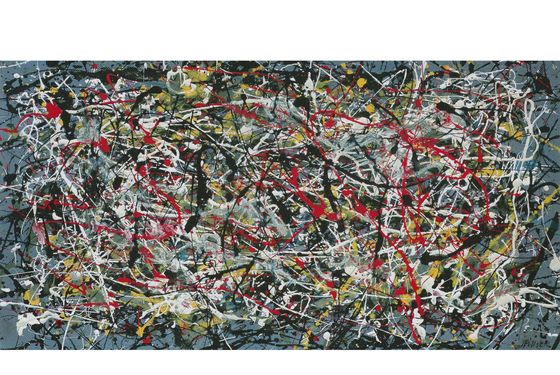
This "Pollock" sold for $17 million

According to the indictment, the saga began in the early nineties when Rosales approached Freedman with a fabulous tale. She claimed to represent a foreign collector who “was of Eastern European descent, maintained residences in Switzerland and Mexico, wished to remain anonymous, and had inherited the works ... from a relative.” Based on this account, Freedman came to call the relative “Mr. X” and the anonymous seller “Mr. X, Jr” — of course, neither existed.

“The story was credible,” said Freedman, who is tall with tightly curled silver hair and a controlled, energetic manner. “Dealers often do not know the specifics of origin or background, or how the art left the artist’s studio. You cannot turn the pages of an auction catalogue or museum publication without seeing a majority of the works labeled ‘private collection.’ The chain of ownership is often out of order and incomplete.”

With time, the story of how Rosales obtained the paintings became more complex: The married Mr. X and David Herbert, a real-life gallery employee and owner who died in 1995, knew each other in the fifties; they were lovers, and Herbert offered Mr. X access to the studios of the Abstract Expressionists, through whom he could purchase paintings off the books; these works were hidden away until Herbert’s death to protect Mr. X’s secret. (Herbert, of course, had nothing do with any Mr. X or secret stash of paintings — since neither existed.)

Freedman says that she did her best to get answers from Rosales. “I went to Glafira and pushed and pushed to get more information, relentlessly,” Freedman said. "My ongoing diligence met more than the gold standard; there is plenty of evidence of that.”

Speaking with Daily Intelligencer last month, Freedman listed some markers that led her to believe that the paintings were genuine. “They were very credible in so many respects,” says Freedman. “I had the best conservation studio examine them. One of the Rothkos had a Sgroi stretcher. He made the stretchers for Rothko. They clearly had the right materials. I got a consensus. Some of the paintings were featured on museum walls,” she continued. “The Rothko went to the Beyeler [Foundation], and the Newman went to Guggenheim Bilbao for the tenth anniversary exhibition. The most knowledgeable in the art establishment gave me no reason to doubt the paintings.”

Experts seem to have been convinced, by and large, that the individualistic quality of the Abstract Expressionist paintings Rosales obtained could only have been achieved by the artists themselves. “The fact is that the entire Eastern establishment believed in them. I saw the paintings,” said Stephen Polcari, a scholar of Abstract Expressionism and author of Abstract Expressionism and the Modern Experience. “And they were very good. You wouldn’t think twice about them for a second. Ann did everything she could possibly do.”

But others in the art world see a pattern of lax, self-interested behavior on Freedman's part. “This has ruined one of the greatest galleries in the world. It has trashed a lot of people’s money. It seems to me Ms. Freedman was totally irresponsible, and it went on for years,” said Marco Grassi, owner of Grassi Studios gallery on the Upper East Side and a well-known expert on Old Master paintings. “Imagine people coming to someone and saying every painting you sold me is a fake. It is an unthinkable situation. It is completely insane. A gallery person has an absolute responsibility to do due diligence, and I don’t think she did it. The story of the paintings is so totally kooky. I mean, really. It was a great story and she just said, ‘this is great.’”

Over time, Freedman came to see the paintings’ lack of provenance as a challenge to overcome. What they were missing in the past, she would make up for in the present. By placing them in the best collections, she would give them a footing. Freedman saw a mandate to sell — and sell she did.

“The point is that I believed that these paintings were genuine, that it was my responsibility to place them into the best of collections,” she said. Once the paintings were out there and established, she hoped “to get many of these works to come back together for a major museum exhibition that Knoedler would take part in.” Establishing these discoveries as accepted works, she believed, would in fact be among her greatest accomplishments at the gallery. “I felt that I was going to create a legacy for Knoedler with these newly discovered paintings, a treasure trove of paintings to bring out into the world,” she said.

At Knoedler, getting paintings out into the world was Freedman’s speciality. She had started her art career as a receptionist of the André Emmerich Gallery in the early seventies but quickly discovered her natural talent for sales. “My enthusiasm for the art was contagious and won people over. André started seeing more and more invoices on his desk that he could not have imagined,” she said. “There was a sense of some disbelief, if not resentment — no one paved the way for me to sell, but I sought out the opportunity and never looked back.”

In 1977, at age 29, Freedman took a job at Knoedler — at the time, the oldest continuously operating gallery in New York. She continued to outperform and eventually took over the palatial central office of the gallery’s gilded-age Upper East Side mansion.

The paintings from Rosales proved to be enormously lucrative for the gallery. Among the sales were a “de Kooning” that went for $4 million, a “Rothko” for $8.3 million, and a “Pollock” for $17 million. She successfully built up a market for each of the paintings as they came in. “If something had been off or wrong on any one of the paintings, I would have put on the brakes,” she said.

She was so convincing, and so convinced, about the paintings that she even bought three herself — a “Rothko,” a “Motherwell,” and a “Pollock.” “I was a believer. Not to be stubborn, but I lived with three of those paintings,” she said. “I lived with them, and in the context of my personal collection.”

For over a decade as they emerged, the paintings were the envy of the art world. Art experts, conservators, and museum professionals praised what appeared to be a newly discovered collection of masterworks. But in 2009, forensic testing on two paintings supposedly by Robert Motherwell revealed paint chemicals that were historically inconsistent. Suspicion descended on the lot, and multi-million-dollar buyers agitated for their refunds. Meanwhile, the FBI began circling Rosales.

Freedman, coming off a battle with lung cancer, left Knoedler just as these suspicions began to emerge. (She describes her departure as a management dispute.) Two years later, the 165-year-old business closed up shop, with no warning, the very same week the buyer of the $17 million Pollock sued both the gallery and Freedman.

Even in cases of a forgery, art buyers don’t necessarily have a lifetime money-back guarantee (the Pollock sale was settled out of court). Owing to statutes of limitations, legal experts say, some buyers of Rosales’s 63 works may have limited recourse in recovering their money — a fact that may also insulate Knoedler and Freedman from additional litigation. “Purchasers of artwork in New York must be diligent and act quickly, otherwise they may lose important remedies,” says Raymond Dowd, a partner and art law specialist at Dunnington, Bartholow & Miller. “In essence, a purchaser who has been defrauded may have no civil remedies against the gallery.”

Robert K. Wittman, a former FBI agent who founded and led the Bureau's National Art Crime Team, told Daily Intelligencer that the buyers were taking a foreseeable risk. "With Abstract Expressionist and modern paintings, there was never any real cataloguing when the artists were alive, so things can pop up on the market that turn out to be legitimate," he said. "The problem is that because these paintings are modern, it is harder to authenticate them. What this does is put the buyers on notice. Unless a piece has really good provenance, forensics, and connoisseurship — the three-legged stool — the buyer shouldn’t buy on someone else’s word."

Freedman has continued to be an active dealer despite the scrutiny of the Rosales case. She recently opened her own gallery, FreedmanArt, on East 73th Street, where she now represents Frank Stella, Lee Bontecou, and the estate of Jules Olitski, among others.

With the revelation of the crime, even though she says she finds relief in knowing the truth of where the paintings came from, she feels most betrayed by the paintings themselves. “I am so angry and upset. It is shattering, as if a trusted friend deserted you.” She says the money she spent on her own three paintings is “a loss. It is a big loss.”

“How can we know the truth? You not only believe in your own instincts. You believe in others who believe.”

The View from Marcellus

CITY JOURNAL
Summer 2013

The View from Marcellus
by James Panero

Fracking brings breathtaking economic and environmental benefits—at least to places that welcome it.

Few people understand the ground better than Larry Fulmer, a soft-spoken man with flowing white hair pulled back into a ponytail. Fulmer, the hydrofracturing superintendent for Cabot Oil & Gas in Pennsylvania, knows just how much pressurized water and sand will liberate the natural gas trapped in the shale rock a mile beneath our feet. Here, in a small square field carved out of hill country in Dimock, Pennsylvania, his crew is mixing water and sand day and night. “They pull [the mixture] in at 35 to 40 pounds per square inch,” he explains, “and boost it to whatever our treating pressure is, anywhere from 4,000 to 9,000 pounds per square inch, and they send it back to the missile”—the final hose to the well. Like a traveling show, Fulmer’s people will be here for just four days before packing up and moving on to the next venue.

Over the last half-decade, workers like Fulmer have tapped immense quantities of previously unreachable energy from pockets deep underground. The economic and political benefits of this Shale Revolution, as it’s sometimes called, are enormous. Shale gas is locally abundant and easily transported to serve the heating and electricity needs of the East Coast. It diminishes our dependence on foreign oil and gas, generates domestic jobs, and pours money into poor rural areas. The hydrofracturing technology to extract, transport, and use it already exists, so there’s no need for decades of research and development before we can take advantage of it.

Shale gas is also far cleaner than oil and coal; indeed, environmentalists should be crusading for it. Instead, they have sought to smother the Shale Revolution, claiming that it’s harmful to the environment and promoting their cause through complaisant media. Their relentless work has begun to turn public opinion and has even influenced New York’s governor to delay the approval of fracking in his state. That’s why I’ve come to visit an active drilling community in rural Pennsylvania, atop the vast rock formation called the Marcellus Shale. I want to observe gas exploration in person. When you’re on the ground, it’s hard not to be awed by its promise—and worried that so many have become convinced otherwise.

The Marcellus Shale is a layer of gas-rich rock that runs northeast to southwest across several mid-Atlantic states. It extends from New York’s Finger Lakes district and Southern Tier through the western half of Pennsylvania and into eastern Ohio and much of West Virginia, covering nearly 100,000 square miles. The layer gets its name from a surface outcropping near Marcellus, New York.

Geologists became aware of the natural gas trapped in the Marcellus Shale decades ago. The problem was how to extract it. Some liken shale to the filling of an Oreo cookie: it’s a “pay zone” sandwiched horizontally between layers of limestone far beneath the earth’s surface. The shale is composed of thin sheets of rock packed too closely together to allow gas to move through. And even if you could free the gas somehow after digging a traditional vertical well, you would reach only what was directly beneath your drilling site—just as a straw punched through the outside of an Oreo might reach the filling at the straw end but would have little luck pulling in the cream around it.

The problem was solved by Texas oilman George P. Mitchell, who spent millions of dollars and nearly two decades trying to extract the natural gas trapped in the Barnett Shale formation in his native state. What did the job, Mitchell eventually discovered, was a combination of two technologies: hydraulic fracturing and horizontal drilling. Hydraulic fracturing—otherwise known as hydrofracturing, fracing, or (most popularly, though it was originally pejorative) fracking—is the fracturing of rock with pressurized fluid. The technology has been around since the late 1940s, when companies used it to release additional oil from spent wells. Horizontal drilling has existed even longer but became prevalent in the 1970s, with the development of advanced surveying tools and the directional “mud-motor” drill head, impelled by pressurized mud that is pumped down a well and passes over a screw-shaped rotor.

Mitchell’s horizontal fracking came online about 15 years ago and launched the Shale Revolution. Once drillers reach the right depth, they bend their well hole horizontally, so that it runs through the middle of a shale formation. Then, after punching additional holes through the sides of the horizontal well, they pump in pressurized fluid, which pushes through the holes, forces the layers of shale slightly apart, and releases the gas trapped inside, which can then flow up the well. Water and sand make up 99 percent of the fluid; the rest consists of biocides and softeners to reduce friction and contaminants. The sand’s job is to keep the fissures about a millimeter open after the water is removed so that the gas can continue to flow. The drilling stage of this process can take several weeks, with the pressurized-fluid treatment lasting four days.

On the northern Pennsylvanian Marcellus, the wells link up with the underground infrastructure of gas pipelines that crisscrosses the eastern United States, making on-site gas storage unnecessary. The gas flows to power plants and urban distribution lines. Once the drilling and fracking are completed, the energy firm removes all the equipment from the site and restores the topsoil. All that’s visible is a tiny wellhead and storage tanks to collect the small amount of fracturing fluid that returns to the surface, which the company will reuse in future jobs.

Since the first modern hydrofracturing wells pushed down into the Marcellus in 2007 and 2008, the estimates for the recoverable gas content of American shale have kept rising. In 2000, shale produced only 2 percent of our domestic gas supply. According to the federal government’s Secretary of Energy Advisory Board, 50 percent now comes from shale and other unconventional sources, a share expected to rise to 80 percent by 2035. Pennsylvania may sit on the second-largest natural-gas field in the world; significant deposits also lie beneath Arkansas, Louisiana, New York, North Dakota, Ohio, Oklahoma, and West Virginia. In 2012, the International Energy Agency predicted that the United States would surpass Russia to become the world’s largest natural-gas producer by 2015. A 2011 study from the Massachusetts Institute of Technology (MIT) estimates that America’s supply of gas will last more than 90 years.

The Shale Revolution has brought enormous economic benefits to American producers and consumers. According to a 2012 study by the consulting and forecasting firm IHS Global Insight, shale oil and gas combined generated $87 billion in domestic capital investments in 2012. These investments will rise to $172.5 billion annually by the end of the decade, IHS says, and could total $5.1 trillion by 2035. Much of the investment has taken place in struggling rural economies. Shale developers not only lease drilling sites from their owners; they also pay the owners of the distant plots whose gas is being tapped. Gas distributors pay people to run underground pipelines through their properties. Drilling firms share the returns of each well with the landowner.

The advantages aren’t confined to the gas industry and its direct beneficiaries; savings on energy ripple through the broader American economy. The U.S. Energy Information Administration reports that the shale-gas boom has pushed down the price of natural gas in America to one-third of its 2008 level. The lower costs of shale gas, PricewaterhouseCoopers reports, will yield 1 million domestic manufacturing jobs by 2025 and add 0.5 percent growth to the nation’s gross domestic product. From 2012 through 2015, American households will save an average of $900 per year—2 percent of median household income—on their heat and electricity bills thanks to shale gas, IHS estimates.

The development of a ready source of domestic energy directly improves America’s geopolitical position, too, given that unsavory states currently govern much of the world’s energy supply. Shale gas even helps protect the environment by replacing coal in power plants, since gas produces far less carbon dioxide, sulfur, carbon monoxide, and ash than coal does. For years, coal drove more than half of all American energy production, but its share dropped to 42 percent in 2011, the lowest figure since analysts began keeping track in 1949. The ongoing shift from coal to natural gas is the main reason that American greenhouse-gas emissions have declined by 450 million tons in five years—a 5.3 percent drop from 2011 to 2012 alone. By contrast, greenhouse-gas emissions have risen in Europe, which lacks a ready source of gas and has been replacing oil and aging nuclear power with coal. “Displacement of coal-fired power by gas-fired power . . . is the most cost-effective way of reducing CO2 emissions in the power sector,” the MIT study concludes.

New York City in particular could benefit greatly from the Shale Revolution. A network of pipelines already delivers gas to nearly every home stove in the five boroughs. The heating boilers in the basements of most residential and commercial buildings, which now run mostly on dirty Number 4 and Number 6 heating oil, could be converted to cheaper, cleaner natural gas over time. My own Upper West Side apartment building has just replaced an obsolete boiler that burned Number 6 oil with one that burns cleaner Number 2 but can shift to gas power with the flick of a switch—once enough gas is available. Utilities are already working to upgrade the underground pipelines to make the changeover possible. Con Edison is installing a gas line an avenue away from my building, and a new city initiative called NYC Clean Heat is helping us persuade the utility to bring the supply to our building. Mayor Michael Bloomberg has embraced shale development, envisioning a city in which buses and trucks run on natural gas and electric vehicles are charged through gas-fired power plants. “Remember that 13,000 Americans will die from the effects of coal-fired power plant pollution every year,” Bloomberg said this April. “I don’t know of anybody yet that’s been killed by fracking.”

Shale gas’s benefits won’t be realized, though, if environmentalists have their way. Convinced of the evils of fossil fuels and the promise of renewable energy, they have successfully portrayed fracking as a destructive and dangerous practice, rather than a safe, tested means of extracting a clean, local, and naturally abundant resource. They often cite a 2011 article in Climatic Change, written by Robert Howarth, Renee Santoro, and Anthony Ingraffea, that contends that “3.6 percent to 7.9 percent of the methane from shale-gas production escapes to the atmosphere in venting and leaks over the lifetime of a well.” Therefore, the piece continues, “the [greenhouse-gas] footprint for shale gas is greater than that for conventional gas or oil when viewed on any time horizon.” This much-publicized article, however, has been debunked by many other researchers, including Cornell University’s Lawrence Cathles, who argues that Howarth and his colleagues “significantly overestimate the fugitive emissions associated with unconventional gas extraction.”

An equally unpersuasive environmentalist claim is that fracking contaminates groundwater. As Columbia Law School’s Thomas Merrill and David Schizer conclude in a study of shale regulations, “there is little evidence so far that subterranean fracturing activity can directly contaminate groundwater, and this risk may never materialize. The layer of shale that is fractured is usually thousands of feet below the water table, with a buffer of dense rock or clay in between.” Of the 35,000 gas wells fractured in the United States in 2006, they write, “the paucity of confirmed incidents of water contamination from the underground migration of fracturing fluid provides powerful evidence that the risk is small.”

At one point, a handful of Pennsylvania residents complained to the media that fracking had contaminated their drinking water, but the Environmental Protection Agency surveyed their groundwater and found it safe. The recently released anti-fracking documentary Gasland (not to be confused with the recently released anti-fracking movie Promised Land, starring Matt Damon) shows a Colorado man holding a match near his faucet water and watching the flame flare up dramatically—because of gas released by fracking, the documentary says. But Colorado’s Oil and Gas Conservation Commission discovered that the cause was naturally occurring methane in the resident’s water. (Merrill and Schizer recommend that gas companies, before drilling, survey water for existing levels of methane to mitigate false claims and shakedowns.) The Center for Rural Pennsylvania, an agency of the state legislature, has found “no statistically significant increases in methane levels after drilling.”

Nevertheless, celebrities have embraced the anti-fracking cause with gusto. In 2012, Yoko Ono and Sean Lennon, the widow and son of slain Beatles front man John Lennon, formed the advocacy group Artists Against Fracking, which soon had more than 200 prominent signatories, including Alec Baldwin, Anne Hathaway, David Geffen, Gwyneth Paltrow, and Lady Gaga. Artists Against Fracking has erected billboards, organized a letter-writing campaign to New York governor Andrew Cuomo, and chartered a luxury tour bus to drive to Dimock, where Ono and Lennon, along with actress Susan Sarandon, brought drinking water to residents. “I can’t believe that here in the United States people don’t even have water to drink,” says Ono in a video about the trip posted on YouTube. “It’s more horrible than I could imagine,” Lennon adds.

Seven months after Artists Against Fracking formed, a March Quinnipiac University poll found that, for the first time, New Yorkers opposed fracking, 45 to 39 percent—an unsurprising outcome, given the unremitting campaign against shale gas. One of the opponents is apparently Governor Cuomo, once a supporter of shale-gas development, who has cited environmental risks in delaying approval of drilling in the state’s economically depressed Southern Tier. As the New York Post’s Fredric Dicker reported in April, “After telling associates for nearly two years he believed natural-gas drilling could be conducted safely, Cuomo developed cold feet late last year in the wake of an increasingly aggressive ‘anti’ movement led by environmental activists, including his former brother-in-law and uncle to his three daughters, Robert F. Kennedy Jr.” Further, proposed legislation in Albany would require all shale gas to undergo tests for radon before it could enter city limits, probably raising the ultimate price of gas and encouraging people to stick with coal and heating oil.

It’s worth noting that Artists Against Fracking was born after gas-development companies, looking to serve New York City’s cleaner energy demands, announced plans to run an underground distribution line near the Lennon family’s second home in Delaware County. The not-in-my-backyard possessiveness of wealthy Catskills second-homeowners is effectively preventing poorer, less politically connected, communities from profiting from the energy wealth beneath their feet.

Soon after Lennon and Ono traveled to Dimock, I made my own trip and found a very different scene. Most of the protest signs are pro-gas. One pro-fracking organization, Dimock Proud, was founded by two landowners to serve, they say, as the “voice of the silent majority” in their town. Residents here took part in a new documentary, FrackNation, an effort by journalists Phelim McAleer and Ann McElhinney to document the distortions of the anti-fracking lobby.

For an area with extensive gas development, Dimock seems almost bereft of heavy industry to the naked eye; its wells are tucked into the region’s endless folding hills. After many twists and turns, I finally come to a Cabot derrick, one of five that the company runs in the area. Here I ask Steve McDonald, Cabot’s colorful drilling consultant—a dead ringer for Hank Williams, Jr.—if the owner of the house next door to the site had to move out. “No, sir,” McDonald tells me. “The gentleman right up there, Mr. Gray, he come down when we first rigged up down here and he visited with me a little bit, and he says, ‘Steve, if you don’t mind, try not to point the lights towards my house, because that’s my bedroom side.’ Well, we done everything we could do to keep them from pointing lights at his house. So he comes down three or four days later and I’m thinking, ‘Oh, devil, we done pointed light at his house up there.’ And he comes, and he brings three dozen of those Krispy Kreme doughnuts, and I’m all about them things. And I asked him, just to see, ‘Is everything okay up there?’ And he said, ‘I hardly know y’all here.’ ”

The Marcellus story is a positive one. The gas industry has newly paved the roads around Dimock. Farmers now have income to pay down debts and fix up their properties. Jobs are growing. McDonald tells me about a conversation that he had with a local contractor hired by Cabot to do odd jobs around the drilling site. “ ‘I’m living the dream,’ the contractor says. And I said, ‘What do you mean by that?’ He said, ‘Man, I couldn’t be any happier. I’ve got a good job. I do what I need to do, and before I got this job here, I was personally almost eating out of garbage cans, trying to feed my family.’ Best thing that’s ever happened to him and his family is the oil company.” As that story suggests, Pennsylvania has been wise enough to let the Shale Revolution improve its residents’ lives. New York should follow suit.