Homelessness, inc.

Image (1)

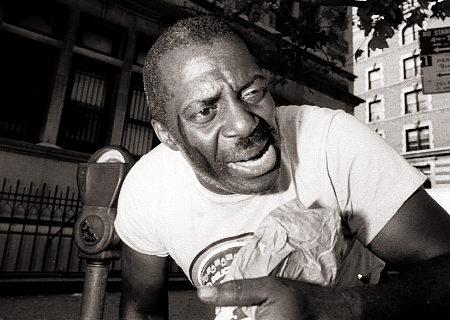
The bad old days: Larry Hogue, "The Wild Man of 96th Street," in 1993.

NEW YORK POST
July 27, 2012

Homelessness, Inc.
by James Panero

The social-services industry’s war on the Upper West Side slows, but it never ends.

Just last week, Robert Hess of the homeless-housing group Aguila informed Community Board 7 that he means to build a 400-person “super shelter” on West 95th Street.

So what? you say. The neighborhood has never looked better.

I agree — and I’ve lived there most of my life.

Yet I recall how, starting in the 1970s, the neighborhood descended into chaos — because a coalition of politically connected developers, nonprofits, labor unions and government agencies did its utmost to turn the area into a dispensary for social services.

Under cover of compassionate rhetoric, the social-services industry used public funds to turn the Upper West Side’s private residential buildings into welfare hotels, homeless shelters, halfway houses and methadone clinics — inundating the neighborhood with crime, homelessness and drug abuse.

Today, the balance has tilted toward gentrification, but several recent reversals show that we can’t take the gains for granted.

Whenever real estate stagnates, the industry spies an opening. In a depressed housing market, it has greater purchasing power. Back in the 1990s recession, New York magazine declared, “Small business is no longer the dominant industry on the Upper West Side. Homelessness is.” The city was going broke, yet there was “explosive growth of the social-service sector.”

The influx of undesirable new residents drove rent-paying tenants out of their apartments. The worst off were forced into the streets and thus into the hands of the homelessness industry — which housed them at four times the cost, sometimes in the same buildings they’d been driven out of in the first place.

The rising disorder helped the industry buy up Upper West Side housing more easily. The obvious public presence of a mentally ill population also let politicians claim that the need for social services was growing. In fact, the rise of the social-services agencies was what had introduced that population in the first place.

Lately, the industry has zeroed in on the neighborhood’s SROs — buildings with “single-room occupancy” apartments. It aims to import and house the most destructive populations it can find — like people with both mental-health problems and drug dependency, a dual diagnosis known in the industry as MICA (for “mentally ill, chemically addicted”).

Placing a MICA population in what is known as “supportive housing” secures the highest possible government funding. The agencies also plant these profoundly troubled new residents alongside the remaining SRO tenants to drive them out.

Aaron Biller, president of the local group Neighborhood in the Nineties, describes the fight as a game of Whac-A-Mole: The industry pops up in one building after another.

Take St. Louis Hall, a six-story residence on 94th Street, just steps from Riverside Park. The Lantern Organization, a nonprofit housing developer, and its for-profit wing, the Lantern Management Group, bought the building to convert it into a MICA facility. Even as it adds another story, Lantern is now trying to push out existing tenants by threatening to house them side by side with the MICAs. For each “special-needs” tenant that Lantern can squeeze in, investors can earn more than $3,000 a month from government agencies paying to house them.

For a while, SRO owners tried to keep their buildings out of the industry’s hands by turning them into European-style budget hotels. The regular tenants often cheered the change, since it meant new amenities and added security and staff. Local merchants welcomed the tourist trade.

But our local political leaders thought otherwise. In 2006, City Councilwoman Gale Brewer teamed up with state legislators Richard Gottfried, Linda Rosenthal and Liz Kreuger to outlaw the new hotels — leaving the SROs at the industry’s mercy.

Late in 2010, I watched as one building, the Alexander Hotel on 94th Street, signed a contract with Samaritan Village, a Queens-based substance-abuse and mental-health center, to convert it into a 200-bed homeless facility. The community fought that conversion to a stalemate. But now comes Aguila, out to put a 400-bed shelter on 95th.

Within the last two weeks, a deranged man, Bernardo Paulino, who’d been living in a shelter for HIV patients on West 95th, allegedly stabbed the desk clerk to death. Across town, Curtis Forteau, a schizophrenic homeless man, randomly attacked Sabatha Tirado with pepper spray and a knife, cops say.

Passing through a revolving door of city agencies, New York’s mentally ill homeless population is a time bomb. That’s why a “fair share” law in the City Charter requires that social-services facilities be evenly distributed through all neighborhoods. Yet West 94th and 95th streets alone have seen a half-dozen homeless shelters, treatment centers and halfway houses proposed in recent years.

A 2008 survey revealed that of the supportive-housing units across Manhattan, 21 percent — 1,978 units — were on the Upper West Side. The Upper East Side, by comparison, had 93 units.

The Upper West Side is known for its social compassion, but that compassion has long been abused by developers and politicians who profit off failure in the neighborhood. More and more, my neighbors have realized what’s going on.

For the moment, the neighborhood remains beautiful and vital — but the battle for the Upper West Side is far from over.

Adapted from the Summer issue of the Manhattan Institute’s City Journal.

UPDATE:  As I mention in my article, the "dual diagnosis" homeless are known as MICA, for "mentally ill chemically addicted." They are most in need of assistance, but even when the gov't pays out $3000 per person a month to the homelessness industry, they don't get the care they need.

After this editorial came out, homeless residents from two different shelters independently called me up to express agreement with my piece. The policy of warehousing these people in residential communities is a failure--a short sighted government attempt to save money without consideration of the long term costs or collateral damage to communities. Willowbrook, a deplorable institution for mentally disabled children in Staten Island exposed in the 1970s, was a true disaster, but the mass deinstitutionalization that resulted has now gone to the opposite extreme.

One solution is that we need to reconsider re-institutionalization and put resources into modernizing our mental health institutions. Some observers have considered calling such a movement "FORMICA," because it would actually help these patients in need rather than just the social services profiteers. 

Supreme Court should have taken the Harmon rent control case


Do you have the right "real estate karma" to rent here? The UWS Harmon house with its three rent-regulated tenants. 

NEW YORK DAILY NEWS
April 24, 2012

Supreme Court should have taken the Harmon rent control case
by James Panero

Current law allows for lavish living, practically for free

On Monday, the U.S. Supreme Court refused to hear an appeal from James and Jeanne Harmon, the owners of two townhouses on West 76th St. who have challenged the constitutionality of rent control.

In Harmon v. Kammel, the Harmons claimed that such controls meant that the government has essentially made them the private funder of a welfare program. It had also illegally taken their property in violation of the 5th Amendment, which reads that “no person shall be . . . deprived of life, liberty, or property, without due process of law; nor shall private property be taken for public use, without just compensation.”

Rent control, they argued, has taken their private property “without just compensation.”

When the Harmons took ownership of their two small buildings, which had been in the family since 1949, they also got the tenants occupying three rent-controlled apartments. By law, these tenants now lease their apartments at 59% below market rate with lifetime tenure and generous succession rights.

A decade ago, one of Harmon’s tenants even bragged to a newspaper that he lived there “practically free” due to his great “real estate karma.”

Monday’s Supreme Court decision might only sound like a setback for landlords like the Harmons, but really it’s bad news for our entire city, which has long been the victim of a disastrous and near fatal experiment in price fixing. This is especially true for neighborhoods like the upper West Side, where I have been a lifelong resident.

Rent control was an “emergency” measure put in after World War II that stayed on the books for political convenience, even as it nearly bankrupted our city’s aging housing stock. These laws, which came out of a fear of the dangers of the free market, in fact demonstrated how government-manipulated pricing could be far more destructive than market forces.

With rents, services and evictions all regulated by the legislature and the courts, the city and state became the absentee landlords of neighborhoods like the upper West Side.

Power flowed from a politician’s apparent ability to depress rental rates for existing tenants while “taking on” the buildings’ now captive owners for diminishing services.

The city’s price controls, among the most stringent in the country, meant that the rate of apartment turnover plummeted. This created an artificial apartment shortage that continues to raise the rental rates of new construction. Since lower rent also meant that existing owners had less revenue for upkeep, for years aging buildings decayed for lack of funds, meaning that politicians could exert even greater rhetorical leverage over their “slumlord” conditions.

Historically, rent control has exacted its heaviest toll on the very tenants it purports to serve. The wealthy could maintain multiple residences while keeping their sprawling and under-used rent controlled apartments off the market.

Corrupt tenants learned to manipulate their rents even further by calling in phony complaints to the Department of Buildings and suing for bogus “diminution of services” in order to tie up rate increases in litigation (the practice remains commonplace today). Meanwhile, average, honest renters became hostage to the artificially depressed rents of their apartments as rent control diminished surplus and drove up the prices of alternative rental apartments.

Even as their building and their neighborhood collapsed around them, they were often unable to afford to relocate and became increasingly captive to the whims of a political class that purported to have a say in rental rates.

What saved New York wasn’t rent control. It was the cooperative revolution. Stocked with rent-controlled and rent-regulated tenants, the aging buildings in neighborhoods like the upper West Side, despite their grandeur, became next to worthless to their owners.

In the 1970s and 1980s, non-eviction plan coop conversions finally allowed owners to sell shares of their buildings to their own rent-controlled and rent-stabilized tenants, who could then invest their capital and sweat equity into the restoration of the neighborhood. Rather than taking on the landlords, as landlords themselves they took on the squalor of their neighborhood and restored areas like the upper West Side to what we see today.

Despite the damage done to our neighborhoods, rent control and rent regulation still feeds our city’s political machine. In 2008, Rep. Charlie Rangel, with a reported net worth of $566,000 to $1.2 million, was even caught taking up four rent regulated apartments for his personal use.

If the courts won’t take it on, the time has come for New Yorkers to do the right thing in the voting booth and say no to a system that has given their politicians a free ride while damaging their neighborhoods almost beyond repair.

Blockbusting the West Side

NEW YORK DAILY NEWS
August 22, 2011

Blockbusting the West Side
by James Panero

How 'supportive housing' doesn't help anyone

In the 1950s and 1960s, the practice of "blockbusting" became commonplace. Speculators depressed housing prices by scaring away white middle-class residents. Then they resold the properties to black homebuyers at artificially inflated prices, often resulting in default and further devaluation.

Today the practice of blockbusting continues, except now it's largely minority renters that the investors want out. The new buyers are us, the taxpayers, underwriting the supportive housing industry.

Government agencies pay supportive-housing profiteers far above market rate for buildings they convert from normal rentals to taxpayer-subsidized housing for the mentally ill. For each "special-needs" tenant their facilities house, investors can collect more than $3,000 a month. Protected by rent stabilization, existing residents, who might only pay $500 a month for the same unit, often stand in the way of maximum profits. So investors use the threat of the incoming population to scare them off.

In the case of St. Louis Hall, a six-story residence on W. 94th St., supportive-housing developers known as Lantern Organization and its for-profit wing, the Lantern Management Group, have a blockbuster at their disposal called "NY/NY III." In 2005, Mayor Bloomberg and then-Gov. George Pataki started this initiative to house the city's most high-risk group of homeless single adults, with problems ranging from persistent mental illness and chemical addiction to HIV/AIDS. While pursuing a noble goal, the champions of NY/NY III failed to anticipate how supportive-housing speculators would use NY/NY III as a weapon to intimidate existing residents.

"To scare the Hispanic tenants, they had someone yelling immigration. They distributed flyers saying they are bringing in a population with AIDS, " says Aaron Biller, president of Neighborhood in the Nineties, of Lantern. Biller's organization, which sees a disproportionate number of supportive housing facilities on the upper West Side, litigated against Lantern's plans for St. Louis Hall since first proposed five years ago. Earlier this year, the group successfully opposed the conversion of the Alexander, a neighboring building, into a homeless shelter.

"They are putting them here because Gale Brewer and company think it's okay," Biller says of his City Council representatives. "It's classism and racism on the part of high-minded individuals. The community is set up for failure with a devastating population. And nothing clears a building faster. They are driving people out and have a huge economic incentive to do it." That's bad news for longtime residents. It's not good for the troubled populations that come in, either, as they require greater supervision than these facilities provide.

But the practice is rewarding to the developers. In 2008, CBS News conducted an investigation into Lantern that the organization "took millions of dollars from the city to provide clean, safe and affordable housing for the mentally ill, recovering drug addicts and others in need," but put them "in deplorable conditions." At the St. Louis, CBS reported "deteriorating conditions under Lantern's ownership," including longtime residents who were now sharing rooms "with rats, mice, roaches, bedbugs and ...dangerously toxic black mold." When the station tracked down Lantern's president, Eric Galloway, at his 6,000-square-foot mansion in upstate Hudson, he refused to comment.

How these developers reap their profits has much to do with the close relationship between the supportive housing industry and the government agencies that fund them. Before joining Lantern as executive director, Jessica Katz worked at New York City's Department of Housing Preservation and Development. At HPD, according to Lantern's website, Katz was "responsible for an annual Supportive Housing pipeline worth over $100 million." More than $15 million of that went to Lantern as an interest-free loan.

But the residents of the St. Louis are digging in. "The Lantern Group feels that they can bully and intimidate someone until they can leave," says Robert Atkins, a musician who has lived at the St. Louis for five years and now fights to keep his home. "If this were a building with a predominantly white population, they wouldn't try to get away with this.

"You want to know how shady these people are? I refused to move. So all of a sudden there is a massive flood. They caused a flood in my room of feces and urine, which destroyed my guitars. It smelled atrocious, so I couldn't stay here."

Still, Atkins keeps fighting. "This whole affordable housing thing is a hoax. It's not affordable to the taxpayer. It's not affordable to the poor. The only people who are making out on it are doing so at the taxpayers' expense. The neighbors lose and the neighborhood loses."