Upper West Side Madness

CITY JOURNAL
August 8, 2012

Upper West Side Madness
by James Panero

A neighborhood suffers under New York’s housing policy for the homeless and mentally ill.

For years, the Upper West Side of Manhattan has been the site of a war between the forces of gentrification and the social-services industry. In July, for example, the neighborhood saw two murders over consecutive weekends in homeless shelters in the West Nineties. Now comes an organization called Aguila, which is in the process of moving 400 homeless people into a building that it has rented on West 95th Street, where the homeless will be housed alongside existing residents. On August 7, the office of Manhattan Borough President Scott Stringer held a rally to oppose the plan. Though the rally was welcome news, it was disturbingly reminiscent of a 2011 controversy over a similar plan to convert a building called the Alexander, on 94th Street, into a 200-person shelter. The Alexander plan seems to have been abandoned—a victory for Upper West Side residents—but the repetition shows how such proposals will keep popping up until politicians confront some real problems with New York’s treatment of troubled populations.

One of those problems is a piece of 2010 legislation backed, as it happens, by two of the politicians who attended the August 7 rally: New York State Assemblywoman Linda Rosenthal and New York City Councilwoman Gale Brewer. The legislation banned the Upper West Side’s SRO apartment buildings—“single-room occupancy” buildings whose small apartments lack their own kitchens and bathrooms—from operating budget hotels. The law meant that the owners of SRO buildings lost a way of competing with social-services organizations, which try to buy or rent the same buildings and use them as warehouses for homeless or MICA (“mentally ill, chemically addicted”) populations. When you realize that the government pays the social-services organizations up to $3,000 a month per resident, you’ll understand why the hotels legislation opened the door for the organizations to move in.

Though intended to protect existing SRO tenants from being evicted by landlords in search of higher profits, the law has made tenants’ lives worse, not better. When a landlord decides to run an improvised hotel in his building, the building’s services generally improve through the introduction of hotel amenities—a 24-hour concierge, for example. But when a shelter opens in an SRO building, tenants find themselves sharing hallways and bathrooms with a homeless, often drug-addicted population. Since the hotel legislation directly precipitated this latest encroachment of social-services providers, one obvious step is to roll back the law and allow SRO buildings to function as budget hotels once again, so long as they honor the leases of existing tenants.

A second problem involves the “fair share” mandate in the city’s charter, which says that each neighborhood should bear its portion of social services and that no one neighborhood should shoulder an excessive burden. That mandate is clearly being disregarded when the Upper West Side hosts nearly 2,000 “supportive-housing” units and the Upper East Side fewer than 100. In fact, in recent years, the blocks around the Aguila facility have seen half a dozen proposals for homeless shelters and “supportive housing” for MICA patients. “Fair share” should be properly enforced, compelling social-services developers to distribute their facilities equally across the city’s neighborhoods.

A third issue is a remarkable loophole that social-services developers have exploited. By calling a shelter an emergency facility, they can bypass community-approval processes, busing in hundreds of homeless—often in the dead of night—with little more than a letter of warning to the local community board. That’s what happened in the Aguila case. The city should scrap the “emergency” provision.

Fourth, we should start asking why MICA populations are being housed in residential neighborhoods at all. In the 1960s and ’70s, the Kennedy family and then Geraldo Rivera, on ABC, publicized the deplorable conditions at Willowbrook State School, a Staten Island institution for mentally retarded children. The backlash following these reports led to the mass deinstitutionalization of the state’s mentally ill population and a move toward providing social services for these people in smaller facilities located within residential communities. A generation later, we see the disastrous outcome of this shift. While community-located care is purportedly cheaper than institutionalization, one wonders if the cost calculations include the collateral damage to communities: increased crime, drain on other municipal resources, and diminishing property values and tax bases, not to mention the mental tax on residents. Another gigantic cost is borne by jails, which house many of the people who would once have been institutionalized. The time may have come to abandon residential care for the mentally ill and replace it with a new generation of mental-health institutions.

Finally, the Upper West Side needs to look to its future. It needs, for example, to find ways to compete with the outer boroughs now attracting a large share of the city’s young talent and energy. One place to look may be the very SRO buildings that have been the cause of so much concern. With their tiny apartments, these SROs already offer a dorm-like arrangement that would lend itself to student living. With Lincoln Center on one side and Columbia University on the other, the Upper West Side is a natural magnet for the city’s young creative class. Why not reconfigure the SROs to carve out new housing for this population—and in the process, reinvigorate the Upper West Side’s impressive cultural legacy? For that to happen, the community’s leaders need to advance genuine solutions to its problems. And those solutions weren’t on view at the rally.

For more, see my article "Homelessness, inc" (New York Post). My longer article on the Upper West Side appeared in the Summer issue of City Journal and will appear online soon.

Here is complete video of the 95th Street Rally of August 7, 2012:
Homelessness, inc.

Image (1)

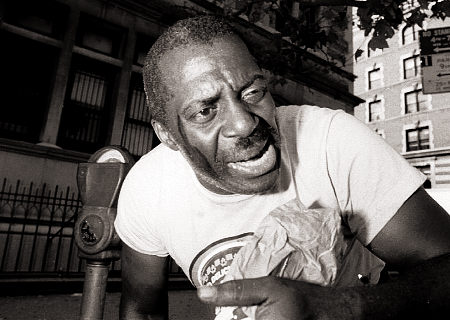
The bad old days: Larry Hogue, "The Wild Man of 96th Street," in 1993.

NEW YORK POST
July 27, 2012

Homelessness, Inc.
by James Panero

The social-services industry’s war on the Upper West Side slows, but it never ends.

Just last week, Robert Hess of the homeless-housing group Aguila informed Community Board 7 that he means to build a 400-person “super shelter” on West 95th Street.

So what? you say. The neighborhood has never looked better.

I agree — and I’ve lived there most of my life.

Yet I recall how, starting in the 1970s, the neighborhood descended into chaos — because a coalition of politically connected developers, nonprofits, labor unions and government agencies did its utmost to turn the area into a dispensary for social services.

Under cover of compassionate rhetoric, the social-services industry used public funds to turn the Upper West Side’s private residential buildings into welfare hotels, homeless shelters, halfway houses and methadone clinics — inundating the neighborhood with crime, homelessness and drug abuse.

Today, the balance has tilted toward gentrification, but several recent reversals show that we can’t take the gains for granted.

Whenever real estate stagnates, the industry spies an opening. In a depressed housing market, it has greater purchasing power. Back in the 1990s recession, New York magazine declared, “Small business is no longer the dominant industry on the Upper West Side. Homelessness is.” The city was going broke, yet there was “explosive growth of the social-service sector.”

The influx of undesirable new residents drove rent-paying tenants out of their apartments. The worst off were forced into the streets and thus into the hands of the homelessness industry — which housed them at four times the cost, sometimes in the same buildings they’d been driven out of in the first place.

The rising disorder helped the industry buy up Upper West Side housing more easily. The obvious public presence of a mentally ill population also let politicians claim that the need for social services was growing. In fact, the rise of the social-services agencies was what had introduced that population in the first place.

Lately, the industry has zeroed in on the neighborhood’s SROs — buildings with “single-room occupancy” apartments. It aims to import and house the most destructive populations it can find — like people with both mental-health problems and drug dependency, a dual diagnosis known in the industry as MICA (for “mentally ill, chemically addicted”).

Placing a MICA population in what is known as “supportive housing” secures the highest possible government funding. The agencies also plant these profoundly troubled new residents alongside the remaining SRO tenants to drive them out.

Aaron Biller, president of the local group Neighborhood in the Nineties, describes the fight as a game of Whac-A-Mole: The industry pops up in one building after another.

Take St. Louis Hall, a six-story residence on 94th Street, just steps from Riverside Park. The Lantern Organization, a nonprofit housing developer, and its for-profit wing, the Lantern Management Group, bought the building to convert it into a MICA facility. Even as it adds another story, Lantern is now trying to push out existing tenants by threatening to house them side by side with the MICAs. For each “special-needs” tenant that Lantern can squeeze in, investors can earn more than $3,000 a month from government agencies paying to house them.

For a while, SRO owners tried to keep their buildings out of the industry’s hands by turning them into European-style budget hotels. The regular tenants often cheered the change, since it meant new amenities and added security and staff. Local merchants welcomed the tourist trade.

But our local political leaders thought otherwise. In 2006, City Councilwoman Gale Brewer teamed up with state legislators Richard Gottfried, Linda Rosenthal and Liz Kreuger to outlaw the new hotels — leaving the SROs at the industry’s mercy.

Late in 2010, I watched as one building, the Alexander Hotel on 94th Street, signed a contract with Samaritan Village, a Queens-based substance-abuse and mental-health center, to convert it into a 200-bed homeless facility. The community fought that conversion to a stalemate. But now comes Aguila, out to put a 400-bed shelter on 95th.

Within the last two weeks, a deranged man, Bernardo Paulino, who’d been living in a shelter for HIV patients on West 95th, allegedly stabbed the desk clerk to death. Across town, Curtis Forteau, a schizophrenic homeless man, randomly attacked Sabatha Tirado with pepper spray and a knife, cops say.

Passing through a revolving door of city agencies, New York’s mentally ill homeless population is a time bomb. That’s why a “fair share” law in the City Charter requires that social-services facilities be evenly distributed through all neighborhoods. Yet West 94th and 95th streets alone have seen a half-dozen homeless shelters, treatment centers and halfway houses proposed in recent years.

A 2008 survey revealed that of the supportive-housing units across Manhattan, 21 percent — 1,978 units — were on the Upper West Side. The Upper East Side, by comparison, had 93 units.

The Upper West Side is known for its social compassion, but that compassion has long been abused by developers and politicians who profit off failure in the neighborhood. More and more, my neighbors have realized what’s going on.

For the moment, the neighborhood remains beautiful and vital — but the battle for the Upper West Side is far from over.

Adapted from the Summer issue of the Manhattan Institute’s City Journal.

UPDATE:  As I mention in my article, the "dual diagnosis" homeless are known as MICA, for "mentally ill chemically addicted." They are most in need of assistance, but even when the gov't pays out $3000 per person a month to the homelessness industry, they don't get the care they need.

After this editorial came out, homeless residents from two different shelters independently called me up to express agreement with my piece. The policy of warehousing these people in residential communities is a failure--a short sighted government attempt to save money without consideration of the long term costs or collateral damage to communities. Willowbrook, a deplorable institution for mentally disabled children in Staten Island exposed in the 1970s, was a true disaster, but the mass deinstitutionalization that resulted has now gone to the opposite extreme.

One solution is that we need to reconsider re-institutionalization and put resources into modernizing our mental health institutions. Some observers have considered calling such a movement "FORMICA," because it would actually help these patients in need rather than just the social services profiteers. 

Supreme Court should have taken the Harmon rent control case


Do you have the right "real estate karma" to rent here? The UWS Harmon house with its three rent-regulated tenants. 

NEW YORK DAILY NEWS
April 24, 2012

Supreme Court should have taken the Harmon rent control case
by James Panero

Current law allows for lavish living, practically for free

On Monday, the U.S. Supreme Court refused to hear an appeal from James and Jeanne Harmon, the owners of two townhouses on West 76th St. who have challenged the constitutionality of rent control.

In Harmon v. Kammel, the Harmons claimed that such controls meant that the government has essentially made them the private funder of a welfare program. It had also illegally taken their property in violation of the 5th Amendment, which reads that “no person shall be . . . deprived of life, liberty, or property, without due process of law; nor shall private property be taken for public use, without just compensation.”

Rent control, they argued, has taken their private property “without just compensation.”

When the Harmons took ownership of their two small buildings, which had been in the family since 1949, they also got the tenants occupying three rent-controlled apartments. By law, these tenants now lease their apartments at 59% below market rate with lifetime tenure and generous succession rights.

A decade ago, one of Harmon’s tenants even bragged to a newspaper that he lived there “practically free” due to his great “real estate karma.”

Monday’s Supreme Court decision might only sound like a setback for landlords like the Harmons, but really it’s bad news for our entire city, which has long been the victim of a disastrous and near fatal experiment in price fixing. This is especially true for neighborhoods like the upper West Side, where I have been a lifelong resident.

Rent control was an “emergency” measure put in after World War II that stayed on the books for political convenience, even as it nearly bankrupted our city’s aging housing stock. These laws, which came out of a fear of the dangers of the free market, in fact demonstrated how government-manipulated pricing could be far more destructive than market forces.

With rents, services and evictions all regulated by the legislature and the courts, the city and state became the absentee landlords of neighborhoods like the upper West Side.

Power flowed from a politician’s apparent ability to depress rental rates for existing tenants while “taking on” the buildings’ now captive owners for diminishing services.

The city’s price controls, among the most stringent in the country, meant that the rate of apartment turnover plummeted. This created an artificial apartment shortage that continues to raise the rental rates of new construction. Since lower rent also meant that existing owners had less revenue for upkeep, for years aging buildings decayed for lack of funds, meaning that politicians could exert even greater rhetorical leverage over their “slumlord” conditions.

Historically, rent control has exacted its heaviest toll on the very tenants it purports to serve. The wealthy could maintain multiple residences while keeping their sprawling and under-used rent controlled apartments off the market.

Corrupt tenants learned to manipulate their rents even further by calling in phony complaints to the Department of Buildings and suing for bogus “diminution of services” in order to tie up rate increases in litigation (the practice remains commonplace today). Meanwhile, average, honest renters became hostage to the artificially depressed rents of their apartments as rent control diminished surplus and drove up the prices of alternative rental apartments.

Even as their building and their neighborhood collapsed around them, they were often unable to afford to relocate and became increasingly captive to the whims of a political class that purported to have a say in rental rates.

What saved New York wasn’t rent control. It was the cooperative revolution. Stocked with rent-controlled and rent-regulated tenants, the aging buildings in neighborhoods like the upper West Side, despite their grandeur, became next to worthless to their owners.

In the 1970s and 1980s, non-eviction plan coop conversions finally allowed owners to sell shares of their buildings to their own rent-controlled and rent-stabilized tenants, who could then invest their capital and sweat equity into the restoration of the neighborhood. Rather than taking on the landlords, as landlords themselves they took on the squalor of their neighborhood and restored areas like the upper West Side to what we see today.

Despite the damage done to our neighborhoods, rent control and rent regulation still feeds our city’s political machine. In 2008, Rep. Charlie Rangel, with a reported net worth of $566,000 to $1.2 million, was even caught taking up four rent regulated apartments for his personal use.

If the courts won’t take it on, the time has come for New Yorkers to do the right thing in the voting booth and say no to a system that has given their politicians a free ride while damaging their neighborhoods almost beyond repair.