Auden the Admirable

Dara writes:

I have decided that I admire the work of 20th-century British poet W.H. Auden more than I love it.

I applaud Auden's moral seriousness, his commitment not to turn a blind eye to the horrors, including World War II, of his time. I applaud his deep investment in poetry, and yet his incapacity to inflate either his own influence or his verse's importance. I find this combination of profound dedication and self-deprecation very appealing, and also missing in many of today's poets.

Auden's command of the English language astounds me. Has there since Shakespeare been a writer so on top of his game in that regard? The poet's flexibility with form invigorates me. Really, he could do it all, and he bore the mark of a master, which is that his formal poems never seem like exercises. Instead, his rhymes fall trippingly off the tongue. I admire Auden the person. He seems like a congenial man with a sense of humor.

His personality was revealed last night at a tribute to him at New York's 92nd Street Y. The centenary of his birth was about two weeks ago. Oliver Sacks and Charles Rosen spoke, and charmed. Sacks has such a Princess Bride of a British voice--"Twu Wuv." Auden's friend Shirley Hazzard rambled at length. Unfortunately she seemed not get her bearings and repeated the phrase "he had good manners" several times.

What I gleaned from the event is that certain rhymes and vistas of Auden wow me, yet I get lost in the poems as a whole. He was such a philosopher; his discursiveness can ruin poems for me. I'm not left reeling from one sustained image, as I am with work by George Herbert, John Keats, or Robert Frost, as examples.

But lines do shine, and I do thank Shirley Hazzard for contributing to the evening this, about three friends sharing an idyllic June day:

That later we, though parted then,
May still recall these evenings when
Fear gave his watch no look;
The lion griefs loped from the shade
And on our knees their muzzles laid
And Death put down his book.

I celebrate Auden the humanist and knower of human truths.
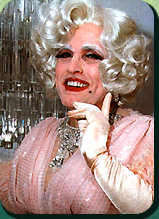
That crazy right-wing conference? Yeah, I was there.

James writes:

While Dara chose to stay home with Bosco, our tenured cat, I headed down to Washington last week to report on the annual Conservative Political Action Conference. It was an interesting year to be at CPAC. Day one the headlines read: Giuliani is a go, but McCain won't do CPAC. From The Washington Times:

Sen. John McCain is the only major Republican presidential candidate who will not address the nation's premier gathering of conservatives this year.

Sponsors of the Conservative Political Action Conference, which begins today in Washington and brings together thousands of conservative leaders and grass-roots activists, say the Arizona Republican has "dissed" organizers by attempting to schedule a private reception for attendees after rejecting invitations to speak at the event.

"It was a classical McCain move, dissing us by going behind our backs," said William J. Lauderback, executive vice president of the American Conservative Union.

With the Brownback campaign slipping cards under CPAC doors and a person in a dolphin suit walking the convention floor (the message: Romney is a 'flip-flopper'), this year's CPAC was pure American tango. Will an outcast conservative base (not a word is spoken in favor of the Bush White House) be wooed by a buffed out, high maintenance, $100-million-rasing Republican candidate for '08? Will a conservative underdog get the last dance? One thing's for sure: conservatives represented at CPAC weren't nearly ready to settle on this year's prom queen, even if this queen is ready to settle for them. (Yes, this is an undoctored picture of Giuliani in drag. You've got to wonder, is America ready for New York humor?)

Also at CPAC, Ann Coulter proved that Stephen Colbert doesn't have a lock on playing the conservative fool (when will they stop inviting this one-woman John Birch Society to the party).

In the end, while Giuliani made a rousing speech on the convention floor, Mitt Romney won the 2007 CPAC 'straw poll' . More here.
One rumor spread through the Shoreham Hotel afterparties that Giuliani's personal and political skeletons may overcome his Presidential ambition. A forensic expert at the event told me he had $5,000 riding on the belief that Giuliani would pull out of the race once he raises more cash. Here is an article that, while not backing up this cynical claim, at least indicates Giuliani's troubles at home. (Gosh, and I remember Andrew Giuliani when he was just an annoying pubescient at his father's first mayoral inauguration.)

The Lives of Others

Dara writes:

"The Lives of Others," the German winner of the Oscar for Best Foreign Language Film of 2006, is a beautiful movie. What is it about Germans, that they can produce both the most extraordinary artwork and such brutal catastrophes?

The director, Florian Henckel von Donnersmarck, is my age, and already has incredible skill. His is a subtle movie that doesn't hit you over the head. Extreme violence is portrayed, but none of it physical. The torture shown is psychological, and maybe I'm relieved because I just saw "The Departed," but it was nice to see a quiet film, though an equally powerful one.

We don't tend to think about the gruesomeness of repression, how horrible it is not to be able to think freely. We have more obvious, genocidal terrors facing us. But "Lives" shows the terror of being an expressive person and not being able to expres yourself. The GDR created a poisonous regime in which you couldn't trust your neighbors. The Secret Police, the Stasi, employed 100,000 workers, yet 200,000 informants. They were obsessed with record-keeping. The Stasi protagonist in this movie, his sole job is to record every movement of a playwright and his girlfriend. We learn quickly that the only reason the playwright is to be watched is a high Stasi official would like hiim out of the way so the official can sleep with the playwright's girlfriend.

I lived in eastern Germany not long after the Wall came down. At the university where I was employed, there were "maintenance workers" whose sole job was to water 30 feet of potted plants. Since everyone had to be employed in the socialist state, meaningless jobs were created. This movie faithfully captures the dreariness of communism: the apartment complexes, the bland party headquarters, of course the Trabant cars in which so many were smuggled. The movie captures the split quite well. On the one hand the politburo types, on the other hand the gorgeous intellectuals. Sebastian Koch plays the lead intellectual, and by golly does he give George Clooney a run for his money.

Watching this film, I both missed my time in Berlin and loathed it. In one scene, the playwright carries groceries home in a wooden crate. Germans take their aversion to plastic bags and supermarket conveniences to an extreme. I almost fainted from fright when I stood in a checkout line and realized I had not brought my own bags. "Schnell, schnell," I heard. "Achtung."