Ridgewood Comes into its Own

Ridgewood-logo

James writes:

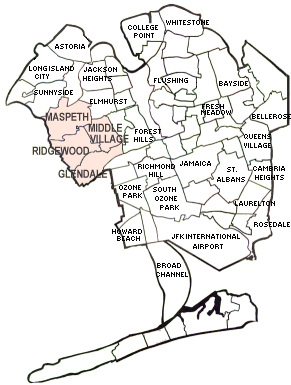
History isn’t always so precise, but it’s possible to declare May 12 as the day when the arts of Queens came into its own. On that Sunday, the Queens Museum of Art organized what it promised would be a “historic art crawl” through an event called “Actually, It’s Ridgewood.”
Qnmap

The title was an amusing response—a declaration of independence aimed at Bushwick, Brooklyn, the neighborhood bordering Ridgewood that usually claims the Queens arts spaces as its own. The symbol for the event included a rendering of Arbitration Rock, the traditional border delineating the two boroughs, and included the motto “vere, Ridgewood est.”

Among the stopovers was the ersatz “Bushwick” gallery building 1717 Troutman, the influential galleries Valentine and Small Black Door, and the temporary sculpture garden, curated by Deborah Brown and Lesley Heller, now at the Vander Ende-Onderdonk House, the oldest Dutch colonial building in New York City.

The event became the talk of Twitter and was a coup for the Queens Museum (the Brooklyn Museum, which must need a trail map whenever it steps off Eastern Parkway, was notably absent from the proceedings).

The crawl also showed how this neighborhood, once the bastard child of Bushwick, is coming into its own.

One Ridgewood show I am especially looking forward to it Cathy Nan Quinlan and Kurt Hoffman at Valentine Gallery, opening June 1. 


There's a gallery in there: Valentine Gallery (red brick building), 464 Seneca Avenue, Ridgewood, Queens 
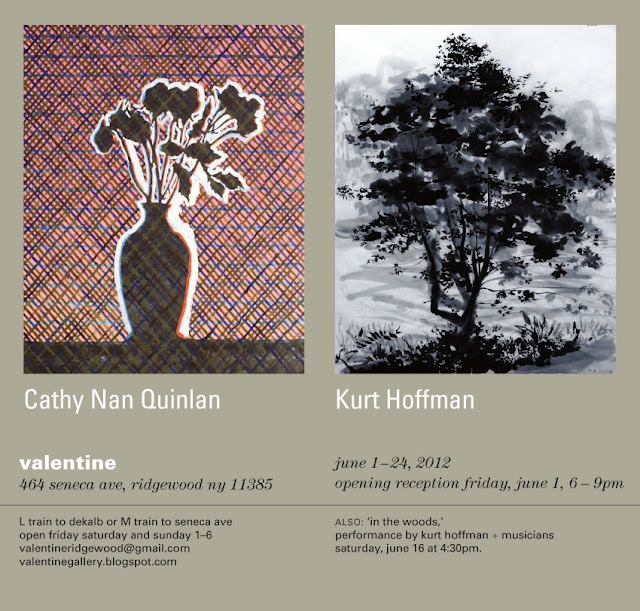
Postcard-with-kurt-event

B_Morandi_22

Cathy Nan Quinlan, The Morandi Series: The Candy Dish (2010). 

B_Morandi_03_Nn
Cathy Nan Quinlan, The Footed Bowl (2009)

--excerpted from Gallery Chronicle, The New Criterion, June 2012

Carol Salmanson & Stephen Truax at Storefront Bushwick

TruaxStephen_Xena_20x16_04
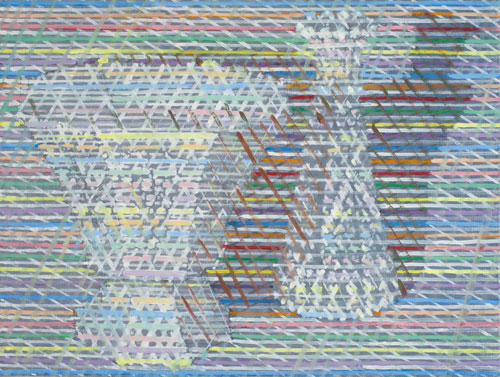
Stephen Truax, Untitled (from the Xena series), (2011)

James writes:

Storefront Bushwick recently featured work by Carol Salmanson and Stephen Truax

Deborah Brown, the owner of Storefront Bushwick, has a particular talent for seeing cross currents and pairing artists. Salmanson makes wall sculptures of led bulbs, Truax paints geometric abstractions on canvas, but both artists seem to work with light.

Truax’s symmetrical forms are like the shapes of a kaleidoscope, sharing some kinship with the prisms that reappear in the paintings of Brooke Moyse and the floodlights of Halsey Hathaway’s circles—two artists who have shown here. Truax also revisits Bauhaus textile and the radiance of Charles Sheeler.

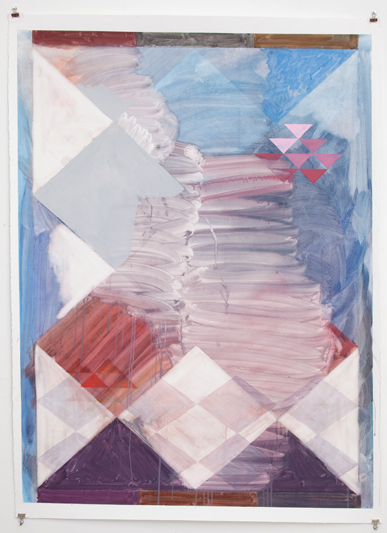
TruaxStephen_Xena_72x48_02
Stephen Truax, Untitled (2012)

At Storefront, he still seems to be working through a range of different paint handling, and I found the best pieces had the cleanest edges.


Carol_salmanson_www
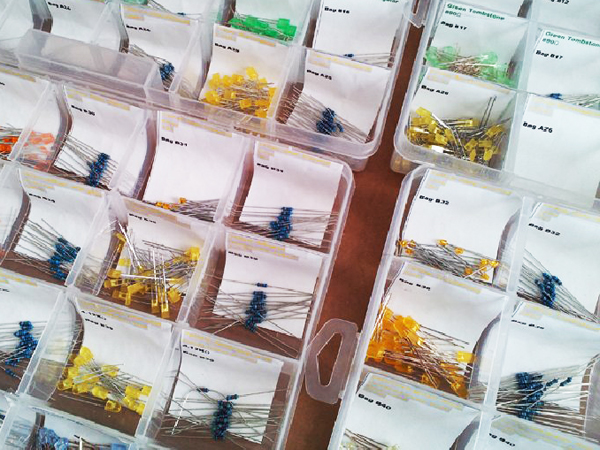
Carol Salmanson's medium: her collection of LEDs

Salmanson is also an experimenter, taking up the led, or light-emitting diode, as her medium. She uses these tiny bulbs and wires to carve out illuminated shapes on a plexiglass ground. The technique, clearly labor intensive, is full of promise, and Salmanson has a delicate sense for how the wires can become a form of drawing.

Salmanson
Carol Salmanson

The installation at Storefront had a remarkable glow, with some work using multicolored bulbs (made of old leds she has collected) and others with a more monochrome palette. I preferred the latter, which seemed more cohesive and did not overpower the compositions with multiple colors. I also question some of the shapes Salmanson traces out—calligraphic doodles that are then embedded with lights. The leds tie down many of these forms like little buoys, with the energy no longer running across the picture plane but radiating out as light into the gallery space. A different, perhaps simpler, approach to composition might solve these formal concerns.

--adapted from Gallery Chronicle, The New Criterion, June 2012
Burrata in the Bronx

431719_10150707483536900_97661261899_11667221_183001618_n

Arthur & Crescent Avenues, Bronx in 1940

James and Dara write:

It helps to bring a grandmother to Arthur Avenue in the Belmont section of the Bronx. The real "Little Italy" of New York City is a multi-generational family affair. Girl Scouts sell cookies on the streets, the proprietors boast about how far back in the bloodlines their businesses go, and the low prices are out of another era.

This is no Italian-American toy town. Every day, a dense assembly of specialty purveyors offers up some of the highest quality meats, cheeses, breads, and pastas found anywhere in New York, even as the neighborhood has yet to make it on every foodie map (their loss). With Brooklyn getting all the culinary attention these days, now is the right time to venture up to this epicure's eden in the Bronx. 

Driving to Arthur Avenue is the easiest way to get there. We've never had a problem with street parking. The district is close to the Bronx Zoo and Fordham University, and the closest train station is the Fordham stop on Metro North, about eight blocks away.

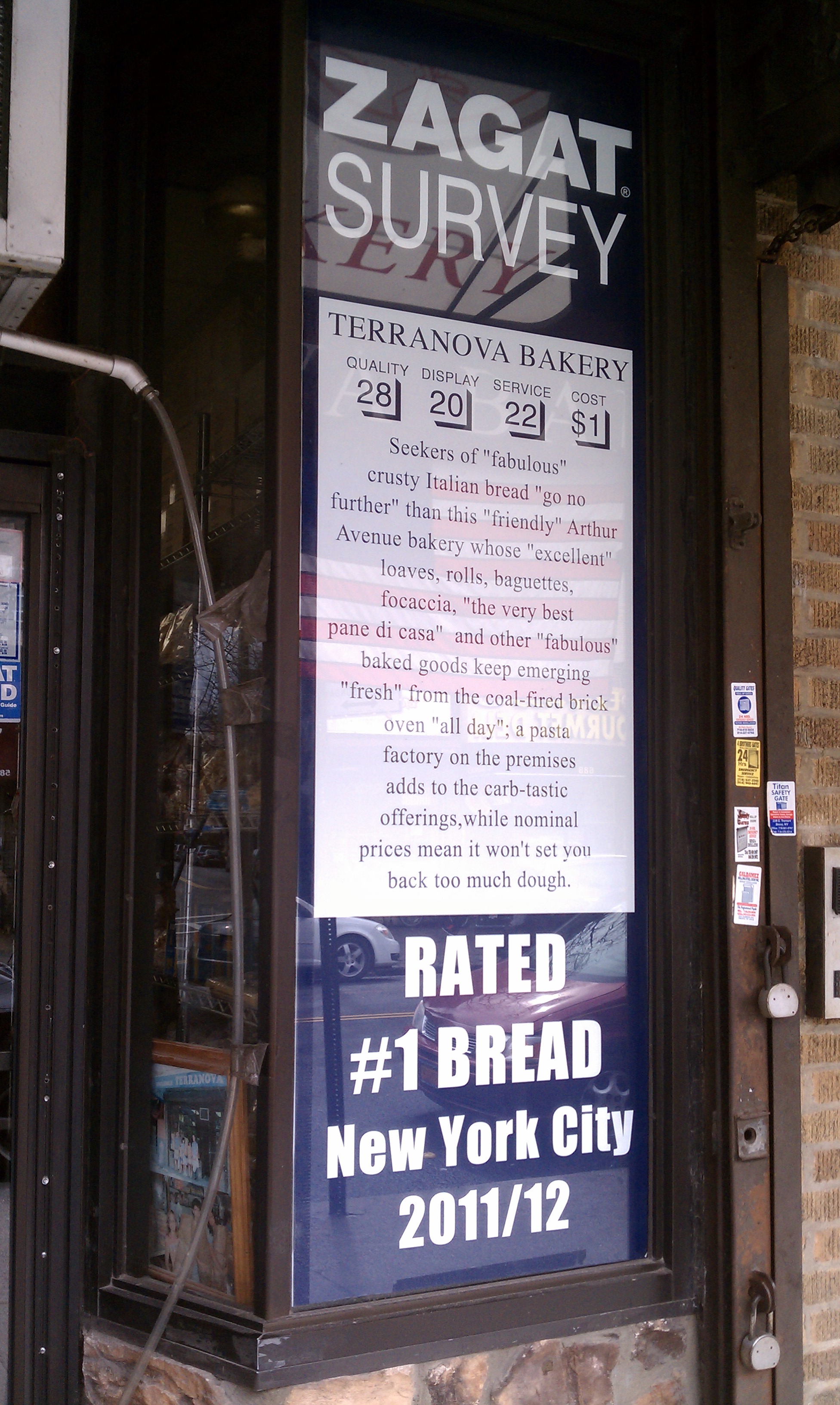
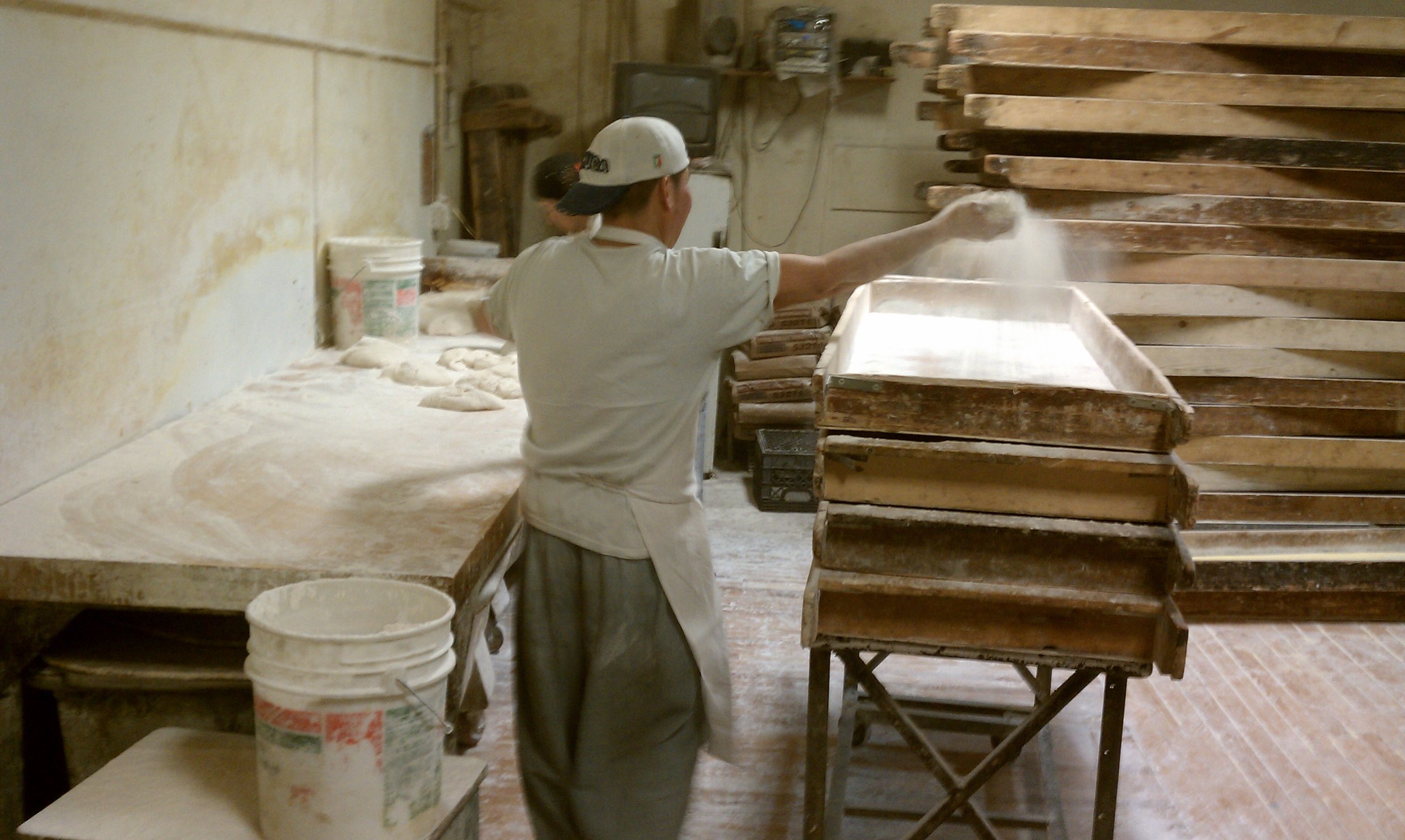
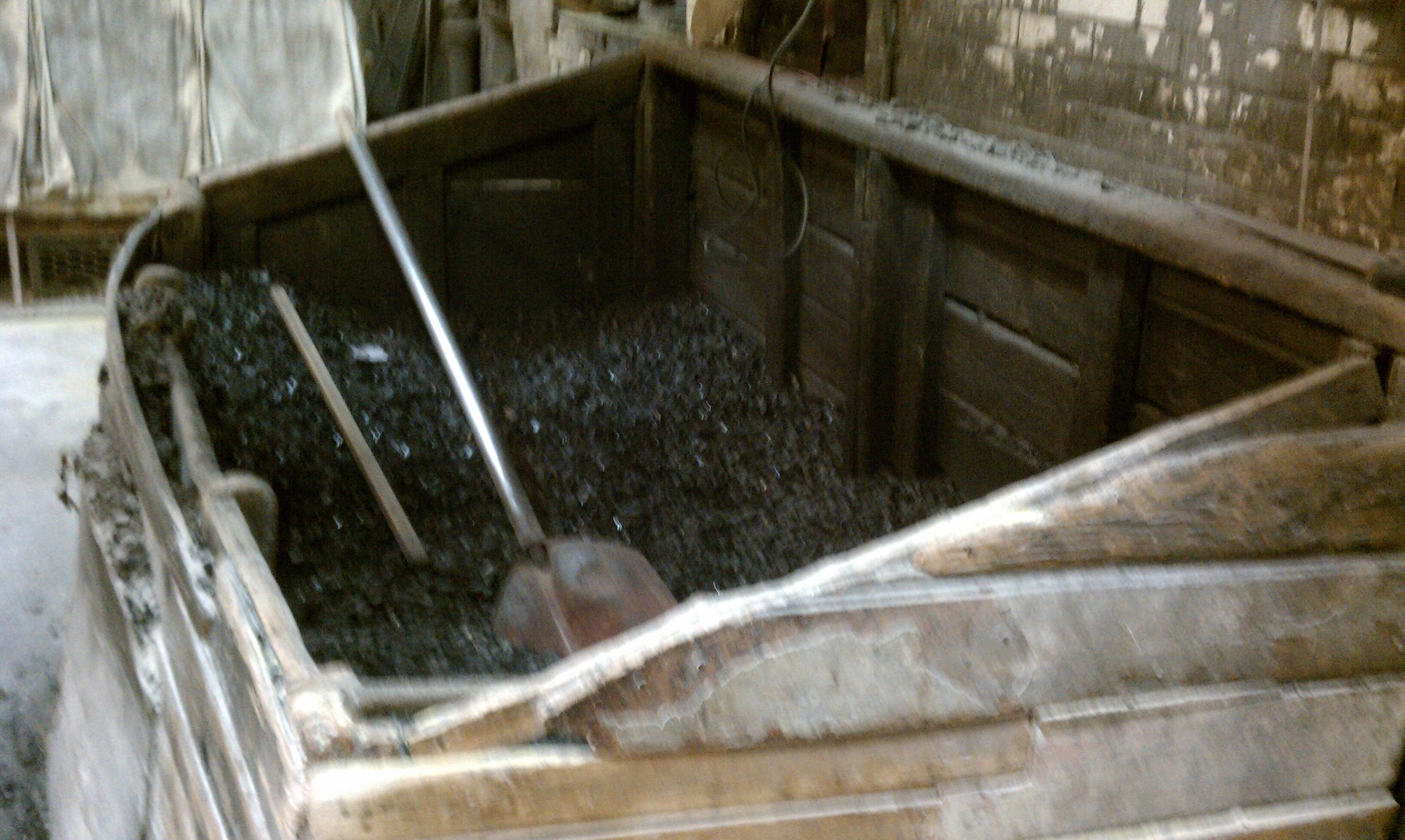
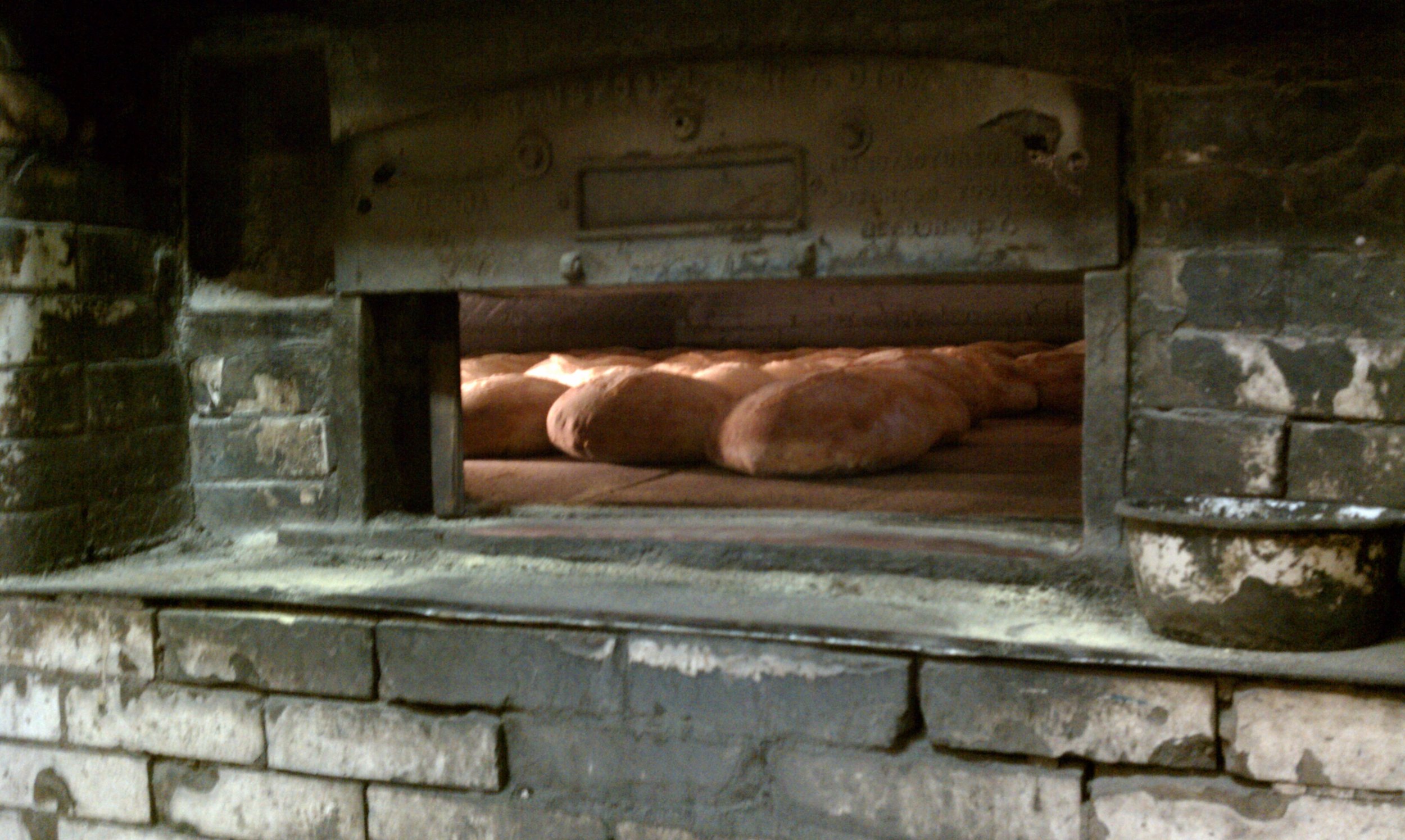
The shopping district runs in an L up Arthur Avenue to 187th Street and then heads east for several blocks. We like to start at Terranova Bakery at 691 East 187th Street. An unassuming storefront masks an original coal-fired oven, where some of the best bread in the city is baked every day and now delivered by special truck to many of Manhattan's top restaurants. The wonderful owner, Pietro, led us into the back to see the bakery in action. (All photographs below by James Panero)

IMAG0494


IMAG0493

IMAG0489


IMAG0488


IMAG0487


IMAG0486


IMAG0485


IMAG0484


IMAG0482


IMAG0481


IMAG0480

 Next up is Joe's Deli for fresh mozzarella and burrata--mozzarella filed with cream.

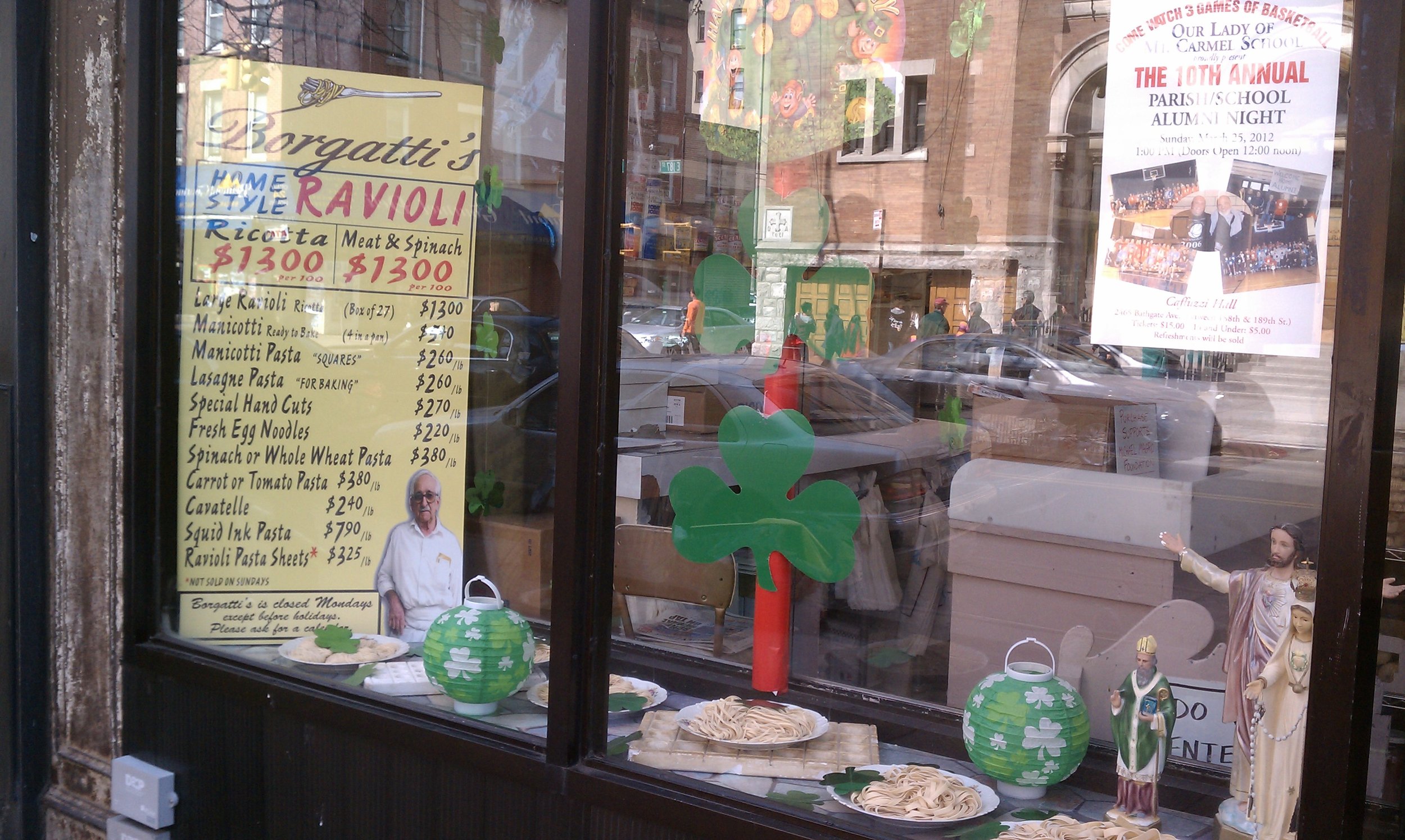
Another block west is Borgatti's Ravioli and Egg Noodles. The pasta is cut to order and the ravioli comes in sleeves wrapped in paper. 

IMAG0602

IMAG0603

IMAG0604


Above, two essential stops: Vincent's Meat Market and Teitel. At Vincent's, the aromatic broccoli rabe sausage spiraled in a circle and held together by wooden sticks is a favorite. Cosenza's Fish Market one block south sells raw oysters and clams on the street. For lunch there's Zero Otto Nove, one of chef Roberto Paciullo's three New York restaurants and named for the telephone code in his childhood home of Salerno. And for desert: can't beat the cookies at Madonia Brothers Bakery.