Kingdom Come

THE NEW CRITERION, November 2025

Kingdom Come

On “To the Holy Sepulcher: Treasures from the Terra Sancta Museum,” at the Frick Collection.

Among the many miracles to come from Jerusalem, “To the Holy Sepulcher: Treasures from the Terra Sancta Museum,” now on view at the Frick Collection, is the latest revelation.1 The wonders of the works on display, with some sixty-eight individual pieces, are only outshone by the tales of their survival and the connections these treasures maintain to that singular place.

Since its rediscovery in the fourth century A.D., the location of Jesus’s tomb—the Holy Sepulcher—has been the most important pilgrimage site in Christendom. In the seventeenth and eighteenth centuries, at a time when European monarchs could not visit the Holy Land, then under Ottoman rule, the courts of Europe sent treasures to the church built over the tomb for use in rituals and veneration. “To the Holy Sepulcher” represents the first pilgrimage of these objects stateside. The exhibition is the result of an unprecedented loan from the Custody of the Holy Land, the Franciscan division charged since A.D. 1309 with protecting the Roman Catholic treasures in Jerusalem and beyond. The American tour anticipates the opening of the Terra Sancta Museum, a Franciscan facility now under construction at the Monastery of Saint Saviour, by Jerusalem’s New Gate, designed to safeguard and display these objects back home.

The astonishing history of these treasures is made all the more remarkable by their appearance in New York. As the Holy Land comes to Fifth Avenue, we must thank Xavier F. Salomon, the Frick’s deputy director and chief curator. He organized this exhibition after first learning about the Terra Sancta Museum a few years ago, with the help of Jacques Charles-Gaffiot and Benoît Constensoux of the Terra Sancta Museum’s scientific committee. The exhibition marks this young curator’s final effort at the Frick before his departure for the Calouste Gulbenkian Museum in Lisbon, Portugal, where he is the incoming director. For a scholar so invested in both the fine and decorative arts of Europe, “To the Holy Sepulcher,” we might say, is a fitting swan song of Salomon.

The exhibition leads off with the one item here actually created in the Holy Land: a model of the Church of the Holy Sepulcher itself, crafted in the eighteenth century. Be sure not to miss it just outside the gallery entrance; on the day I visited, it was not easy to double back. Carved in Bethlehem of local olive and pistachio wood, mother-of-pearl from the shells of the Red Sea, and camel bone, the dollhouse-like assembly was created to be a gift for Europeans from the Franciscans—a memento from rather than for the Holy Sepulcher. The jeweled model reminds us of all this footprint contains and how this church has come down to us through time.

Look up this church in the index of Jerusalem, Simon Sebag Montefiore’s recent history of the city, and the subcategories give some indication of the site’s vicissitudes:

Church of the Holy Sepulchre: and Arab conquests . . . construction by Empress Helena . . . and Crusades . . . daily rituals . . . and Descent of the Holy Fire . . . destruction by fire . . . Fatimid destruction . . . latrines . . . and Mongol raids . . . and Napoleonic invasion . . . Persian destruction . . . and religious conflict . . . and Tartar conquest . . . and Turkish conquests . . .

The layout of the Church of the Holy Sepulcher is far different from the grand vision of the Vatican or what one might expect from this axis mundi of Christianity (there is, in fact, a spot in the church marking the very axis point). A concatenation of surprisingly small Romanesque buildings, all of which were built, burned, and reconstructed over various periods, the church has been a site of veneration, speculation, and contention for two millennia—and is made all the more wondrous in its strangeness. No two of the extant floor plans of this church look exactly alike. It is easy to get turned around among its domes and passages, its priests and pilgrims. Make a left turn at the Chapel of Adam, where the blood of Christ ran through Adam’s skull; go past the Stone of Unction, where the body of Christ was cleaned before burial and which pilgrims now rub down with oil; and you might come across a wall of medieval graffiti carved to collect its holy dust.
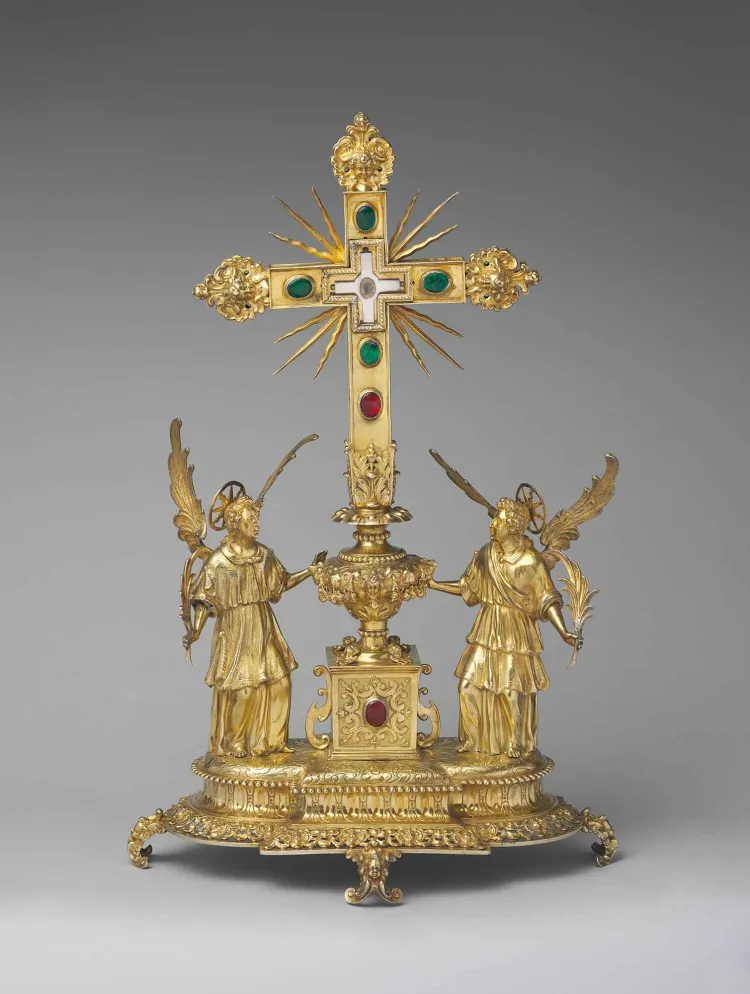
Robert Landry, Reliquary of the True Cross, 1628–29, Gilt silver and glass, Terra Sancta Museum, Jerusalem.

Today the church is located within the Old City, a short walk from the Temple Mount through narrow, winding streets of Jerusalem stone, and is little changed from that eighteenth-century model. In the time of Jesus, the tomb was part of a sloped cemetery that existed just outside the city walls. Following Titus’s destruction of Jerusalem in A.D. 70, Hadrian recast the city as Aelia Capitolina in A.D. 130. Even by then, the tomb had become a site of veneration for the earliest Christians. Hoping to redirect their attention to the Roman gods, Hadrian walled off the tomb, flattened the site, and constructed a temple to Venus in its stead. Nevertheless, the memory of the location endured. Two centuries on, as Rome accepted Christianity with the Edict of Milan, Helena of Constantinople—mother to Emperor Constantine, and Saint Helena to Christians—traveled to Jerusalem and reopened the tomb in 326; her son dedicated the new church on its site in 335. In a nearby well, Helena also discovered pieces of what she believed to be the True Cross. The site of the Crucifixion, known as Calvary Hill or Golgotha, is just 150 feet from the tomb and was soon incorporated in the church grounds.

Regarding the tomb’s history, Evelyn Waugh wrote in his introduction to Helena, his historical novel of 1950, that

if we do accept its authenticity we must, I think, allow an element of the miraculous in its discovery and identification. We do know that most of the relics of the True Cross now venerated in various places have a clear descent from the relic venerated in the first half of the fourth century. It used to be believed by the vulgar that there were enough pieces of this “true cross” to build a battleship.

Much as Waugh encountered them, today the tomb, Calvary Hill, and Helena’s well—in addition to archaeological evidence of Hadrian’s Temple of Venus—are all connected under one roof within the warren of buildings that comprise the Church of the Holy Sepulcher. Making this real estate even more complex—and explaining its general appearance of deferred maintenance—the Roman Catholic, Greek Orthodox, Armenian, Coptic, Syrian, and Ethiopian churches all share in the church’s administration under an arrangement reached in 1757, in the days of the sultan, known as the Status Quo.

“To the Holy Sepulcher” is made up of a selection of precious objects used by the Latin church in its annual rituals around the site and in other places under its protection in the Holy Land. Only recently have these objects been, like the tomb itself in Helena’s day, brought to the light—in this case, after the Cuban Italian scholar Alvar González-Palacios began researching them in the 1980s and exposing them to the greater museum world (his fascinating story gets its due in the exhibition’s lavish catalogue, which also features updated photographs of these freshly cleaned treasures).

Before then, as the Franciscan custodians tell it, these treasures were hidden in plain sight—brought out for special ceremonies but otherwise squirreled away in closets and storerooms, miraculously safe from looting, vandalism, and whatever authority was ruling Jerusalem at any given time. In fact, the greatest threat to such treasures has come from intrachurch rivalry. A sanctuary lamp (ca. 1758–59) of gold and gilt silver attributed to Johann Caspar Kriedemann, showing reliefs of episodes from the life of Christ, was most likely created from the gold of earlier Latin treasure that had been destroyed by the Greek clergy in an attack on the eve of Palm Sunday in 1757. The same goes for the pair of torchères from 1762, remade in Venice by the workshop known as al San Lorenzo Giustinian from the 1,304 ounces of silver recovered by the Franciscans from those destroyed and stolen treasures.
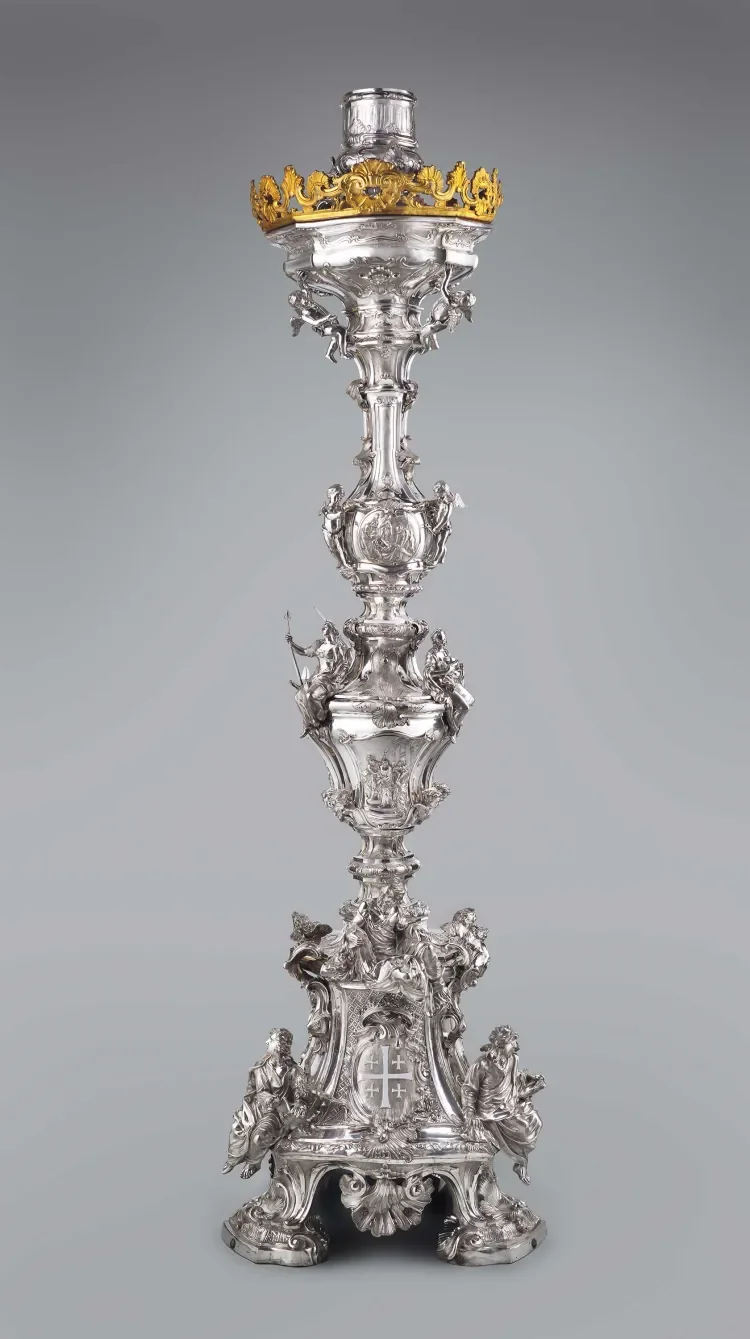
Al San Lorenzo Giustinian Workshop, Torchère, 1762, Silver and gilt silver, Terra Sancta Museum, Jerusalem.

Nevertheless, despite the challenges faced by the church and city, the many treasures in Franciscan custody at the Holy Sepulcher have fared far better than their counterparts in Europe. “To the Holy Sepulcher” contains examples of European metalwork that are otherwise no longer extant—melted down long ago for their raw materials. The sections of the exhibition are therefore divided by region of origin, denoting the French, Iberian, and Germanic sources of these gifts given by European monarchs to Franciscan emissaries for delivery to and use in the Holy Land.

It is, after all, the continuous liturgical function of these ritual objects that has defined their design and sustained them. “Their survival over the centuries is a direct result of their continued use,” says Salomon. As the outgoing director of the cultural heritage office at the Custody of the Holy Land, Friar Stéphane Milovitch explained at the Frick opening, “If the Ottomans knew we had all these kinds of things, they would have liked to take it. So during many centuries we use and we hide—but we used.”

To understand such metalwork and textile, it helps to envision it carried, elevated, illuminated, and worn. At the opening, I met one friar looking at the subtle wear on a section of fleurs-de-lys on a crozier (1654–55) created by Nicolas Dolin. He wanted to see just where the bishops grasped this imposing pastoral staff of gilt silver, glass, and semi-precious stones, made in Paris and given to the Franciscans by Louis XIV.

Nicolas Dolin, Chalice, 1661–63, Gilt silver, glass, and semi-precious stone, Terra Santa Museum, Jerusalem.

A special alchemy takes place when such treasures of sculptural relief, created from metal and stone, are held in the lamplit liturgies of the church. Objects such as Dolin’s chalice and paten (1661–63) and Jean Hubé’s ciborium (1668–69) are so finely detailed, with minuscule images from the life of Christ alongside symbols of the holy ancestors of the French kings, that these messages are more intended to be felt than seen. While European monarchs could not travel to Jerusalem in person, their presence was conveyed to the holy altars through the symbolism preserved in these finely wrought materials.

To encounter such objects in a museum setting is therefore a trade-off. Salomon has done what he can to reproduce an altarlike feel in some of these displays, with vested mannequins arranged among the treasures. Nevertheless, we experience them as never intended, not in candlelit glimpses but in close-up stares. Ornate objects such as a solid-gold Neapolitan monstrance of 1746, Antonio de Laurentiis’s throne of Eucharistic exposition of 1754, and a Neapolitan crucifix of gold and lapis lazuli of 1756 are just about too much to take in under the light of the Frick’s spare new special-exhibition space. The same goes for Robert Landry’s reliquary of the true cross (1628–29), containing at its center a fragment of Helena’s fourth-century find.

As an exhibition of holy objects, “To the Holy Sepulcher” ultimately tells us little about the liturgical role of these materials back in Jerusalem. As a display of European metalwork and textile design, however, the show connects us to relics of the European past as never before. This connection is not lost on the Franciscan custodians of these works, who rightly see American institutions such as the Frick as upholding the legacy of Christian Europe even in a post-Christian, post-European age. Today, these treasures speak to the resurrection of Western culture as much as the Resurrection from that Jerusalem tomb. In either context, they represent singular objects of faith.

  1. “To the Holy Sepulcher: Treasures from the Terra Sancta Museum” opened at the Frick Collection, New York, on October 2, 2025, and remains on view through January 5, 2026. The exhibition will also be seen at the Kimbell Art Museum, Fort Worth (March 15–June 28, 2026. 
Mock stars

NEW YORK POST, October 14, 2025

Mock stars

The famous forgers who fooled everyone — even the experts

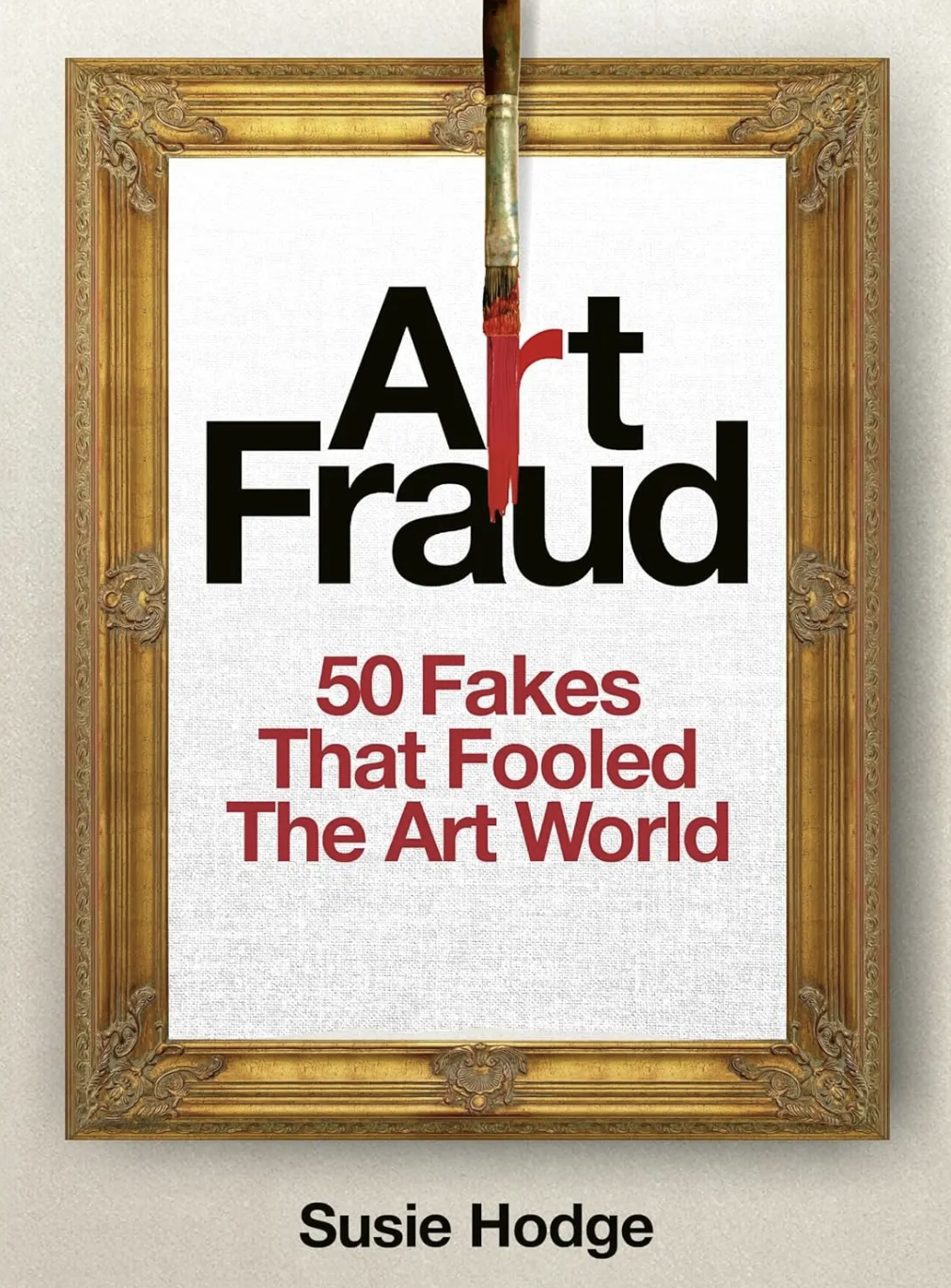
In the words of Cole Porter, “Is it the good turtle soup or merely the mock?” Art Fraud: 50 Fakes That Fooled the Art World,” the new book by Susie Hodge, will leave you wondering whether any work of art is the real McCoy. “Art fraud is rife,” Hodge begins. “Many experts believe that as much as 50 per cent of all art on the market today is forgery.”

If the 50% statistic sounds phony, you don’t know the half of it. “Art Fraud” casts a gimlet eye on the most famous forgery cases to reveal the truth behind the art world’s worst-kept secret. From the greatest experts on down to the most naïve online bidders, just about anyone can, and will at some point, be duped by the mock.

Of course, artists have always traced out the styles and techniques of others. The ancient Romans made such a business of copying Greek sculptures that scholars still cannot chisel out the source of one discus thrower from the next. Even the greatest artists played the copy game. In the Renaissance, Michelangelo passed off one of his cupids as a Roman original. Canova painted a fake self-portrait by Giorgione. And so on.

“Good artists copy; great artists steal,” said Pablo Picasso, an artist well known for taking up other artists’ innovations as his own (bonjour, Georges Braque).

The Louvre has a longstanding tradition of artists who come to copy the works on the museum’s walls. Manet even met Degas when he was copying a Velázquez painting. But there’s a difference between just duplicating a work of art and passing it off as someone else’s. At the Louvre, a copy must be stamped and cannot be created in the same size as the original. The strict French regulation tells us much about the slippery slope between copy and fraud and the latter’s temptations.

“Art Fraud” offers quick sketches of the range of famous fakers who went that extra step and succeeded in passing off their art as someone else’s, at least for a time. (Of course, it’s very possible the best of them have never been caught.) “Art Fraud” considers their various techniques and motivations — and frankly will leave you with a newfound respect for the fraudulent arts.

Often, it’s not just about the money. Ego plays a role as forgers pass off their own work as the creation of a master, whether old or modern. Sometimes forgers want to expose the art market and disrupt the way works are collected and esteemed, creating forgeries in the process that are designed to be exposed. And sometimes the forger is just another victim, paid a pittance by unscrupulous dealers to create fakes under false pretense, not even aware their creations are being used to defraud.

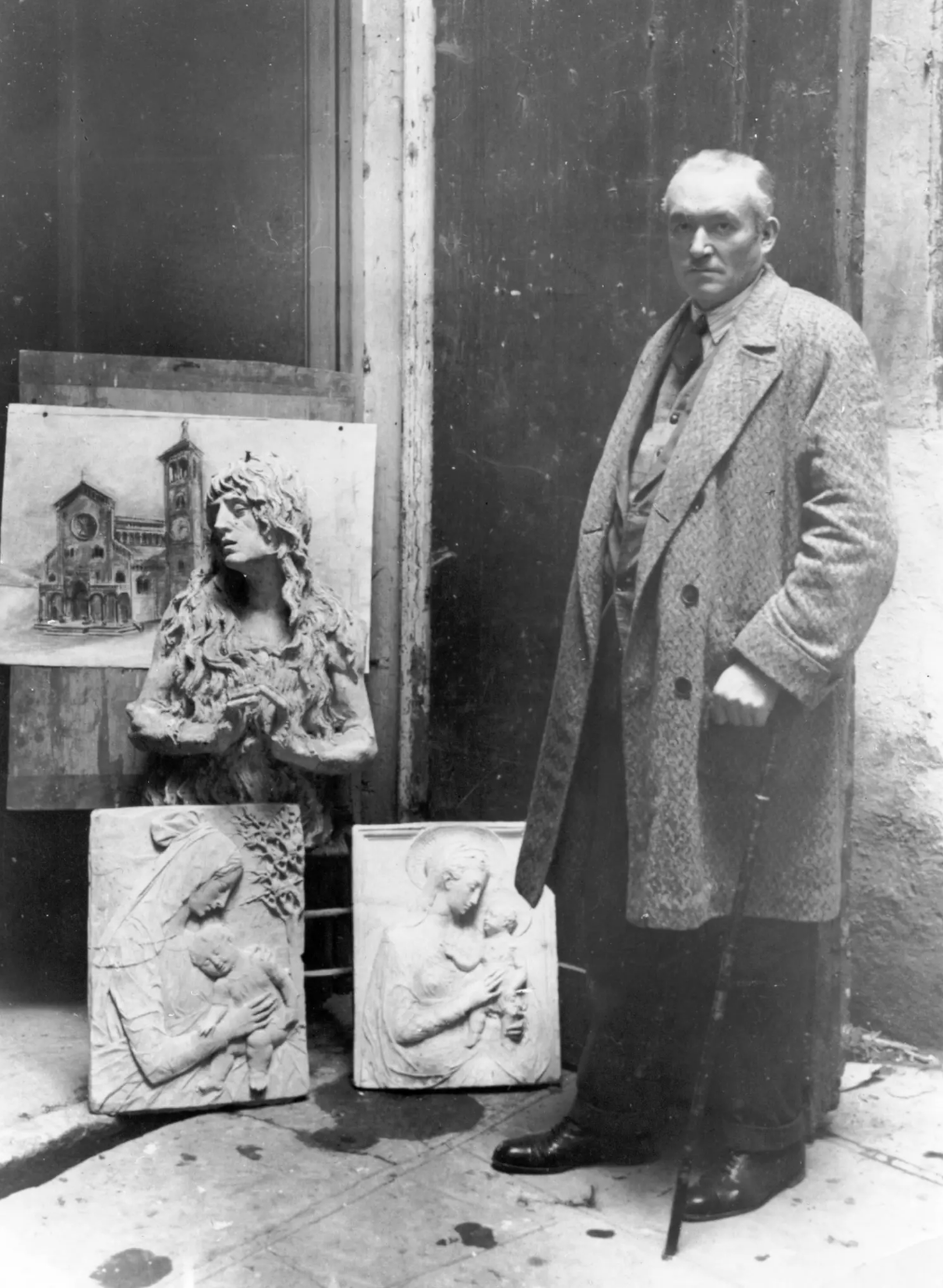
Alceo Dossena didn’t know dealers were passing off his recreations of Gothic and Renaissance sculpture as the real deal.

The Italian sculptor Alceo Dossena (1878-1937) was one such sad case. A student of the Old Masters, in the early 20th century he demonstrated an uncanny ability to carve sculptures in the Gothic and Renaissance style and artificially age them in a way that could fool even the top experts of his time. Two Roman dealers, Alfredo Fasoli and Romano Palesi, ordered up plenty from Dossena, convincing him he was creating work for an American church that had requested new statuary that looked old and weathered.

Carving in the styles of Simone Martini, Giovanni Pisano, Donatello, Michelangelo and Giambologna, Dossena artificially aged his creations in baths of urine. He scraped them, baked them and darkened their finishes to add 500 years of wear to order. Fasoli and Palesi paid Dossena a fraction of the millions they took in as his misattributed work made its way into the collections of Helen Clay Frick, the Cleveland Museum of Art, the Metropolitan Museum of Art and the Louvre. Only when new X-ray technology was applied to his sculpture, revealing modern nails, did the ruse begin to come to light.

In another era, Dossena might have been hailed as an esteemed artist in his own right. “We had witnessed the reincarnation of a Renaissance master and an Attic sculptor,” said the German art historian Hans Cürlis once the deception was discovered. Alfred Frankfurter, the editor of Art News, wrote of the “quality of sincerity in Dossena, the almost incredible ability of the man to have worked without affectation and without malevolence in the spirit of the dead past and its masters.” Dossena was cleared of any crime and continued to sculpt, but few wanted his work once the world learned the artist behind it was not an Old Master but just old Alceo Dossena.

The Dutch painter Henricus “Han” van Meegeren (1889-1947) had no such illusions. The most famous faker of all, he tossed off dozens of Vermeers and other works purportedly from the Dutch Golden Age and made the equivalent of tens of millions of dollars. At one time the Dutch art expert Abraham Bredius praised the work, declaring, “It is a wonderful moment in the life of a lover of art when he finds himself suddenly confronted with a hitherto unknown painting by a great master, untouched, on the original canvas, and without any restoration — just as it left the painter’s studio. And what a picture!”

American soldiers found in a Nazi leader’s home the work “Christ and the Adulteress” — which everyone wrongly believed Vermeer painted.

As van Meegeren sourced old canvases and ground his own pigments, his work convinced even the dreaded Nazi Hermann Göring, who traded away genuine looted art for a van Meegeren fake. Only after the war, when van Meegeren faced the death penalty for despoiling Dutch heritage during Nazi occupation, did he admit to his deception. Painting a fake Vermeer in front of an audience, he proved the only loser in his deception was the dead Reichsmarschall.

Han van Meegeren paints a “Vermeer” before an audience — proving he was a forger, not a Nazi collaborator.

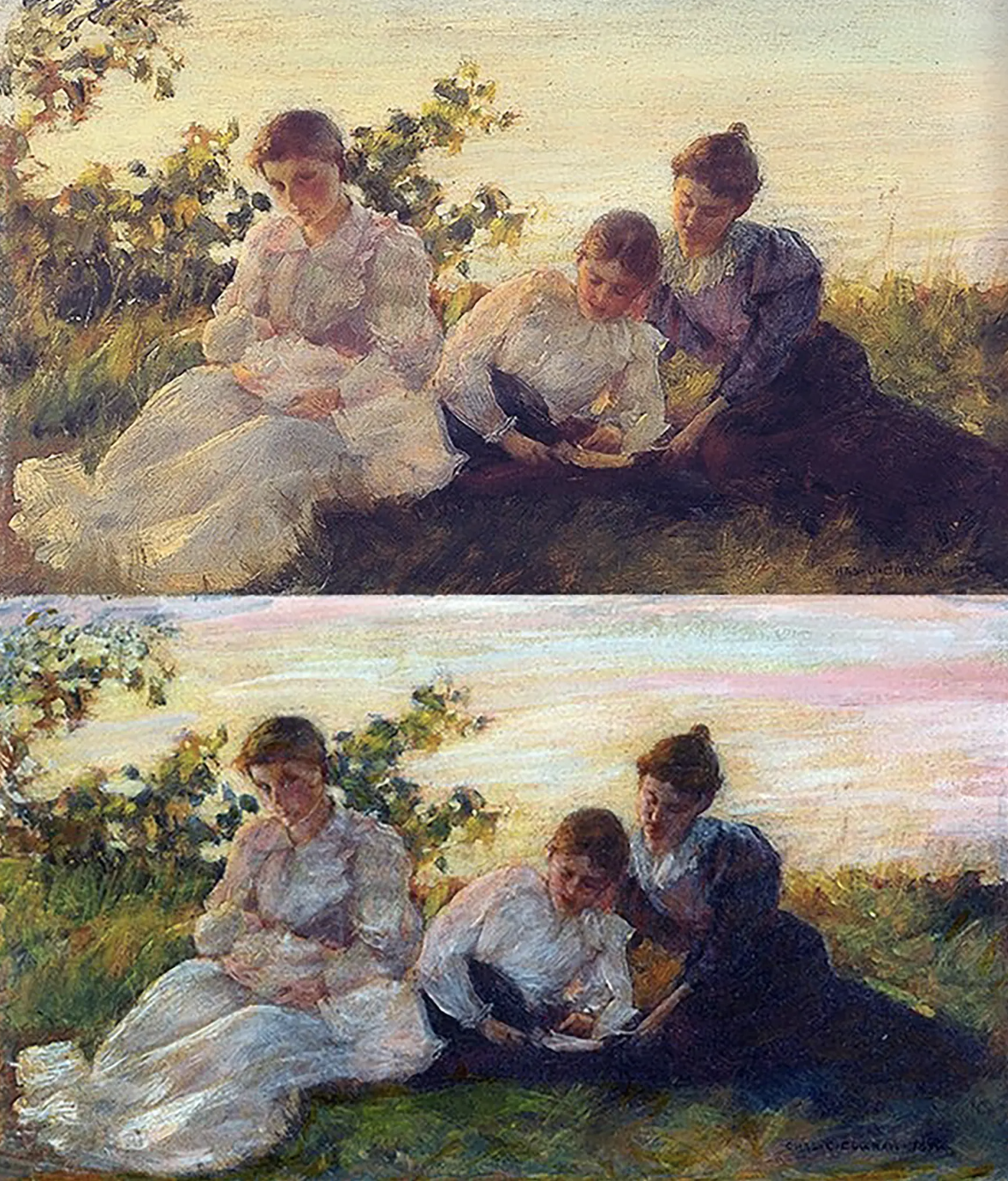
Through van Meegeren’s use of modern Bakelite plastic to harden his paints, subsequent false canvases continue to turn up, most recently at London’s Courtauld Institute in 2011. The case of the American forger Mark Landis (b. 1955) is particularly compelling. Never interested in money, he created fake pictures and fake personas to enjoy the attention that would be lavished on him as a museum donor. Drawing works in a matter of hours with materials purchased at Walmart, he stated, “I felt an impulse to give away pictures. I’d watched so much TV and learned about philanthropists — wealthy people who gave to others — so I gave a picture away, and I was treated with so much respect and deference and friendship. Those are things I had never experienced before. I really liked it, and I got addicted to it.”

Mark Landis quickly made copies (bottom) of famous works like Charles Courtney Curran’s “Three Women” (top).

To pass off a fake, forgers need not only period materials and a convincing style but also a plausible backstory or what the art world calls provenance. The British painter John Myatt (b. 1945) at one time advertised himself as a copyist for hire. His materials were far from historical — emulsion paint and K-Y jelly. Nevertheless, his accomplice John Drewe created convincing backstories by adding fake documents to artist archives and replacing pages in art catalogues, creating historical records for work that in fact never existed.

The most recent headline case of art fraud, involving the loss of tens of millions of dollars and shuttering of New York’s oldest art gallery, now reads like a copy of Alceo Dossena. The art dealer Glafira Rosales claimed to have discovered a trove of modern masterpieces. Her source was a mysterious “Mr. X Junior,” whose father, she said, had secretly collected the work through a gay liaison.

The reality was far more prosaic: Pei-Shen Qian, an immigrant living in Queens, unknowingly painted the abstractions in a garage to order. Like that modern nail in Dossena’s statue, an ahistorical pigment was the nail in the coffin.

Art frauds can be easy to spot in retrospect but are far more challenging in the moment. Nowadays, few would say a van Meegeren is anything but a van Meegeren. The stories in “Art Fraud” reveal how people believe what others believe. We accept labels and defer to experts. This is especially the case when there’s little to gain from exposing the lie aside from knowing the truth.

Today, as we look to a future of generative artificial intelligence and “deep fakes,” the only real certainty is the unreliability of anything we may see. Copy that.

Inside the Cult of Equinox

THE SPECTATOR, September 15, 2025

Inside the Cult of Equinox

Fueled by a mysterious marketing campaign, the gym now has more than 100 outposts

Scratch the surface of Silver Age Rome and what do you find? Most likely, a tight subterranean vault built as a meeting room for the followers of Mithras. This Persian mystery cult was everywhere in the early Anni Domini, coming to prominence between the decline of Hellenism and the rise of Christianity, filling that gap between the gods of Olympus and the God of Moses. The cult’s dark temples, the Mithraea, squeezed devotees into opposing benches designed to make them uncomfortable, all while in communion with their fellow initiates. Today, sociologists might call a Mithraeum a “third place.” Here was the kind of space where Roman men who had become disillusioned with Jupiter Stator could go between work and home to be purified together in a shower of bull’s blood.

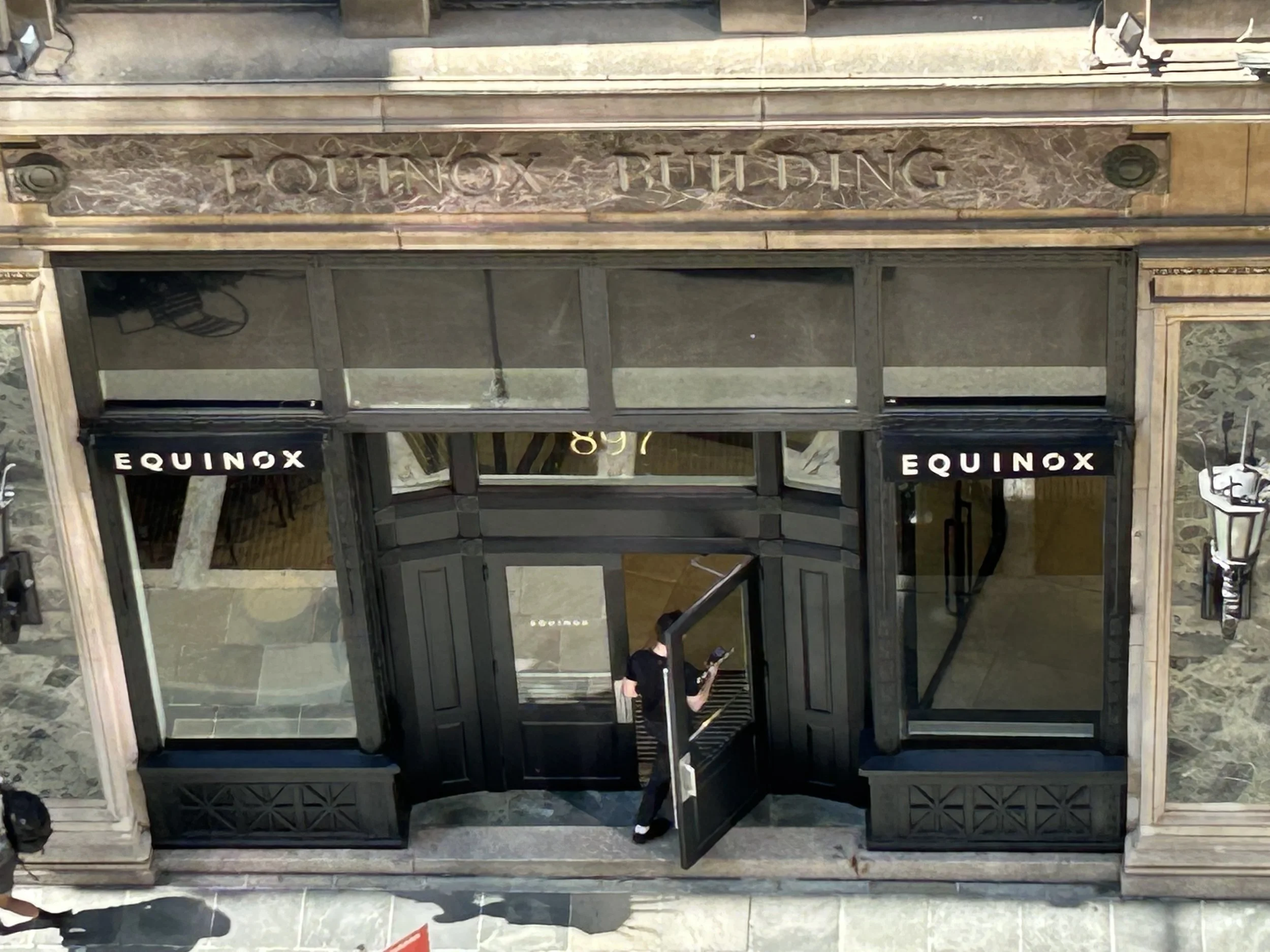
The modern gym is one of our own ubiquitous third places, but only the urban fitness chain known as Equinox has positioned itself as an upscale mystery cult. “COMMIT TO SOMETHING,” beckons the gnostic advertising campaign of this self-described “high-performance lifestyle leader.” When presented with the accompanying outsize images obstructing the gym’s windows, we might well wonder: commit to what?

Launched in 1991, the gym now has more than 100 outposts spread across New York, Los Angeles, San Francisco, Miami, Chicago, Boston, Dallas, Houston and Washington, DC, as well as London, Toronto and Vancouver. The Equinox campaign started by the ad agency Wieden+Kennedy in 2016, diverged notably from the standard gym appeal of “improving lives through fitness” or “member-friendly memberships that won’t break the bank,” as the bargain-basement New York Sports Club might say. First shot by Steven Klein – whom the New Yorker described as creating “fashion photography with a pistol and a pulse” for his images that “teetered between the seductive and the sadistic” – the Equinox campaign was far from mens sana in corpore sano. It wasn’t even about going to the gym at all.

Instead, we saw a model etching a tattoo over what remained of her preemptive double mastectomy. “Scars aren’t ugly,” she said in the video component. “Scars are really just beautiful badges reminding you what you chose to go against; not just the size of your opponent but the size of your commitment.” Other materials presented a young man with a paralyzing stutter. “Your commitment tells your story better than you ever could,” he eked out. In another, three deaf cheerleaders signed in unison. In another, a model cut her hands practicing the harp as blood ran down her instrument. In another, a naked man received a haircut and manicure-pedicure as a small mirror covered his pudendum. In another, a woman breastfed two babies at her table at a restaurant. In yet another, a shirtless man was soon covered in bees.

At the time, Equinox promoted its campaign as an “intimate, provocative and deeply moving exploration of personal identity” that “confronts current cultural issues and asserts that commitment has the power to define who we are in the deepest sense.”

This year, Equinox updated the approach with a shoot by the British fashion photographer Charlotte Wales that extended these themes: a model licks a leather boot; a woman lies on a bed of nails as a robotic arm sticks her with a hypodermic needle; another model (this time transsexual) walks side by side with an AI version of their likeness covered in metallic parts. “Commitment is obsessed,” reads Equinox’s latest ad copy. “It’s now. It’s relentless. Always one step ahead. Abandon half-measures. Surrender to your urges. Sacrifice for obsession. Commitment isn’t a choice. It’s an awakening. Let desire drive you. Commit to something.”

Abandon all hope, ye who enter here? To hammer home the infernal message, Equinox throws extra shade on those who make that naive New Year’s resolution to get in shape. “If you waited for the ball to drop, you dropped the ball,” advises the gym. “On January 1, we blocked new membership sign-ups. Because commitment doesn’t start when the calendar resets. It’s for those who are all in. Not when the ball drops, the clock strikes, or the calendar flips – but always.”

So what if you can’t commit to the gym, the message goes. You should really be committed to an intensive-care unit. Or a mental asylum. Or you should receive a felony charge. But in truth, the “something” to which one mainly commits at Equinox is a mid-four-figure annual fee.

The real mystery of Equinox is what you get for the expense. In June, New York attorney general Letitia James won a $600,000 judgment against the company by arguing that its contractual agreements were too hard to break. The award of a mere $250 to each of the plaintiffs – which equaled less than a month of dues, to say nothing of the initiation fee – left members less than impressed. “Tish gets ripped!” ran the New York Post headline. “New Yorkers not impressed with AG Letitia James’s crackdown on gyms.”

Equinox positions its membership as fast-track admission to the cosmopolitan faith. At the root of such modern urbanism, of course, is masochism. High taxes, crowded subways and filthy streets appeal to the broken-window theory in reverse: that our souls will only get better if our city lives get worse. Professional sadists such as New York’s Democratic mayoral nominee Zohran Mamdani therefore thrive in the same way as that Equinox spin instructor who comes around to crank up your bike’s resistance. It’s all about abnegating the flesh and globalizing the intifada to a techno beat. In one early Equinox advertisement, a screaming, shirtless woman holds up her fist in front of a classical building surrounded by a night-time security detail. Just what she is protesting does not matter so much as the appearance of her consequence-free LARPing. (She is portrayed by the fitness model Bianca Van Damme, daughter of the “muscles from Brussels” Jean-Claude Van Damme.)

Equinox members may not be true basement-dwelling “Brooklynites for Gaza,” but they are content to go along with the latest thing as long as the towels are stocked and the steam room stays open. We all signed up to be in this Paul Verhoeven-movie of a place, and that’s life in the big city.

“A manic attempt to make the posthuman sexy,” is how one agnostic member explained it to me. “I have the distressing sense that I am beholding another stripe – or, heaven forbid, chevron – on the ghastly and vexillologically metastasizing ‘progress flag.’ The clientele strikes me as being finance and finance-adjacent bros plus gay men for whom human growth hormone, rather than Ozempic, is still the lifestyle supplement of choice. As for the women, I’d have no idea. I don’t notice.”

Not noticing is a big part of the Equinox culture. Members don’t converse. Most employ monastic silence as they move from station to station, carrying their water bottles and iPhones upon which a small dog must be featured on the lock screen. No grunts. Little sweat. The chilled eucalyptus towels see to that. After reports a decade ago of problems in the steam room, the facility posted signs of a “zero-tolerance policy regarding inappropriate, sexual or lewd behavior. Our staff is on notice.” The closest most come to catching a sexually transmitted disease at today’s Equinox is when a form of athlete’s foot requires an oral course of fungicide (I now wear shower shoes).

And yet, past the many cult symbols that line its entry, Equinox tends to be well-maintained and almost always uncrowded. Bottles of four different soaps and lotions line each shower stall: a shampoo and conditioner of rose, pepper and sage; a facial cleanser of aloe, geranium and rose; a body cleanser of chamomile, bergamot and rose. Additional bottles of face and body cream are available in the locker rooms. So too are Q-Tips, deodorant, mouthwash, razors, even a container of black hair ties to maintain one’s man bun. The only recent controversy here occurred a year ago, when Equinox switched out its Kiehl’s line of products for Grown Alchemist, a brand that can also be purchased at (gasp) Target.

My Equinox membership grants me access to all the spin classes and boxing sessions my heart desires. There is a mobile media library showing the proper use of every exercise machine – something I found particularly useful as I recovered from a suite of orthopedic setbacks. With my level of membership, I can visit the Flatiron location across from my office, the Upper West Side location next to my apartment, the Columbus Circle location with the saltwater pool and just about every other location save for the nirvana that is the new Equinox Hudson Yards, which would cost me another $50 a month. Perhaps one day I too will join this “most spacious, thoughtful, and connected Equinox ever… the purest expression of high-performance living yet. The 60,000-square-foot luxury destination spans two floors and includes a 15,000-square-foot pool and sundeck.”

Even Robert F. Kennedy Jr. has been spotted in his Make America Healthy Again jeans and hiking boots, lifting at Equinox. At some point we all reach that moment in life when we realize our aging frames must be committed to a daily routine of physical therapy.

By spending more than $300 a month with a company that advertises personal destruction, many urban professionals may feel they have purchased some progressive blessing on their self-care. For others such as myself, Equinox is simply a very nice gym.