CITY JOURNAL
Spring 2013
A New Moral Treatment
by James Panero
Humane institutionalization can help the mentally ill and protect society.
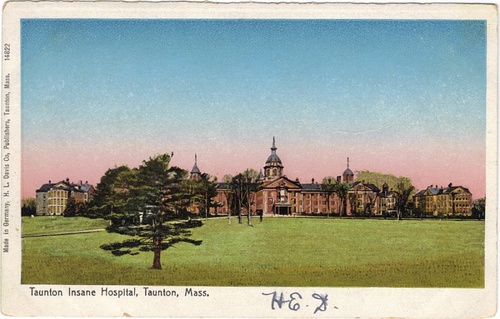
If it’s true that “men moralise among ruins,” as Benjamin Disraeli wrote, the ruins of America’s nineteenth-century mental institutions should invite some serious reflection. Built between 1850 and 1900, these crumbling edifices speak to our onetime dedication to caring for the mentally ill. Almost all were designed on the Kirkbride Plan, named for Pennsylvania physician Thomas Story Kirkbride, author of an influential treatise on the role of architecture and landscape in treating mental disorders. Even in their dilapidated state, it’s possible to see how the buildings, which followed a method of care called the “moral treatment,” gave the mentally ill a calming refuge from the gutters, jails, and almshouses that had been the default custodians of society’s “lunatics.”
Unfortunately, in the middle of the twentieth century, as asylums became grossly overcrowded and invasive treatments aroused public concern, the moral treatment came to seem immoral. The eventual result was the process known as deinstitutionalization, which steadily ejected patients from the asylums. Instead of liberating the mentally ill, however, deinstitutionalization left them—like the asylums that once sheltered them—in ruins. Many of today’s mentally ill have returned to pre-Kirkbride conditions and live on society’s margins, either sleeping on the streets or drifting among prisons, jails, welfare hotels, and outpatient facilities. As their diseases go untreated, they do significant harm to themselves and their families. Some go further, terrorizing communities with disorder and violence. Our failure to care for them recalls the inhumane era that preceded the rise of the state institutions. The time has come for new facilities and a new moral treatment.
When Kirkbride published On the Construction, Organization, and General Arrangements of Hospitals for the Insane in 1854, he expressed concerns that remain relevant today. “The plan of putting up cheap buildings in connection with county or city almshouses for the care of the insane poor, and under the same management, cannot be too severely condemned,” he wrote. “Such structures are sure to degenerate into receptacles of which all humane persons will, sooner or later, be heartily ashamed.” Proper care, Kirkbride continued, occurs “only in institutions specially provided for this class of disease.” He concluded that “the simple claims of a common humanity . . . should induce every State to make a liberal provision for all its insane, and it will be found that it is no less its interest to do so, as a mere matter of economy.”
Kirkbride’s arguments were compelling, and state legislatures across the country began building asylums to his specifications, spending millions to care for the mentally ill during the late nineteenth century. Set in serene landscapes and composed of substantial brick edifices, the asylums resembled palatial estates. The Hudson River State Hospital for the Insane in Poughkeepsie, New York, was designed in 1867 by Frederick Clarke Withers in High Victorian Gothic; its grounds were the work of Frederick Law Olmsted and Calvert Vaux, the same duo responsible for Central Park in Manhattan. Buffalo State Asylum for the Insane, begun in 1870, was designed by H. H. Richardson in a style that marked the advent of his Romanesque Revival period, with grounds again planned by Olmsted and Vaux. The enormous New Jersey State Lunatic Asylum at Morristown owed its founding to the persistence of Dorothea Dix, a nurse who famously lobbied state legislatures for funding for the mentally ill. Designed by Samuel Sloan in Second Empire Victorian in the early 1870s, the building was said to have the largest continuous foundation in the United States until the construction of the Pentagon about 70 years later.

Under the Kirkbride Plan, patients were treated in the beautiful, calming surroundings of such institutions as the Buffalo State Asylum for the Insane.
At a time when the medical science of mental illness was in its infancy, the Kirkbride Plan created alternative, protected worlds for patients. It echoed many of today’s more holistic approaches to treatment by encouraging patients to participate in social activities, games, and crafts. Kirkbride institutions often sported their own baseball diamonds, golf courses, bakeries, bowling alleys, ice cream shops, dairy farms, gardens, and stages for plays and other performances.
But in the twentieth century, a shadow fell over the Kirkbride asylums, as doctors there began using more invasive procedures. The Austrian psychiatrist Manfred Sakel introduced insulin shock therapy, now known as insulin coma therapy, in the 1930s. Electroshock therapy arrived from Italy soon after. Both treatments induced seizures to alter brain chemistry in patients with depression and schizophrenia. In 1949, the Portuguese neuropsychiatrist Egas Moniz won a Nobel Prize for developing the frontal lobotomy, which he had invented in 1935. Walter Freeman, a clinical neurologist in Washington, D.C., further popularized the treatment through his own outpatient procedure, which came to be known as the transorbital, or “ice-pick,” lobotomy. Freeman performed the ten-minute operation—in which he inserted long metal rods around the eyeballs of his patients and penetrated, stirred, and severed their frontal brain matter—some 3,500 times. Among the recipients of lobotomy was 23-year-old Rosemary Kennedy, the future president’s sister, who wound up severely disabled by the procedure in 1941.
As her siblings embarked on a lifetime crusade against institutionalization and invasive treatment, they joined a growing chorus that included civil libertarians and conscientious objectors who had been assigned to work in the asylums during World War II. Starting in the 1950s, these critics could tout powerful new antipsychotic drugs, such as Thorazine, as an alternative to institutionalization. By temporarily blocking receptors in the dopamine pathways, the drugs could inhibit psychotic hallucinations and produce a semblance of clarity for many patients—so long as the drugs were regularly administered. The miracle medicines seemed to obviate the need for separating the mentally ill from the rest of society.
Critics of institutionalization protested, too, about the asylums’ crowded conditions. By midcentury, some psychiatric wards designed to house 50 to 60 patients were struggling to accommodate twice that number. In 1946,Life ran a photo essay subtitled MOST U.S. MENTAL HOSPITALS ARE A SHAME AND A DISGRACE. Two years later, journalist Albert Deutsch published an exposé of the institutions called The Shame of the States. The apparent ease with which the government could commit patients and subject them to invasive treatments also alarmed critics. In 1955, fringe elements of the American Right, along with L. Ron Hubbard’s new Church of Scientology, described a congressional proposal to expand mental health care in the Alaska territory as “Siberia, USA.” The Santa Ana Register ran an editorial denouncing the proposed Alaska-based institution as a “concentration camp for political prisoners under the guise of treatment of mental cases [and] our own version of the Siberia slave camps run by the Russian government.”
In 1963, President Kennedy laid the groundwork for an alternative to the asylums, proposing a federal law that, once passed, provided the seed money for a system of decentralized Community Mental Health Centers (CMHCs). These facilities sought to remove the mentally ill from the state-run asylums and to incorporate them into more social, usually urban, settings. And two years later, Medicare and Medicaid, creations of President Lyndon Johnson’s Great Society, erected a new funding apparatus that effectively, if unintentionally, drove patients out of the asylums. Since mental institutions had always been a state responsibility, the two federal programs deliberately excluded state mental-hospital patients between the ages of 22 and 65 from coverage. Patients passing through the CMHCs, by contrast, could now be eligible for partial federal reimbursements. The ability to shift 45 percent of treatment costs, on average, to Washington proved too great a temptation for the states, which promptly began emptying their asylums.

Further, at the same time that patients were driven from institutional care, civil libertarians set up legal barriers to committing patients to the institutions that remained. Needing treatment was no longer enough to be committed; “patients now had to be a danger to themselves or others,” writes E. Fuller Torrey, a psychiatrist and the nation’s leading critic of deinstitutionalization. That standard may sound reasonable in theory, but in practice, it meant that only extremely violent patients could be committed—often, only after they’d acted on their violent impulses. Adjusting for population growth, Torrey calculates that over 90 percent of patients who would have been committed before deinstitutionalization are now out in the world.
As for the Kirkbride buildings, many fell into shambles. Some were converted into condominiums, stores, and retirement villages. In upstate New York, the Matteawan State Hospital for the Criminally Insane is now part of the Fishkill Correctional Facility—a telling transformation that mirrors the journey, taken by so many mental patients, from asylums to prisons. And in recent years, documentarians and photographers have shown a renewed interest in the once-grand buildings, often gaining access surreptitiously to record what remains there. The fascination can seem lurid, as though the voices of schizophrenia still echoed through the halls. Layers of paint have flaked into mountains of dust. In the winter, stalagmites of ice reach up from the floors. An odd piece of furniture, an old wheelchair, or an abandoned loom may serve as a reminder of former residents’ lives and activities. But what the cameras mainly find is the buildings’ haunting beauty. Soaring ceilings, ornate door hinges, and elaborate tile work all speak to the care and expense that went into their design and construction. Websites like Kirkbridebuildings.com now compile photographs and host forums for discussion. Community preservation groups have fought to save the buildings from demolition.
When the CMHCs replaced the asylums, some backers of the new arrangement argued, in the words of President Carter’s Commission on Mental Health, that it would allow the “greatest degree of freedom, self-determination, autonomy, dignity, and integrity of body, mind, and spirit for the individual.” Unfortunately, this self-determination proved far worse for the severely mentally ill than the state institutions ever were. Within a year of leaving institutional care, according to researchers, half of all mentally ill patients fail to take their prescribed antipsychotic medications—a terrifying prospect for the vast numbers of patients who left the asylums under deinstitutionalization. Between 50 and 60 percent of patients discharged from state institutions were schizophrenic. Another 10 to 15 percent had been diagnosed with manic-depressive illness or severe depression.
The CMHCs have proven woefully inadequate at caring for this massive population. They offer far less supervision, professional care, and patient coordination than the old state institutions did. Also, with an eye on the bottom line, the managed-care companies that run them generally avoid taking on costly patients with severe illnesses.
For evidence of the failure of the CMHCs, just look at the way so many mentally ill people actually live today. Deinstitutionalization has consigned them to a terrifying roller-coaster ride among prisons, emergency rooms, and the streets. Public psychotic episodes, now a common sight in American cities, are, at the very least, frightening examples of the loss of social order. Last year, a New York homeless man made headlines when he was caught on video making angry outbursts in front of children. Calling himself “Adam Sandler” and dressed as the Sesame Street character Elmo, the man posed for money in Central Park and routinely shouted anti-Semitic rants while in costume, sending children and parents fleeing. The behavior earned him a profile in the New York Times, which revealed that he had once operated a pornographic website in Cambodia called Welcome to the Rape Camp. The article reported that “Sandler” had been sent to Metropolitan Hospital Center after his most recent episode, but he was neither arrested nor committed. Days later, he was back in costume, posing with children for money. “Obviously, they saw I was not a threat to myself or anybody,” he said, adding that doctors had described him as “a little paranoid.”
Far more frightening than episodes like that is the violence that a small percentage of the severely mentally ill inflict on society. In recent years, untreated mentally ill people have committed many of America’s mass homicides. The list includes Seung-Hui Cho, who in 2007 killed 32 and injured 24 at Virginia Tech; Jared Lee Loughner, a diagnosed schizophrenic who in 2011 killed six people and injured 14, including U.S. Representative Gabrielle Giffords; and possibly James Holmes, who is currently awaiting trial for opening fire in 2012 on a crowded movie theater in Aurora, Colorado, killing 12 and injuring at least 58. It may include, too, Adam Lanza, who last December killed 26 people at Sandy Hook Elementary School in Newtown, Connecticut. While Lanza’s condition at the time of the shootings remains a mystery, it has already been determined that he had a history of mental disorder.
Psychotic breakdowns on a smaller scale pose an even greater public concern. A 2008 study in Indiana found that 10 percent of inmates imprisoned for homicide had been diagnosed with severe mental illness, a number consistent with similar studies in Europe. Or consider the New Yorker’s recurring nightmare: being pushed under an oncoming subway train. In 1999, Andrew Goldstein, a schizophrenic who had stopped taking his medications, shoved Kendra Webdale to her death beneath a train in New York City. The incident led to the creation of Kendra’s Law, which gave New York courts the modest power to compel the mentally ill to accept treatment as a condition of living in society. (Kendra’s Law was nonetheless opposed by the ACLU.) This past December, a homeless drifter named Naeem Davis was seen exhibiting erratic behavior on a subway platform before allegedly shoving Ki-Suck Han onto the tracks and killing him. Later that month, Sunando Sen was killed the same way. Erika Menendez—a woman with “a history of psychiatric problems,” according to the Daily News—confessed to the crime.
These incidents suggest a correlation between deinstitutionalization and violent crime, a relationship that Torrey and others confirm. According to a report issued by the Treatment Advocacy Center (TAC), a think tank founded by Torrey, several studies have shown that “having fewer public psychiatric beds was statistically associated with increased rates of homicide.” Christopher Ferguson, an associate professor of psychology and criminal justice at Texas A&M, has written in Time that the rise of masshomicide “began in the late 1960s and coincided with the deinstitutionalization movement, when mental asylums were closed down and services diminished.”
The connection between mental illness and crime would come as no surprise to law enforcement professionals. Since deinstitutionalization, police and sheriffs’ departments have reported an overwhelming increase in mental illness–related calls, a trend that continues today. A 2011 survey of 2,400 law enforcement officials reported that responding to these calls had become “a major consumer of law enforcement resources nationally.” A TAC study in 2010 found that there were now “three times more seriously mentally ill persons in jails and prisons than in hospitals.” Many county sheriffs’ associations estimate that over a quarter of their jail population is mentally ill. The Los Angeles County Jail has become the largest de facto inpatient psychiatric facility in the United States, says Torrey; New York’s Rikers Island Prison Complex is the second-largest.
Though the proponents of deinstitutionalization claimed that it would save money, even that claim hasn’t stood the test of time. Yes, expensive institutional beds have been eliminated. But weigh those savings against the costs that must be borne by other facilities, such as emergency rooms, prisons, jails, and nursing homes. “Untreated mentally ill individuals revolve endlessly through hospitals, courts, jails, social services, group homes, the streets and back again,” reports TAC. “It is a spectacularly inefficient and costly system, perhaps best symbolized by ΩMillion Dollar Murray,≈ a mentally ill homeless man who cost Nevada more than $1 million, mostly in emergency department costs, as he rotated through the system for 10 years.” Consider, too, the dollar burden that the mentally ill have piled on law enforcement agencies.
But even more important is the human cost of preventing sick people from receiving proper treatment. The current legal barrier to commitment “is not just unfeeling, it is uncivilized,” writes the columnist Charles Krauthammer, a former chief resident in psychiatry at Massachusetts General Hospital. “The standard should not be dangerousness but helplessness. Society has an obligation to save people from degradation, not just death.”
While the backers of deinstitutionalization recognize these problems, they have largely doubled down on their own solution, calling for even more funding of the poorly managed local facilities that replaced the asylums. But recently, a few psychiatrists and other members of the mental health profession have joined urbanists and law enforcement officials in questioning the wisdom of deinstitutionalization. Last April, H. Steven Moffic, a tenured professor of psychiatry at the Medical College of Wisconsin, wrote an article called “Is It Time for Re-institutionalization?” in the Psychiatric Times. “Have we gone too far in making it difficult to hospitalize someone,” he asked, “and are our hospitalizations generally too short anyways to help clarify diagnosis and carefully make any medication adjustments?” His answer: Yes. Moffic went on to praise recent expansions at a handful of psychiatric hospitals in Massachusetts and Vermont. The tide, he said, was turning back toward the institutions.
Moffic’s article provoked a flurry of online responses, showing that after decades of condemnation, institutionalization is becoming suitable for discussion again within the mental health community. “I do think something needs to change,” wrote Rebecca Trewyn, a psychiatric nurse in Wisconsin. “Most of the patients I am currently seeing in private practice . . . will soon end up in prison because we can’t treat them properly in the 15 minutes we have.” Frank Miller, who works near an original Kirkbride building, wrote to say how “many many things went wrong” as “the state hospitals were downsized” and as patients were transferred to private mental health providers. Like Moffic, Miller happily reports that a new state hospital building is under way at his institution “to provide relief to the private hospital ERs and jails where the chronically mentally ill are Ωparked.≈ ” David Bell, who began working in an Australian mental asylum in 1956, lamented how in his country, “we have committed all the same reforms in the name of de-institutionalization, closed the asylums and opened many new jails, walked past the homeless lying on benches or surrounded by their bags in doorways and reluctantly poured increasing funds into Ωcommunity mental health.≈ Like Dr. Moffic I do not look back with horror at my work in the institution, but with some fondness.” Bell ended: “What is to become of the mentally ill and retarded? Give them asylum for as long as they need it.”
Sixty years ago, Jo Garfield took asylum exactly that way. Battling a severe eating disorder and underlying manic-depressive symptoms, Garfield was anorexic at 16, grew to 225 pounds a year later, and became addicted to the prescription drug Dexedrine. At college in Wisconsin, after she stole a prescription pad and filled her scripts at drugstores, her mental state deteriorated further.
Her parents sent her to Chestnut Lodge, a small private mental institution in Rockville, Maryland. When she went, she tells me, “they made sure I didn’t have meds, but I had concealed them in my sneaker.” Yet Garfield grew to like the institutional setting, and her condition began to improve. She willingly extended her initial treatment of a few months to a few years. She was surrounded by patients with far worse disorders: “For the first time, I felt like I was at least as healthy or more so than the people around me.”
Garfield spent two and a half years at Chestnut Lodge. “The whole idea was interpersonal relationships,” she recalls. “You learn to cope with life and people by interacting with patients and nurses and doctors. They had arts and crafts. A newspaper. On the floor I started out was the less seriously disturbed, but it was a locked ward. Then once they decided I could be trusted not to get pills, they moved me to this smaller thing called Little Lodge. There was a lot of bridge playing. I got involved in this small store.” When she finally left, she discovered, “I had done some behavior modification. Before that I couldn’t control eating. Now I had changed my habits. I had retrained myself.” Examples like Garfield’s demonstrate how institutionalization can offer a path to recovery. In 1986, she wrote about her experiences in a book called The Life of a Real Girl: A True Story. Today, she’s a respected writer and a prominent collector of modern art.
A close friend of mine, born into the deinstitutionalized era, wasn’t so fortunate. Mel, as I’ll call him, was described by his parents as brilliant from an early age. He read at age two, asked to study cello at four, and entered a preeminent music school at 12. Mel was as good at math and English as at music. He was also one of the wittiest people I’ve known. Yet soon after he enrolled in college, his eccentricities became more pronounced. He took time off and traveled to the far reaches of Asia—where, he told me, maps didn’t yet exist. Sometime after his return, I learned that he had been diagnosed with schizophrenia. He drifted among flophouses in Trenton, New Jersey. By phone, we talked about his difficulty taking antipsychotic medication; he felt much better without it, he said. Soon after the terrorist attacks of September 11, 2001, Mel left a message on my answering machine to say hello—one in a series of calls that he made to friends, as I later learned. Two days later, he jumped to his death from a New York high-rise. He was 25.
It’s impossible to be certain that Mel’s fate would have been different without deinstitutionalization. But it’s certainly clear that deinstitutionalization has made life worse for those whose illness prevents them from independently following their own best course of treatment. And it’s a troubling thought that the lifetime suicide rate, about 1 percent for the general population, is over 10 percent for schizophrenics.
Even as more critics come forward, deinstitutionalization continues. In 1955, nearly 600,000 severely mentally ill patients were in the care of state psychiatric hospitals. By 2010, only 43,000 state psychiatric beds remained available for the mentally ill. That equals about 14 psychiatric beds per 100,000 Americans, far fewer than the minimum of 50 recommended by TAC and nearly identical to the per-capita number that existed in 1850, when the institutional movement first began.
A century and a half ago, the need for a moral treatment of the mentally ill led to institutions that offered the most advanced care of the day. The fiscal and legal barriers to repeating that achievement may seem insurmountable. But undoing 50 years of bad policy is easy compared with what today’s mentally ill must endure.