A Helluva Show

Theater_review_on_the_town

Clyde Alves, Tony Yazbeck, Jay Armstrong Johnson and the cast of On the Town

CITY JOURNAL 

March 26, 2015

A Helluva Show
by James Panero

A new production of On the Town captures the spirit of New York City.

With music by Leonard Bernstein and book and lyrics by Betty Comden and Adolph Green, the original 1944 production of On the Town was a celebration of the freedom and energy that New York City represented in wartime. The musical rightly brought fame to its three wunderkind creators, all in their twenties, who drew their inspiration from the Jerome Robbins ballet Fancy Free.

Now, as the spectacular, must-see revival of On the Town returns to Broadway at 42nd Street’s Lyric Theatre, the musical reflects a city that has itself been revived in a synergy of past and present. Then as now, it’s the right time to see On the Town. After all, could there be a greater paean to urban life? The ultimate love interest in this musical of three American sailors on shore leave is, of course, “New York, New York, a helluva town,” where “The Bronx is up, but the Battery’s down” and “the people ride in a hole in the groun’.” The city captivates and animates the storyline, beginning with that famous opening number. One sailor, Chip (Jay Armstrong Johnson), calls the city “a visitor’s place!” and announces his ambitious touring schedule (“10:30 Bronx Zoo, 10:40 Statue of Liberty”).

The famous places to visit are so many, 
Or so the guidebooks say. 
I promised Daddy I wouldn’t miss on any. 
And we have just one day. 
Got to see the whole town 
From Yonkers on down to the Bay.

Ozzie (Clyde Alves), meanwhile, has other attractions in mind: “Manhattan women are dressed in silk and satin,/ Or so the fellas say;/ There’s just one thing that’s important in Manhattan,/ When you have just one day.” A poster on the subway convinces Gabey (Tony Yazbeck), the shy sailor, to seek out Ivy Smith (Megan Fairchild), the winner of “Miss Turnstiles for the month of June.” The sailors’ 24-hour trek spans Carnegie Hall and the uptown museums to midtown nightclubs and Coney Island. Eventually, they assemble together with their dates—the fizzy anthropologist Claire de Loon (Elizabeth Stanley) with Ozzie, the brassy taxi driver Brunhilde “Hildy” Esterhazy (Alysha Umphress) with Chip, and Ivy Smith with Gabey—only to have to say their goodbyes at the Navy docks just as another three sailors slide down the gangplank, singing the same opening tune.

The team behind this current On the Town—lead producers Howard and Janet Kagan and director John Rando—captured the revival spirit of both the musical and the city with a promotional music video released last summer. The video closely tracks the familiar opening shots of the 1949 movie film version starring Frank Sinatra and Gene Kelly. Rather than running off their ship onto the Brooklyn Navy Yard, though, our three sailors emerge in their starched white suits running down the gangplank of the Intrepid—the sea, air, and space museum in the aircraft carrier docked on the Hudson River. Then these spirits of World War II-era New York are seen singing and dancing around today’s city. Some locations have thankfully changed little since the 1940s—the Brooklyn Bridge, Coney Island, Bethesda Fountain, the Statue of Liberty, the American Museum of Natural History. Yet, for their bike ride through Central Park, the sailors rent Citibikes. And between shots of Chinatown and a carriage ride through the park, they visit the Apple Store on 59th Street and Fifth Avenue. If anything, the city looks far clearer and better than it did on film 60 years ago.

The preternatural and, at times, winking exuberance of this revival gets carried through the musical, which is lavishly staged with a live 28-piece orchestra at the Lyric. The revival is surprisingly faithful to the original Broadway production. Each performance begins with the cast, led by Phillip Boykin, joining the audience in a rendition of “The Star Spangled Banner.” This patriotic feeling continues throughout the show, especially as Stephen DeRosa, on the night I attended, singled out a veteran in the audience for special recognition of his service.

But just like the original musical, this revival is far more red-blooded and grittier than the sanitized Hollywood production. Not only did “helluva town” get changed to “wonderful town” in the 1949 film, but many of the best musical numbers were cut, in particular Hildy’s “I Can Cook Too,” which includes a full serving of double entendre (“I’m a man’s ideal of a perfect meal/ Right down to the demi-tasse./ I’m a pot of joy for a hungry boy,/ Baby, I’m cookin’ with gas.”) A new cast recording of this revival has just been released by PS Classics.

In addition to the possibilities presented by the city (where density and public transportation play a leading role), On the Town also hints at the more desperate side of the urban experience, especially for the women. Ivy Smith, a celebrity in the eyes of Gabey, is being hustled by an alcoholic dance teacher (Jackie Hoffman) who insists that she debase herself working at an after-hours gentlemen’s club on Coney Island to pay for her classes. Claire de Loon cracks in an unhappy marriage, which her fly-by-night relationship with Ozzie finally destroys. Hildy, fired from her job as a taxi driver, lives with a sick roommate in an apartment overlooking a brick wall.

Yet for its lows, the New York of On the Town is ultimately one of great heights, finally reached in the dream dance sequence between Gabey and Ivy. Inspired by the heated choreography of Jerome Robbins, the nine-minute pas de deux, choreographed by Joshua Bergasse, finds the dancers sweating it out in a boxing ring before soaring into one another’s arms. That Ivy is danced by Fairchild, the famous principal dancer of the New York City Ballet, speaks to the talent that only a city can gather. Here is a production that only Broadway can stage and a story that only New York can tell.

'The infinite Spanking Jerry Saltz'

Jerry-Saltz

James writes:

In this week's Capital New York, Nicole Levy has written a smart and well researched profile of Jerry Saltz, the award winning art critic for New York Magazine and social media phenomenon. I say "smart" and "well researched" in particular because Levy article, titled "The Infinite Spanking of Jerry Saltz," picks up on "My Jerry Saltz Problem," the essay I wrote for The New Criterion on the evolving online relationship between artists and critics, which Saltz embodies through his Facebook presence. As I observed at the time:

On Facebook and now elsewhere online, Saltz regularly mixes portentous metaphysical questions with internet messianism, unctuous flattery of his followers, treacly self-doubt, and gaseous emissions of political cant. The ultimate topic of discussion is not art or even his devoted followers but Jerry Saltz himself.      

Read Nicole Levy's entire piece here

The Manor Reborn

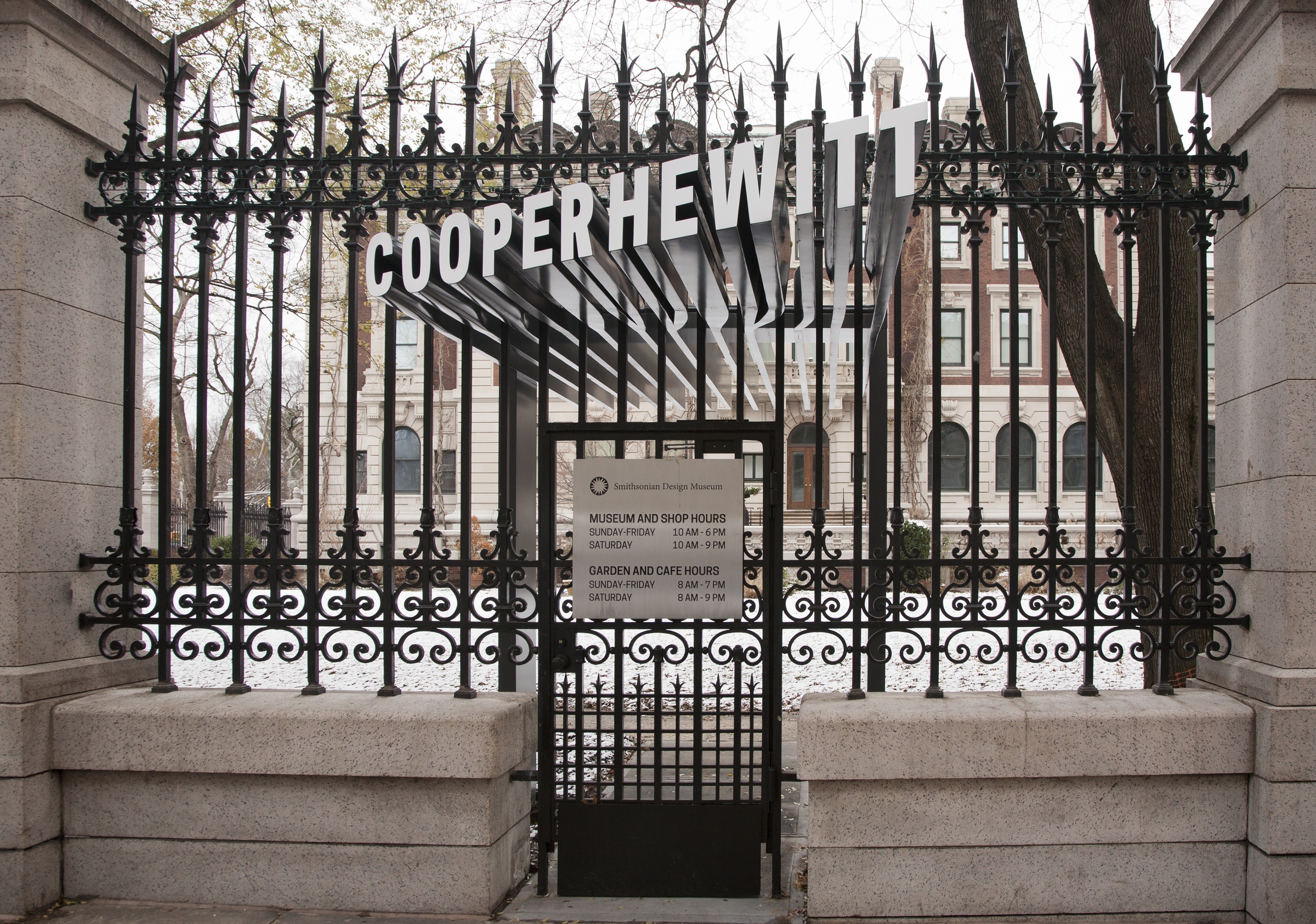
New 90th St Garden Entrance

ART & ANTIQUES
April 2015

The Manor Reborn
by James Panero

The renovated Cooper Hewitt Museum harmonizes new, immersive exhibition spaces with the elegant, century-old infrastructure of New York's Carnegie Mansion

THE DECEMBER 12, 1902, inauguration of Andrew Carnegie’s New York mansion on Fifth Avenue, between 90th and 91st Streets, captivated the city and solidified Carnegie’s ambitions in brick, mortar, steel, wood, and stone. When the Carnegie family returned from their Scottish castle, Skibo, to see the home for the first time, a crowd gathered at the New York pier to greet the famous industrialist. “Why, I am fit as a brand new piston rod and solid as a rock!” he told waiting journalists. Across a city blanketed with snow, a team of horses carried the family through Central Park to what was then an underdeveloped neighborhood still far to the north of midtown high society. Arriving at the entrance, Carnegie turned to his five-year-old daughter Margaret, his only child, and gave her the key to their new home.

Since that first day, the keys of the Carnegie Mansion, on the heights of what came to be known as Carnegie Hill on Manhattan’s Upper East Side, have passed through several hands. In a ceremony following Louise’s death in 1946, Margaret handed over the same front-door key to the New York School of Social Work, part of Columbia University, which occupied the buildings for the next 20 years before moving onto the Columbia campus. Beginning in 1976, after losing the original support of the Cooper Union and being taken on by the Smithsonian, the Cooper Hewitt design museum has called the mansion home.

3 (1)

Following a three-year renovation—112 years to the day since the Carnegie family first set foot inside—the Cooper Hewitt has now handed over the keys for us to explore this museum in a mansion. In her diary entry for her first evening in residence, Louise Carnegie concluded she was “very pleased with the house.” With a revitalized museum, thoughtfully brought to life by 13 design teams working closely with museum staff through a $91 million capital campaign, we can all be very pleased.

Through the latest renovation, Carnegie’s original imprint has been brought back to the forefront of the mansion. At the same time, the Cooper Hewitt has been able to update its approach with the latest forward- thinking concepts in museum presentation, improved efficiencies, and a 60 percent increase in exhibition space (achieved largely by clearing out its underused third floor), all without enlarging the campus footprint.

The genius of the renovation has been not to fight old with new, but to find synergies between the two, tapping Carnegie’s own sense for design, education, and betterment through technology. For example, his was the first private residence in the United States to have a structural steel frame (supplied, of course, by his own state-of-the-art mills) and among the first to have an Otis passenger elevator along with central heating and air conditioning. Carnegie’s philanthropic vision, now manifested in the latest technologies of the revamped Cooper Hewitt, lives on through a principle he stenciled along the frieze of his library wall: “the highest form of worship is service to man.” Carnegie’s philanthropy was greatly inspired by Peter Cooper, the founder of the Coo- per Union, whose three Hewitt granddaughters created the initial design collection that formed the Cooper Hewitt. “I feel very proud,” Cara McCarty, the Cooper Hewitt’s curatorial director, explains. “We are repurposing a historic home, celebrating its design, not denying it or covering up the historic features. We’ve tried to work with it. And I think it makes our objects feel so much richer. Because it’s landmarked, there are a lot of limitations for what we can do with an intervention. We turned those limitations into an asset.”

By “knowing so well what we wanted to achieve,” McCarty says the museum avoided “the Bilbao syndrome” affecting many museums, in which spectacular expansions by celebrity architects take precedence over collections. The Cooper Hewitt’s sensitivity continues the approach of Lisa Taylor, its inaugural director, who maintained, “The use of an old building for a modern purpose is the essence of urban recycling, so...we have a museum that exemplifies in its facilities the very principles we are trying to communicate through our collections.” From its arrival in the Carnegie mansion, the Cooper Hewitt has respected the building’s original design, which helps explain why the museum now has so much to draw on for its latest revitalization.

The design of the mansion, by the architects Babb, Cook & Willard, reflected Carnegie’s desire to create a proper home for his family around art and nature that, given his extreme wealth, was still relatively modest in its exposed brick and Georgian style but full of personal details inside. The most sumptuous space, now newly restored, is the small second-floor family library, better known as the Teak Room, designed by the painter Lockwood de Forest. With intricately carved teak paneling from India decorating the ceiling frieze, corbels, door, and fireplace, the room is the most intact de Forest interior still in place. The room also shows the wide scope of Carnegie’s design interests, here drawing on the same Eastern influences that informed Olana, Frederic Church’s Persian-inspired country home in Hudson, N.Y.

Tools- Extending Our Reach controller of the universe with people v1

“Tools: Extending Our Reach,” the inaugural exhibition in the new 6,000-square-foot third-floor Barbara and Morton Mandel Design Gallery, brings a cross-cultural 2001-like consideration to the instruments that make such design happen, with 175 objects ranging in date from a Paleolithic hand chopper to a live feed of the sun transmitted by an orbiting satellite. Especially impressive here is Controller of the Universe, a sculpture by Damián Ortega made of old hand tools suspended on string that appears to radiate from a central point that a viewer can walk through. There is also “Beautiful Users,” an exhibition on the ground floor that explores “user-centered design,” from thermostats to telephones to hand grips for kitchen implements to the latest in innovations for the handicapped to open-source 3D-printing “hacks” to connect Legos to Lincoln Logs. Next door, “Maira Kalman Selects” invites the beloved author, illustrator, and designer to “raid the icebox” of the permanent collection and tell a story with a selection mixed in with her own personal artifacts. Especially tempting here is a pair of trousers draped over a bench with a handwritten admonition: “Kindly refrain from touching the piano and Toscanini’s pants.” The “Process Lab,” in Carnegie’s sumptuous library, poses museumgoers with their own design challenges through hands-on interaction.

Among a host of new digital displays underwritten by Bloomberg Philanthropies, the “Immersion Room” stands out for using digital and projection technologies to help visualize wall- covering design in a new way. With access to hundreds of patterns digitized from the museum collection, and the ability to sketch their own designs on a digital table, museum goers can now see patterns projected full size and floor-to-ceiling on the room’s walls, rather than having to extrapolate from see- ing a single strip of paper.

Such interactive engagements elevate the making along with the made and use historical examples to challenge museum goers to think about contemporary design in a new way. The exercise is not all that different from the challenges faced by the Cooper Hewitt as the institution thought through its historic home.

Immersion Room