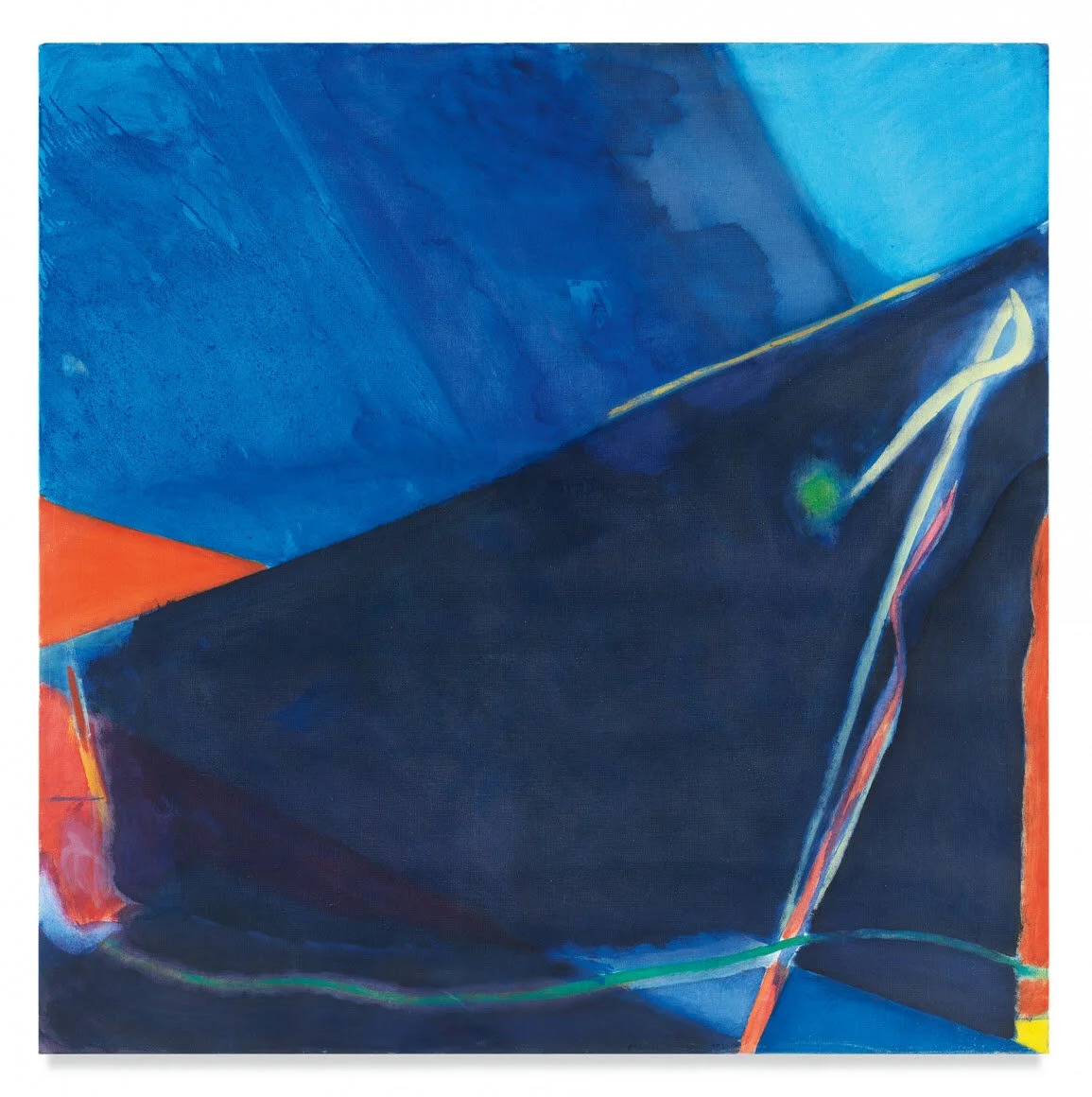
Man & Beast

James Panero, the Executive Editor of The New Criterion, reads the essay “Man & beast,” his reflections on the zoo from the May issue of The New Criterion.

THE NEW CRITERION, May 2021

Man & Beast

On the un-zooing of the zoo 

What is so wild about If I Ran the Zoo? Don’t ask young Gerald McGrew. It was hard to escape the news when, on March 2, the zoo-loving protagonist of Dr. Seuss’s 1950 children’s book was captured and caged along with five other titles. The author’s own estate threw away the key to what quickly became the endangered species of its archive. The confinement not only ended the publication and licensing of six books. The move also cut into our ability to buy used copies of the books online. eBay announced it was “sweeping our marketplace” to remove these titles that now violated the company’s “offensive material policy.” The street price for ragged copies shot up a hundred fold. Overnight, Mein Kampf became more available than the anapestic tetrameters of that “New Zoo, McGrew Zoo.”

Somewhere between “Pasternak, Boris” and “Solzhenitsyn, Aleksandr,” “Seuss, Dr.” might seem like an unexpected addition to the samizdat library. Yet some have long looked to cancel the writer beloved by generations for hitting the funny bones of children while twisting the tongues of parents. This year for “Read Across America Day,” the National Education Association declined to acknowledge Seuss at its annual March event that is, in fact, timed to coincide with the author’s birthday (Seuss had been the focus of the event during both the Obama and Trump administrations). Faced with the full loss of its intellectual property’s value, “working with a panel of experts, including educators,” Seuss Enterprises instead used the birthday to announce that six Seuss books were the first things to go—like stockings hung all in a row.

Born in 1904, Theodor Seuss Geisel had the misfortune of beginning his career as a college humorist at a time when nothing was funny, at least by today’s standards. Some of Seuss’s sophomoric efforts were indeed cringe-making by anyone’s standards. As his early work has been unearthed, activists have painted Seuss as an unregenerate racist who encoded hate into everything from The Cat in the Hat’s supposed minstrelry to Horton’s unwanted paternalism in hearing that Who.

The indictment of If I Ran the Zoo speaks not only to a modern problem with Seuss but also to a modern problem with zoos. Katie Ishizuka and Ramón Stephens are the married academics behind an organization called The Conscious Kid that has led the prosecution against the book. With over two million followers, their Instagram account is the kind that promises to reveal “Childhood nursery rhymes you didn’t realize were racist.” In their 2019 study called The Cat Is Out of the Bag: Orientalism, Anti-Blackness, and White Supremacy in Dr. Seuss’s Children’s Books, the two make a diversity audit of Seuss and particularly target If I Ran the Zoo.

By scouring the world, or at least the world of his dreams, for unusual animals “to be put on display in the White male’s zoo,” according to the authors of the study, Gerald McGrew traffics in Orientalism, subservience, “exotification, stereotypes, and dominance”:

In addition to White males dominating the presence and speaking roles of characters, their violence is used as a tool of White masculinity to support dominance and White supremacy over additional forms of masculinity. An example of how White supremacy, specifically White masculinity, uses violence to support dominance is mentioned in the findings where we see a White male holding a gun while standing on top of the heads of three Asian men.

It is true that McGrew enlists “helpers who all wear their eyes at a slant” from “countries no one can spell.” He also goes “to the African island of Yerka” and employs local aid to return with a “tizzle-topped Tufted Mazurka.” Yet the study’s authors conveniently ignore that McGrew’s exoticizing gaze was an equal opportunity offender, extending to the “Far Western part of south-east North Dakota,” where one can find a “very fine animal called the Iota.” McGrew also tasks local blue bloods in the “Wilds of Nantucket” to “capture a family of Lunks in a bucket.”

For some, the history of America’s zoological parks is not so unlike the one imagined by young Gerald McGrew—and just as damning. For those who run today’s zoos, their cultural position may be just as tenuous as the publication of If I Ran the Zoo. As far back as 1985, Dale Jamieson was writing “Against Zoos” for a chapter in Peter Singer’s In Defense of Animals. In 2018, a group called the The Non-human Rights Project sued the Bronx Zoo, New York’s flagship zoological institution, demanding legal personhood for Happy, the elephant who has lived “wrongfully imprisoned” at the zoo, the suit maintained, for forty-two years. While a Bronx County Supreme Court judge ruled against the motion in February, the zoo nonetheless announced it would soon end its elephant exhibit.

The un-zooing of the zoo should come as no surprise. Since 1993, the Bronx Zoo has officially not been known as a zoo at all, but the “Wildlife Conservation Society.” At the time of the renaming, zoo guides complained that they must now be known as stuffy “docents” in a “wildlife conservation center.” “The society is no longer simply a keeper of zoos and an aquarium, wonderful though those facilities may be,” responded trustee John Elliott, Jr. “The society’s primary mission is to save wildlife. Its new name reflects that mission. Fair enough?”

While the Bronx Zoo has, unofficially at least, now consented to calling itself the Bronx Zoo, a conservation mantra continues to permeate its exhibits. Animals, when they can be seen, are often woefully under-identified, appearing as mere props for a presentation on the dangers of pollution, or deforestation, or some other man-made calamity. At the conclusion of many exhibits, we are given opportunities to atone for our own culpability in this Malthusian world through the contribution of funds.

The zoo’s mission creep reflects a growing discomfort over the dynamics of its founding, a time when elite (and, yes, white) collectors indeed filled cages with game nearly as exotic and far-flung as those specimens for McGrew’s zoo. At the Bronx Zoo, the animals are now dispersed across the park, but what remains of its turn-of-the-century art and architecture, often overlooked by visitors, still speaks to the zoo’s original ambitions.

The New York Zoological Park, as the Bronx Zoo was originally known, began as an initiative of the Boone and Crockett Club, an association founded in 1887 by ten wealthy big-game hunters, including Theodore Roosevelt. Dedicated to game protection and game preserves, in 1895 the Club seeded the board of a new zoological society that would establish a free park “with North American and exotic animals, for the benefit and enjoyment of the general public, the zoologist, the sportsman and every lover of nature,” the Society wrote in its first annual report of 1897. Andrew Carnegie, Cornelius Vanderbilt II, Jacob Schiff, and William C. Whitney were among the first donors as the society took control of 261 acres, an ambitiously large tract of undeveloped land straddling the Bronx River that had been acquired by the New York City Municipal Park Commission in 1884.

These days visitors mainly arrive at the zoo by some back door, as parking lots disgorge them unceremoniously in some odd corner of the park. Yet as conceived, the zoo presented an ordered and elevating classical assembly leading visitors up to nothing less than an acropolis for the animal kingdom. To get some sense of that, today’s visitors must start at the zoo’s original entrance along East Fordham Road, at one time an arboreal boulevard serviced by nearby elevated rail and separating the zoo from the New York Botanical Garden to the north.

Rainey.jpeg

Here one of the last monuments of the zoo’s classical period still anticipates the animal wonders within. In 1934, the zoo unveiled the double-arched bronze gates as a memorial to Paul J. Rainey. His sister, Grace Rainey Rogers, commissioned the sculptor Paul Manship to create the fanciful design based on actual animals in the zoo’s collection. Tortoises, cranes, storks, owls, bears, deer, baboons, leopards, and a lion named Sultan perch on the gate’s stylized vines. The menagerie pays tribute to Rainey, the big-game hunter who filled the zoo, as well as nature museums, with the gifts of his exotic specimens. His 1911 report of his arctic adventure to capture “Silver King,” one of the zoo’s first polar bears, reads like a cross between If I Ran the Zoo and King Kong. As Rainey recounts, after much struggle the first bear he roped on an iceberg was mistakenly garroted: “Presently it seemed to me that the bear was choking, and I ordered the rope loosened at once. Too late! His eyes were glassy, and he was stone dead.”

Past the Memorial Gates, the original zoo entrance leads onto a fountain plaza and set of monumental steps that were at one time bursting with floral arrangements, now mainly turned over to parking and denuded lawn. Here the Rockefeller Fountain, of imagined sea creatures, still adds to the stairs’ Italianate design with its unusual provenance: originally from Como, Italy, where it was created by the local sculptor Biagio Catella in 1872, the fountain was purchased by William Rockefeller as a gift for the zoo in 1902.

image005-1.jpeg

Up the stairs, the zoo’s Astor Court, originally known as Baird Court, still speaks to the zoo’s original focus, in mineral if no longer in animal or vegetable form. Designed by the architects Heins & La Farge, the Court’s brick and limestone neoclassical buildings once housed the animals at the heart of the zoo. Modeled after the Court of Honor at the World’s Columbian Exposition in Chicago of 1893, Astor Court is symmetrical and longitudinal, with the Primates’ House, Lion House, and Large Bird House leading on to the domed Elephant House. Stone and terracotta animal sculptures by Eli Harvey, Charles R. Knight, and Alexander Phimister Proctor cover the façades as though the buildings have been given over to the natural world. Of this design, only the central sea lion pool still serves its original function. While the Court buildings have been restored and maintained through a gift of the Astor family, they are otherwise closed to the public or greatly altered. The Elephant House now houses the museum’s rhinoceri, while the cages of the Lion House have been removed to create an immersive exhibition called “Madagascar!” Lions, primates, birds, and elephants (for now) appear elsewhere, removed into sprawling and often distant settings.

The Elephant House at the Bronx Zoo. Photo: WCS Archives.

The Elephant House at the Bronx Zoo. Photo: WCS Archives.

These naturalistic habitats, most likely more salubrious for the animals’ captivity, may be in line with updated zoological practice, but something got lost in the transition. The animals at the zoo are not in a state of nature, despite the artifice of their current surroundings. With their ordered arrangement, the animals as presented in the neoclassical Astor Court were more clearly and honestly in a state of man. The animal heads sculpted onto these buildings at one time even reflected the actual assembly of the National Collection of Heads and Horns, prize trophies that originally occupied a sixth Court building, designed by Henry D. Whitfield in 1922.

From McGrew Zoo to Bronx Zoo, zoological parks as originally conceived served to reveal not white supremacy but human supremacy, and therefore human responsibility, over the animal kingdom. The big-game hunters who founded the Bronx Zoo maintained such a deep respect for animal behavior and animal habitat that they created this shrine to animals. In the modern age, the animals of the world are the captives of man with no chance of release. Let’s at least give us unwitting jailers a direct engagement with the wonders of creation in our charge. If I ran the zoo, that’s just what I’d do.

Sublet with Bellini

James Panero, the Executive Editor of The New Criterion, reads his essay from the April issue of The New Criterion on the rehanging of The Frick Collection in the former home of the Whitney Museum.

THE NEW CRITERION, April 2021

Sublet with Bellini

On Frick Madison.

For as long as anyone can remember—until last month, that is—Giovanni Bellini’s St. Francis in the Desert (ca. 1480) has lived at a single New York address: One East Seventieth Street. In fact, just about continuously since Henry Clay Frick acquired the painting in 1915, the tempera-and-oil on panel has resided in one room, and one place in that room, known as the Living Hall. There, in the sanctum sanctorum of Frick’s former mansion on Fifth Avenue, it has kept communion with the other paintings, bronzes, porcelains, and furniture that Frick brought together in the final, fecund decade of his life.

For a few years, following the death of J. P. Morgan in 1913, Frick, the self-made Pittsburgh industrialist, became the world’s unrivaled collector of European art, able to acquire masterpieces such as St. Francis in the Desert against all others. Upon Frick’s own death in 1919, his New York mansion was transformed into the home of his collection. According to his wishes, yet against the odds, his domestic setting remained intact. By maintaining its private feel even as it has grown into a collecting institution, The Frick Collection has been able to speak to the acuity of its founder’s eye and the power of his purse. The assembly has also gone against every modern museum trend of pasteurized, homogenized, white-cube walls lined with supposedly blue-chip works.

The presentation of Frick’s genuine masterpieces and historical objects all together, and in such density, is what has made his collection the astonishing place it is: the Bellini flanked by the Titians; the Titians above the small mythological bronzes; the bronzes atop the French commodes; the Chinese figurines atop the French cabinets by the windows; the French writing table illuminated by the electrified Qing dynasty lamps; the scattering of chairs and couches that you could trip over; and, across the room, the two Holbein portraits, eternally glowering at one another, interceded only by El Greco’s Saint Jerome (ca. 1590–1600), who translates the scene from his place above the mantelpiece.

From the moment the Frick opened to the public, art-world nabobs have lodged their complaints with the museum commission of weights and measures about this unbalanced display of fine art and decorative objects. At times, they just about showed up with their crowbars to pry the collection loose from Frick’s opulent setting—which still does not lend its objects, or admit children under ten years of age, or permit photography of any kind. Until quite recently, under the administration of its late founder, Helen Clay Frick, the adjoining Frick Art Reference Library even required jackets for men and skirts for women.

Decrying the Frick’s “sculptural bric-a-brac,” in The New Yorker of December 28, 1935, Lewis Mumford huffed that “The paintings are lost in the background.” “Converting a private mansion into a public museum” was a mistake, he continued: “That may have satisfied the tastes of Renaissance princes, or even that of American millionaires during the first part of the present century, but it no longer meets today’s standard of presentation.”

It was not just Frick’s mixing of business and pleasure, of life and art, that so offended Mumford’s standard. Frick failed to follow the protocols of serious scholarship that mandate one should divide art by geography, chronology, and material. By placing beauty and excellence above other concerns—and by honoring these priorities for a century after his death—The Frick Collection has long gone against the diktats of taxonomic Germanic academicism that make such deviations verboten, making The Frick Collection such a delight.

It goes without saying that a century of curators would have liked nothing more than to rehang The Frick Collection to “today’s standard.” Now, just such an opportunity has befallen the Frick’s current curatorial staff. As I wrote in these pages in March 2020 (see “Bird-brained at the Frick”), the Frick building is now undergoing an expansion that is more of an ill-advised intervention, squaring off John Russell Pope’s round edges and obscuring the light and lines of his Art Reference Library.

For the next two years, during the demolition and construction of this project, the Bellini, along with roughly half of its collection mates, has taken up temporary residence a few blocks north and one block east. It is a moment for broken leases in New York, but also for sublets of opportunity. The Frick has arranged a pop-up in the one time Met Breuer, formerly known as the Whitney Museum of American Art, now simply 945 Madison Avenue—for the period of the residency, to be called Frick Madison. And as might be expected with such a move, Frick Madison clears out the furniture. It cleans up the spaces. It whittles down and reorganizes the collection by geography, chronology, and material, as it austerely rehangs the work in Breuer’s brutalist building.

And yet, Frick Madison succeeds precisely because it adheres to the best traditions of that Germanic art history. It does not try to replace or recreate the Frick mansion with a facsimile installation. Rather it offers us an opportunity to have a direct engagement with art at a time when much more than the doors of One East Seventieth remain shuttered. And this rehang is explicitly temporary, not some “new Frick,” or so we are led to believe.

At its best—and in the hands of the director Ian Wardropper and the curators Xavier F. Salomon and Aimee Ng, this is often at its best—Frick Madison grants us the privilege of seeing these masterpieces in what amounts to a building-wide private viewing room. That’s certainly how you come across Frick’s collection here in this achingly spare, intimately thought-out presentation. Take that Bellini: positioned now in an alcove of its own, illuminated by one of Marcel Breuer’s cockeyed trapezoidal windows, St. Francis in the Desert makes the most of its new light both natural and divine.

Bellini was a genius of framing. He could paint his figures as if they were sitting just inside a window display. He also knew what to leave out, or just beyond the painting’s edges. For all the details we see in St. Francis in the Desert—and we may never stop finding new details in this composition—it is the light, blazing onto the scene from beyond the left frame, that is most revelatory. While very much seen by the painting’s subjects, the source of the light is left unseen to us. We only sense it indirectly, through Francis’s stunned countenance and the shadow lines behind him. At Frick Madison, the light now entering from the ray-like window on the wall to the left of the painting, blinding when you first come across it in the otherwise dimmed gallery space, newly illuminates Bellini’s own startling dynamics by extending the lines of light and shadow both depicted and real.

For the first time, you can also take a seat by the Bellini. Be sure to leave enough time to do so. I may have spent an hour in front of this work, standing up, sitting down, trying to take in what is, ultimately, untakable. I wish I could have stayed longer. When this painting went up for sale over a century ago at Colnaghi, in London, Bernard Berenson described it as “the most beautiful Bellini in existence, the most profound and spiritual picture ever painted in the Renaissance.” The divine is in its details. “Be praised, my Lord, through all your creatures,” that mountain man Francis wrote in his Canticle of the Creatures, “especially through my lord Brother Sun, who brings the day, and you give light through him.”

Bellini devotedly rendered each plant and every animal of this verdant Italian agricultural scene in a newly proximate light. Out of his hermitage, Francis steps forward in such amazement that he has left behind his sandals, still tossed under the reading desk of his rustic dwelling. He holds his hands outstretched to receive the stigmata of Christ’s wounds as he is punctured by a light only hinted at by the rays streaking down in the upper left corner of the composition. That same light seems to liquefy the stone behind him, which melts like ice into a spring, feeding the kingfisher below. A heron, a donkey, and a rabbit occupy the middle ground, while a shepherd tends to his flock in the valley next to a river pooling by a low wooden dam. In his excellent audio commentary, Salomon suggests the surrounding figures are oblivious to Francis’s spiritual vision, but I wonder. From the donkey to the lambs, all seem to be alerted to something beyond themselves. Even the shepherd, far in the distance, looks up and turns his head back to us. The light may be incomprehensible, but it is also impossible to ignore.

There are many such moments here of new encounters with old friends. Spread across three upper floors, the collection is divided by geography and type: northern European painting and sculpture on Floor Two; Italian and Spanish painting and sculpture along with Indian carpets, porcelain, bronzes, enamels, and clocks on Three; and French and British painting, sculpture, and decorative arts on Four. The order has been dictated by the size of the floor-plates and the heights of the ceilings, which increase as you go up, accommodating the larger French paintings at top, but scaled down for the northern miniatures below. Wall labels are also gratefully non-existent, and instead a handsome sixty-page printed gallery guide is available free of charge by the entrance.

Jean Barbet, Angel, 1475, Bronze, Frick Madison (The Frick Collection).

Jean Barbet, Angel, 1475, Bronze, Frick Madison (The Frick Collection).

Sculpture introduces each floor. On Floor Two, Jean Barbet’s Angel (1475) points the way for new arrivals. In his commentary, Salomon describes the story for this immaculate work that survived the meltdown of the French Revolution, one that “dramatically underscores the importance of preserving remarkable works of art—one of the most important missions, if not the defining aim, of any museum.” Amen to that.

Just around the bend, Holbein’s portraits of those undoubting Thomases, More and Cromwell, confront each other as though at the back of an alley, unmediated and raw, squinting at each other now at eye level. Past the Rembrandts, the Frick’s eight Van Dycks are united in one room for the first time. Just ahead, the three Vermeers now face one another like high-definition screens onto Dutch life, encouraging ready comparison.

Paintings by Jean-Honoré Fragonard, installed at the new Frick Madison. Photo: The Frick Collection.

Paintings by Jean-Honoré Fragonard, installed at the new Frick Madison. Photo: The Frick Collection.

There is some work here that is rarely seen, and even more that is often overlooked. Two of the Van Dycks do not usually appear in the Frick’s public galleries. The same goes for the Mughal carpets, which need special protection from light. The rooms dedicated solely to European and Asian porcelain may be most surprising, elevating these “background” objects as solitary works in conversation with one another and across continents. But even the Frick’s highlights seem startlingly fresh. Removed from their opulent walls, Fragonard’s Progress of Love series of 1771–72, the four canvases he painted for Madame du Barry, seem newly monumental, especially in the spare hanging that now divides them from the scenes he added two decades later.

The only oversight here may be the bust of Frick himself. Positioned rather uneasily by the lobby elevators, shouldn’t he get a painting of his own to admire? How about Gilbert Stuart’s George Washington, now off view? With only about half of the collection we usually see now available at Frick Madison, the omissions may be as interesting as the inclusions, calling out for a rehanging sometime during the run. But, mostly, Frick Madison calls us back to The Frick Collection, when it is collected together once again at One East Seventieth. After seeing this work in a new light, I look forward, even more, to seeing it in the old.

Gallery Chronicle (March 2021)

THE NEW CRITERION, March 2021

Gallery Chronicle

On “Albers and Morandi: Never Finished” at David Zwirner, “Victor Pesce: Still Life” at Elizabeth Harris Gallery, “Emily Mason: Chelsea Paintings” & “Wolf Kahn: The Last Decade 2010–2020” at Miles McEnery Gallery, “Jill Nathanson: Light Phrase” at Berry Campbell, “Jane Freilicher: Parts of a World” at Kasmin Gallery, “Deborah Brown: Things As They Are” at Anna Zorina Gallery, “Tworkov: Towards Nirvana / Works from the 70s” at Van Doren Waxter & “Sharon Butler: Morning in America” at Theodore:Art.

“Albers and Morandi: Never Finished” is one of those sublime, museum-quality exhibitions where sight alone is allowed to inform and delight.1 “Museum-quality” might do a disservice, in fact, as the qualities of our museums are increasingly drawn to the verbal, even the hectoring and didactic, over the pictorial. Now on view at David Zwirner, this exhibition is near perfect in its selection, presentation, and insight. The result is stunning, even dumbfounding, in how it shows painting in its own language, on its own terms, and, at its best, speaking across styles in visual conversation.

Although near exact contemporaries—Josef Albers was born in 1888; Giorgio Morandi in 1890—these two artists seemingly painted worlds apart. Albers was theory. Morandi was practice. The hard edges of Albers looked forward. The soft contours of Morandi looked back. Or so we were told. “Never Finished” finds their shared affinities. They shared, for one, the same absorptive palette. Rather than radiate out, pale blues, airy grays, buttery yellows, and earthy browns pull us in. The two artists also approached composition in complementary ways, exploring their own recurring motifs. Simplex munditiis is the phrase that comes to mind from the recesses of high school Latin—the Horatian line that might translate as “simple in its refinements.” Both Morandi and Albers distilled their paintings to their own bare minimums of essential information, each paying respect, one might even say “homage,” to their chosen forms.

Seen together, Morandi brings out the softness of Albers’s line, while Albers reveals the sharpness of Morandi’s shapes. Up close, Albers is all edge, but back away and his squares, despite their flat brushwork, take on a mysterious glow. From afar, Morandi’s still lifes seem extra still, but get closer and those squares, rectangles, and triangles come alive in their own mysterious ways.

Each artist finds a balance in his compositional energies. Albers looked for the tension between figure and frame. In all of his signature “Homage,” just what, precisely, is the “Square,” and what is the frame around it? Beyond the square forms on masonite, here, in certain works, the frames themselves thicken to become part of the overall compositions.

Albers’s designs seem to tunnel inward, often from light outer forms to darker voids. His innermost squares are both absences and presences, forms floating on top that also sink beneath. Morandi finds a similar tension between subject and object. Just what is the “natura” of his “morta”? Is it the canvas itself, so sensuously brushed, or the vessels depicted therein? Here, rather than forward-facing, Morandi’s frames are allowed to recede, with his canvases now floating in the void. As curated by the gallery’s David Leiber, this exhibition makes the most of its space and light. Each room uses paired works and lines of sight to tunnel from one to the next, through evolving moods and tones, in a painterly conversation that is, indeed, “never finished.”

Installation view of “Victor Pesce: Still Life,” Elizabeth Harris, New York. Photo: Elizabeth Harris.

Installation view of “Victor Pesce: Still Life,” Elizabeth Harris, New York. Photo: Elizabeth Harris.

Just up the block from Zwirner, last month at Elizabeth Harris, that small, serious gallery holding out among the megas of Chelsea, “Victor Pesce: Still Life” revealed the life in the stillness.2 With unmistakable homage to Morandi, and perhaps not a little to Albers, Pesce painted basic forms with complex intensity. Created in the last twelve years of his life—Pesce died in 2010 at the age of seventy-one—the works on view depicted blocks and bags, boxes and vases. Over time, a simplicity of means betrays a strangeness of meaning, as these still lifes dissolve into abstractions of oil and ideations of shape. Just what is that haunting green block of Bridge (2007)? Pesce looked for the bones of form. “In the language of painting,” as John Goodrich writes in his catalogue essay, “he found the means of making them rhythmically, vitally alive—known, as a painter might know them.”

Emily Mason, Ancient Incense, 1981, Oil on canvas. Miles McEnery Gallery, New York.

Emily Mason, Ancient Incense, 1981, Oil on canvas. Miles McEnery Gallery, New York.

Spread across the gallery’s two Chelsea venues, Miles McEnery last month enlightened the dark days of winter with a luminous husband–wife double-header. “Wolf Kahn: The Last Decade 2010–2020” looked to the artist’s late pastel-like landscapes. “Emily Mason: Chelsea Paintings” opened a window onto the sunny compositions the artist developed in her New York loft, in which she had worked since 1979.3 Taken together, the paired exhibitions honored two artists, married for sixty-two years and both recently deceased, who maintained a connection with Tenth Street and, in their enduring work, each other.

In her nearly square canvases, here dating from 1978 to 1988, Mason lit up her compositions with washes of color that appear like dapples of light. As though illuminated by the sunshine from a window, her oils operate more like photo emulsion, seemingly brightened by luminous rays passing over their surfaces. At their best, as in The Green In Go (1983), these passages open up her designs. Streaks of light pull us into her abstractions that might otherwise be too densely color-filled to unpack.

Wolf Kahn, Against a Red Slope (Large Version), 2018, Oil on canvas. Miles McEnery Gallery, New York.

Wolf Kahn, Against a Red Slope (Large Version), 2018, Oil on canvas. Miles McEnery Gallery, New York.

Mason’s abstract dynamics revealed something about her husband’s landscapes a block away. Late in life, Kahn’s woodsy scenes became a thicket of blowing, branching brushstrokes. The feeling of vernal softness, of a verdure perfumed with yellows, oranges, and greens, went right to his surfaces. Yet Kahn left a hint of depth, a spot of color or light, to signal distance. In Redwoods (2019), a bit of sky viewed through the trees brings us into the scene. In Woodland Density (2019), a blue hill, as though cast in shadow, carves out deeper space. Such glimpses, whether of the horizon or a cabin or a woodland stream, offer just the right destination in the abstract wilderness.

Installation view of “Jill Nathanson: Light Phrase,” at Berry Campbell Gallery, New York. Photo: Berry Campbell Gallery.

Installation view of “Jill Nathanson: Light Phrase,” at Berry Campbell Gallery, New York. Photo: Berry Campbell Gallery.

Anyone who has ever mixed intensely chromatic paints will notice that the results are not brighter colors but duller murkiness. That’s Color Theory 101. In her alchemical experiments with pigments and polymers, Jill Nathanson looks for ways to prove color theory wrong. Through abstractions created of translucent layers of acrylic, polymers, and oil, which she pours onto panel, Nathanson tries to find the light of her colorful combinations. In “Light Phrase,” her latest exhibition at Chelsea’s Berry Campbell Gallery, on view last month, Nathanson looked to enlarge and refine these fluid forms.4

Unlike the opaque layering of oil on canvas, Nathanson’s translucent media are far less forgiving in their combinations and permutations. Occasionally the experiments go awry. In Sparkshift (2020), shimmering pools of purples, blues, oranges, and reds risk puddling at one point into a brown. In other compositions, such as Through Another’s (2020), color-rich curves make some abrupt turns that feel overly manipulated. The best forms were those that, despite their complex creation, seemed simple, even natural, in occurrence. Take the upward swirl of Tan Transpose (2020) or the sparkling beach glass of Only a Friend (2020). Here were crystal visions filtered through green-, blue-, yellow-, and rose-colored glasses.

Jane Freilicher, Parts of a World, 1987, Oil on linen, Kasmin Gallery, New York.

Jane Freilicher, Parts of a World, 1987, Oil on linen, Kasmin Gallery, New York.

“Parts of a World” is an apt title for an exhibition of Jane Freilicher’s still lifes. The artist could take on a world of parts and incorporate them into a painted whole. Last month Kasmin Gallery presented fifteen of these still lifes, painted over five decades beginning in the early 1950s.5 In her quotidian visions of fish and flowers, Freilicher often painted the views from her beach-scrub window in Water Mill, Long Island, and her greenhouse-like studio overlooking the rooftops of New York’s East Village. Near and far, inside and out are taken in with equal measure. A single color then connects the disparate parts. What results is a mood, a world of sense and sensation that left me smelling the goldenrod and forsythia and hungry for the oranges and oysters.

Deborah Brown, Melancholia, 2020, Oil on canvas, Anna Zorina Gallery, New York.

Deborah Brown, Melancholia, 2020, Oil on canvas, Anna Zorina Gallery, New York.

It’s been a year for keeping things in house. For the painter Deborah Brown, the household gods of kachina dolls, glass figurines, and pet dogs all become subject matter in her latest, plague-year body of work, on view last month at Anna Zorina Gallery.6 A painter of loose lines and sun-drenched colors, Brown never lost the sense for the light of her Pasadena youth, even when walking her dog Zeus in the industrial business zone of East Williamsburg, Brooklyn. Brown looks for the animism in everyday scenes. Twenty-five years ago, for a mosaic series in the Houston Street subway station, she reimagined the train platforms with sea life swimming among the straphangers. Now skewed perspectives of domestic scenes, starring the bric-à-brac we have all rediscovered, find the humor and warmth of a year of staying in.

Installation view of “Tworkov: Towards Nirvana / Works from the 70s,” at Van Doren Waxter, New York. Photo: Van Doren Waxter.

Installation view of “Tworkov: Towards Nirvana / Works from the 70s,” at Van Doren Waxter, New York. Photo: Van Doren Waxter.

The minimalist 1970s challenged the expressionist 1950s. For Jack Tworkov, at one time a burning young painter of the New York School, the answer was to cool his molten compositions into glass and stone. Now at Van Doren Waxter, “Towards Nirvana / Works from the 70s” collects these prismatic, architectural constructions of black, white, and gray.7 A fine essayist and a chair of Yale’s art department in the 1960s, Tworkov always reflected on art and history and his role within it. This exhibition includes a catalogue essay by the curator Jason Andrew and a sample of Tworkov’s own writing that well represents his broad perspective. It should not have been unexpected that Tworkov, entering the 1970s, would seek a new path. “I am tired of the artist’s agonies,” he remarked in 1974. His answer was to look to systems—the movement of chess pieces or the rules of composition—to distill his abstractions. His wild mark-making became more like hatches, his surfaces like etched planes overlapping and folding in on themselves. The exhibition at Van Doren Waxter reveals the color and heart that still energized these cerebral constructions. A dot of red or dash of yellow electrifies these abstractions far more than some wild expressionist brush.

Installation view of “Sharon Butler: Morning in America,” at Theodore:Art, Brooklyn. Photo: Sharon Butler.

Installation view of “Sharon Butler: Morning in America,” at Theodore:Art, Brooklyn. Photo: Sharon Butler.

Sharon Butler may have identified the “new casualism” of the outer-borough aesthetic, that studied desultoriness of what we might call the Jefferson Street Touch, but her latest paintings evince a new formalist intent. I like all the buttoning up. In her latest exhibition at Theodore:Art, forms and patterns have matured in her compositions.8 The contingent line has developed into the assured mark. The white holes of Pink (Dec 19, 2018) (2020) play between figure and ground. The rectangles of May 29, 2018 (2020) balance like pickup sticks. Meanwhile her brush handling has replaced freshness with maturity. Surfaces have aged. These paintings have a history. It’s been a year for feeling the years.

1 “Albers and Morandi: Never Finished” opened at David Zwirner, New York, on January 7 and remains on view through April 3, 2021.

2 “Victor Pesce: Still Life” was on view at Elizabeth Harris Gallery, New York, from January 7 through February 27, 2021.

3 “Emily Mason: Chelsea Paintings” and “Wolf Kahn: The Last Decade 2010–2020” were on view at Miles McEnery Gallery, New York, from January 7 through February 13, 2021.

4 “Jill Nathanson: Light Phrase” was on view at Berry Campbell, New York, from January 7 through February 6, 2021.

5 “Jane Freilicher: Parts of a World” is on view at Kasmin Gallery, New York, from January 21 through March 13, 2021.

6 “Deborah Brown: Things As They Are” was on view at Anna Zorina Gallery, New York, from January 7 through February 13, 2021.

7 “Tworkov: Towards Nirvana / Works from the 70s” opened at Van Doren Waxter, New York, on January 14 and remains on view through March 20, 2021.

8 “Sharon Butler: Morning in America” opened at Theodore:Art, Brooklyn, on January 15 and remains on view through March 7, 2021.