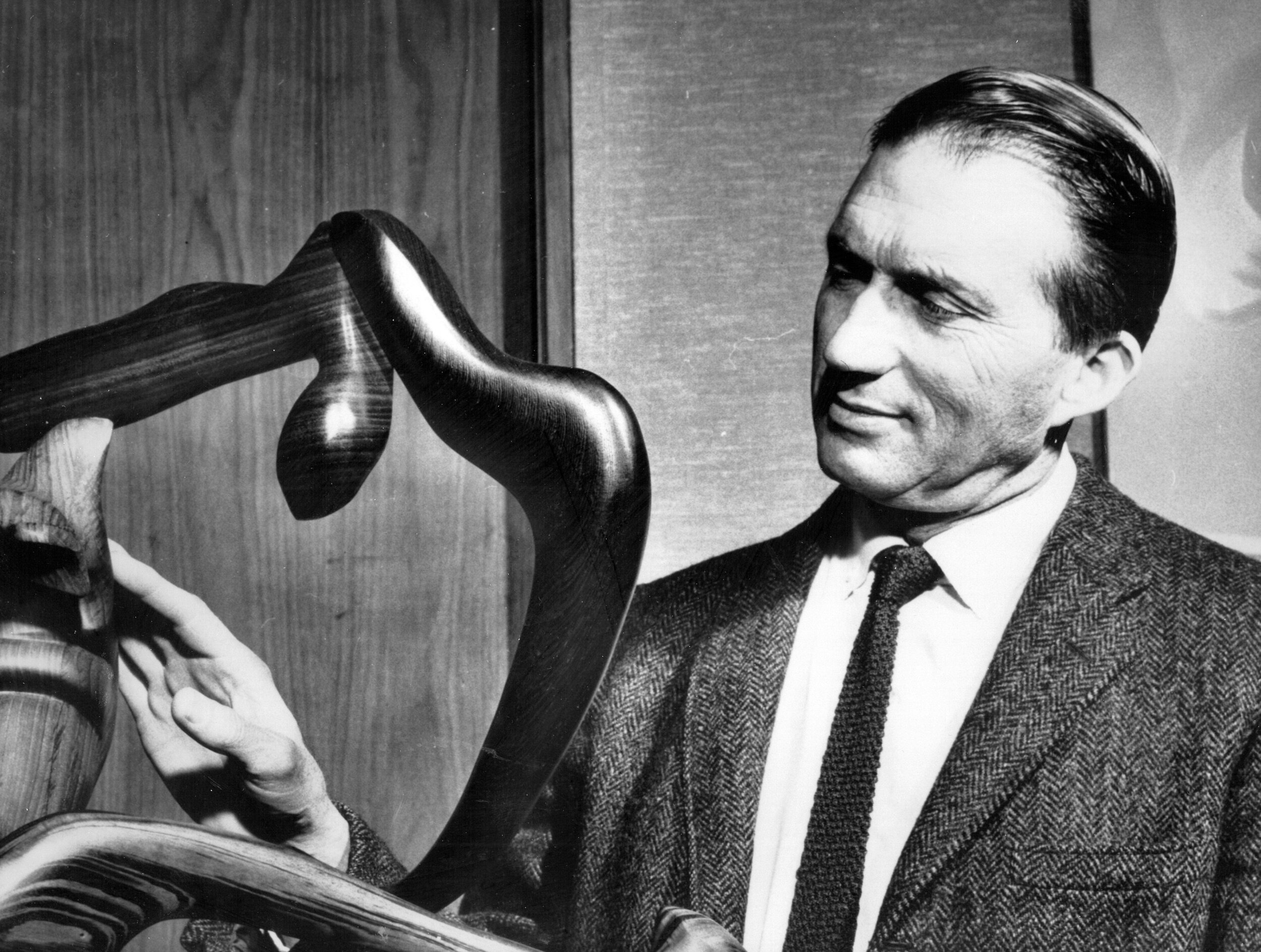
At The New Criterion, we were proud to be one of the last remaining venues to feature John regularly and at length. At the end of his life, he otherwise made do with a blog called Uncensored John Simon—underwritten by his surprise friend Yoko Ono—and appearances on local Westchester television. John wrote seventy-six pieces for The New Criterion from 1989 through, now, 2020. The essay in this issue that carries him over the decade line, a review of a new collection of writings by Vladimir Nabokov, was in edits when he died on November 24. Even at the end of his life, John wrote in a distinctive style of erudite prestidigitation and playful idiom: “obiter—or arbiter—dicta” . . . “cream of a much larger crop.” The piece bears his precise and unmistakable accent.
The subject matter of Nabokov also seems right for a final act. The two shared linguistic affinities. Each delighted in their adopted, “richer” English language. Wordplay abounds for both writers, although John was quick to point out that Nabokov did not know German—unlike the reviewer of the present volume. A “special, poetic prose that depends on comparisons and metaphors” came to define Nabokov, John writes in this review. In Paradigms Lost, he made a similar observation about himself:
I suppose I must credit my coming to English relatively late with my especially analytical, exploratory, adventurous approach to it. I am always surprised when people marvel at the way some foreigners—Joseph Conrad, Karen Blixen, alias Isak Dinesen, Vladimir Nabokov—wrote English. If you have a sufficient feeling for and facility with language, coming to a specific tongue later rather than earlier can prove a distinct advantage. . . . There is a sense in which one is both an insider and an outsider in that language, and the interplay between the two becomes creative play.
As an outsider, John reveled in the new language at his fingertips. “English became eroticized for me,” he said. Beginning in Belgrade and moving on to study in Cambridge, England, he finished his high school years at New York’s Horace Mann. When he enrolled at Harvard, where he went on to earn a doctorate in comparative literature, he tested the potential of his adopted language by writing “ardent verses to a number of Radcliffe girls.” He says his “poetry ran dry before there was enough of it for a volume; by then, however, my prose had begun.” One must also wonder at his poetry’s amatory successes. He described one story as involving a “rutilant princess and a dainty redhead with a steamily rubescent epidermis.” His first love was words.
John defended the significance of words while bristling at their devaluation. He did not genuflect to identity politics. Nor did he come to our shores to carry America’s cultural baggage. The shocks of the Sixties only clarified this critical vision. He saw our cultural debasement as stemming from “some sort of populism, Marxism, bad social conscience, demagoguery, inverted snobbery, or even moral cowardice.”
Even in the 1970s, he questioned the rising Orwellian impositions of the new Left. “Should we Genderspeak?,” he asked in one essay for Esquire. “I understand and even sympathize with a woman’s desire not to be called a poetess or an authoress, because there was once a kind of female-ghetto poetry and prose that gave poetess and authoress a bad odor. But actress was never pejorative, nor, certainly, were empress, priestess, duchess, and the rest.” Contrary to the prescriptive dictates of our political ophthalmology, John was not about to start wearing rose-colored glasses.
The decline of criticism was just as much his concern as the decline of culture. “Insensitivity is the coloring of the age,” he told Mike Wallace in 1978. “The only way that you can pierce all that protective, or maybe not protective, coloring is by calling people’s attention to the fact that another opinion exists. You can’t do that by whispering. You can’t do that by a polite little rap on the knuckles. You have to make yourself felt.” Some years ago, my wife and I took John out for dinner in the theater district to be followed by a show (which he left at intermission). When she asked John’s opinion about another critic, his voluble response nearly sent the proverbial record scratching and plates crashing to the floor. I will reserve his remarks to the grave.
We “read a critic for the writing,” John says in “Critics & criticism,” his essay in these pages in November 2018. “If the critic goes beyond information and adjudication, if he or she can add wit to the review or critique, the resultant effect is at least doubled. . . . This is scarcely less important than the critic’s yea or nay.” As the explosion of the summer blockbuster paralleled the rise of pop criticism and hot takes, the thumbs-up, thumbs-down school of criticism was never for him: “Except from the palsied or mentally defective, it takes no dexterity whatsoever, let alone art.”
Nor did John have a style well suited for the proliferation of mass media. Up against the imperial forces of Gene Siskel and Roger Ebert, in 1983 he waged a one-man rebellion on Nightline against the dark side of Star Wars:
The raves for the early Star Wars have been so violent and so extravagant, that I feel one cannot afford to mince one’s words if one dislikes these things. I feel they’re so bad because they’re completely dehumanizing. Obviously, let’s face it, they are for children, or for childish adults. They are not for adult mentalities, which unfortunately means they are for a lot of my fellow critics, who also lack adult mentalities.
Rather than watch Return of the Jedi, John suggested that children—and Roger Ebert—read Huckleberry Finn or see Tender Mercies.
Good opinions may never be popular, but they need to be stated. Serious criticism often stands against majority rule and what one wants to hear. A year ago John joined me in my office to record a discussion about his life in review. Do you have any advice for aspiring critics?, I wondered at the end.
I mainly give them a piece of advice, which may not be helpful, or maybe it will, but is to trust themselves: to review in the way that they really feel or really think. Not in the way the audience, the readers, the editors, the public might think. But they themselves, what their true feelings, true opinions are. That is what you heed, and what you put on paper or on the internet.
John was not anything but himself. His departure leaves us without a friend to call and a culture desperately in need of his criticism.