• Home
  • About
  • Writing + News
  • Media
  • Books
  • Search
  • Contact
  • Subscribe
Menu

James Panero

Street Address
City, State, Zip
Phone Number
writer, editor, critic

Your Custom Text Here

James Panero

  • Home
  • About
  • Writing + News
  • Media
  • Books
  • Search
  • Contact
  • Subscribe

Escape Artist

May 7, 2026 James Panero

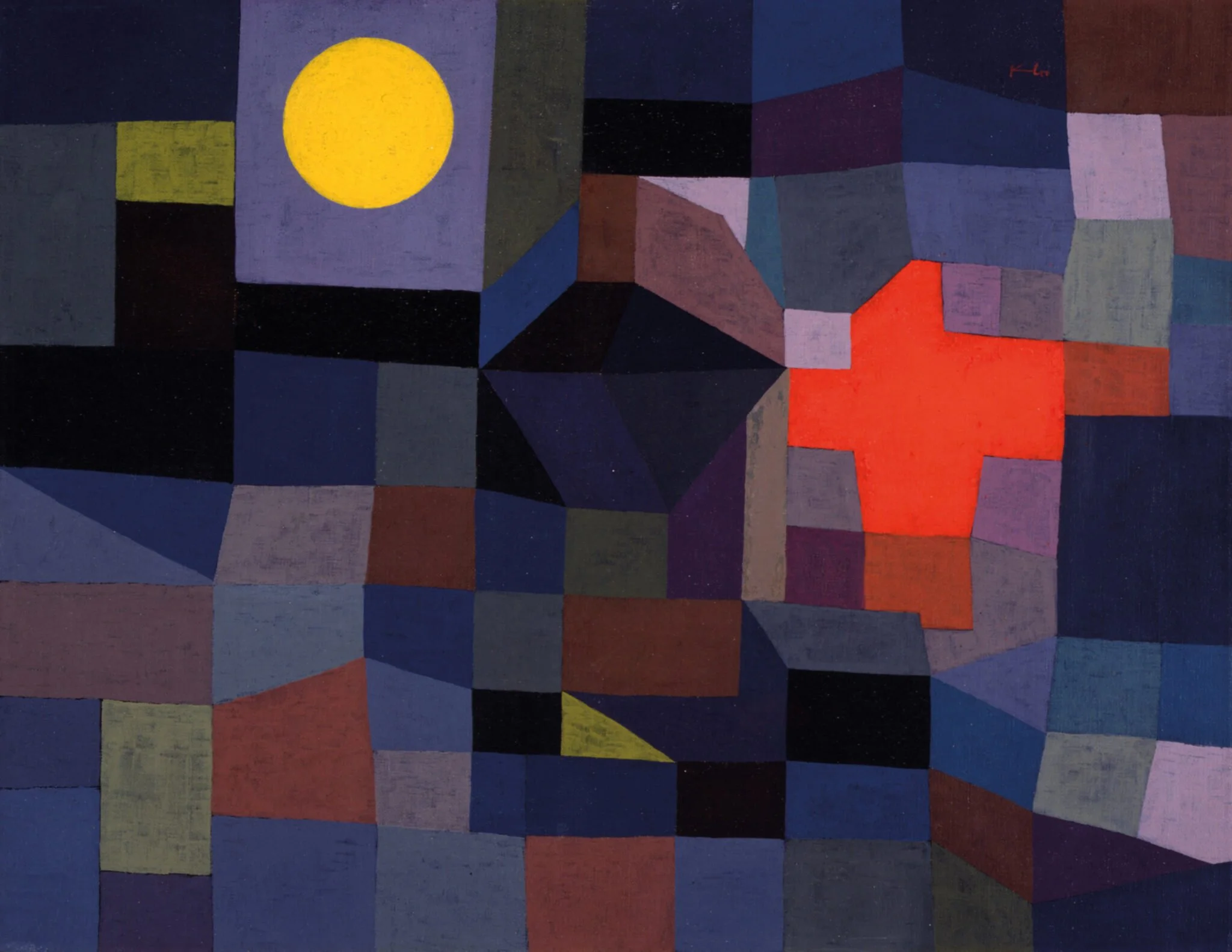
Paul Klee, Fire at Full Moon, 1933, Mixed media on canvas, Museum Folkwang, Essen. © 2026 Artists Rights Society (ARS), New York.

THE NEW CRITERION, May 2026

Escape artist

On “Paul Klee: Other Possible Worlds,” at the Jewish Museum, New York.

The Nazis wasted no time in denouncing the artist Paul Klee (1879–1940). On February 1, 1933, less than a month after Hilter’s ascendance, the periodical Die Rote Erde (The Red Earth) published a hit piece on the Düsseldorf Academy and its fifty-three-year-old instructor:

Then the great Klee makes his entrance, already famous as a teacher at the Bauhaus. . . . He tells everybody he has pedigree Arabian blood in his veins, but is actually a typical Galician Jew. He paints in a crazier and crazier way, he bluffs and baffles, his students goggle and gape, a new, unheard-of art makes its appearance in the Rhineland.

Born in Switzerland to a German father and Swiss mother, both musicians, Klee was not Jewish, Galician or otherwise. It made no difference. Within the year, Klee lost his academic post. The Gestapo raided his apartment in Dessau and seized six baskets of papers. Finally Klee was forced to relocate to Bern, the city of his birth. He lived out his final decade in Swiss exile.

Elusive, idiosyncratic, and wide-ranging, Klee’s work today might seem decorative and anodyne. Clement Greenberg was right to observe in 1957 that “almost everybody, whether aware or not, was learning from Klee.” The artist’s inventive and experimental mode, occupying a liminal space between depiction and description, became part of the post-war visual vocabulary. You can see his influence in artists from Jackson Pollock to Keith Haring.

The Nazis well understood his subversive encoding. Klee connected his art to child-like design, primitive symbolism, and parodic marginalia. He advocated for the sort of free-form line the Nazis looked to flatten. Identifying himself with the social outcast—at times the Harlequin, at others the Jew—Klee faced down the scourge of anti-Semitism by association. Occasionally he even made this association explicit. He deployed symbols such as the Star of David in his compositions. More than a decade before his persecution by the Nazis, as the artist went up for a professorship at the Academy of Fine Arts, Stuttgart, in October 1919, the press denounced him as “Paul Zion Klee.”

This history helps explain why the Swiss German artist now appears in “Other Possible Worlds,” a major retrospective at the Jewish Museum of a hundred works that focuses on Klee’s final decade.1 “He was not Jewish,” writes Mason Klein, the museum’s senior curator emeritus and the organizer of this exhibition, “but he might as well have been, given his particular denunciation by the National Socialists in 1933 in Germany.”
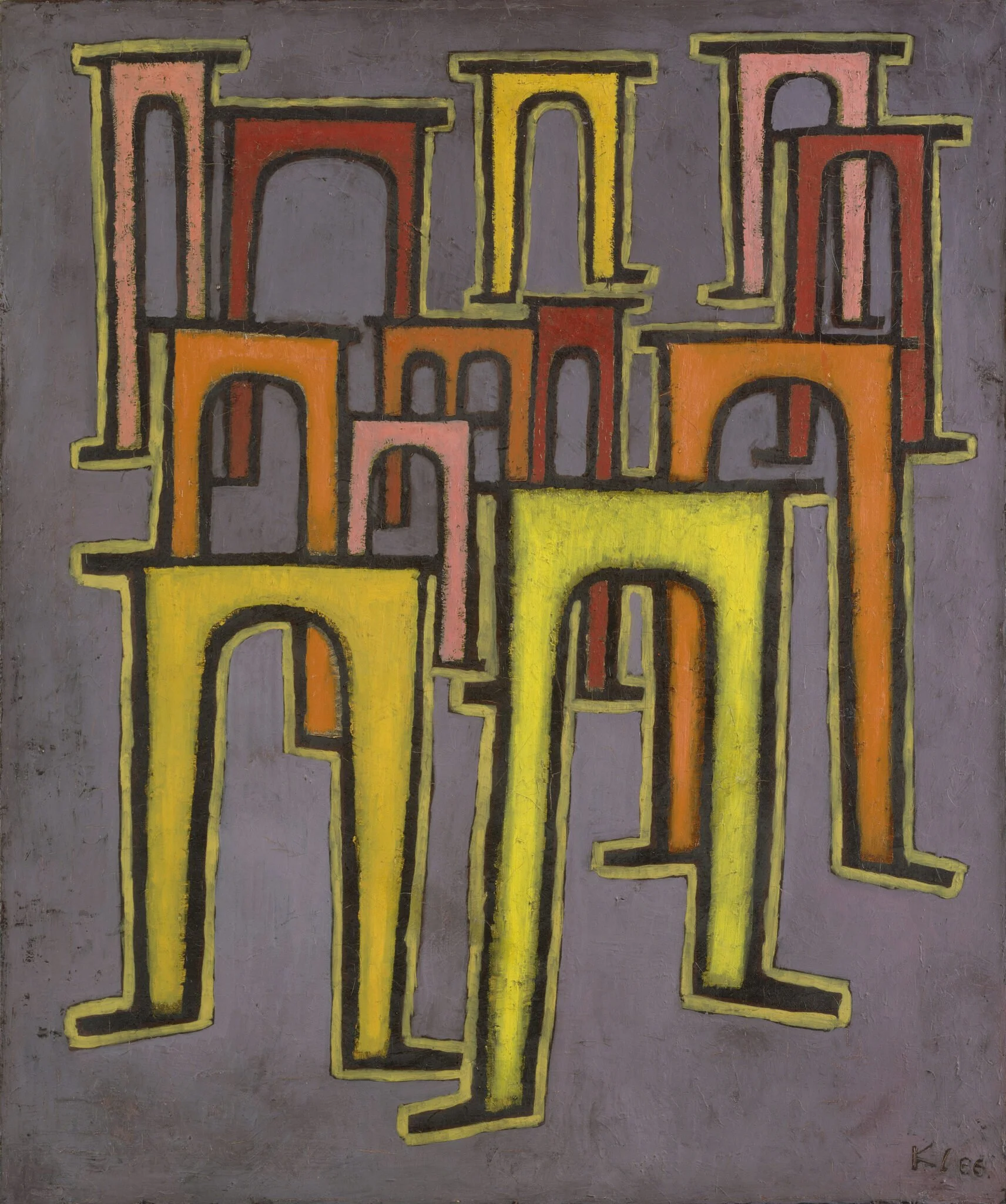
Paul Klee, Revolution of the Viaduct, 1937, Oil on cotton, Hamburger Kunsthalle. © 2026 Artists Rights Society (ARS), New York.

At the center of this presentation, and an impetus for the exhibition, is a selection of drawings from a rarely seen cycle of some two hundred works that Klee produced in 1933—a furious assembly created in response to what he called the “Nazi Socialist revolution.” Lost for decades, the works on paper were only rediscovered in 1984 by the Klee cataloguer Jürgen Glaesemer at Bern’s Paul Klee Foundation. In 2003, the art historian Pamela Kort presented them for the first time through four exhibitions in Germany and Switzerland.

Composed in wild scribbles of pencil and chalk, these drawings are expressive and explicit. In title and substance they take dead aim at the false verities of the Nazi regime: “He” a Dictator Too! (Auch “ER” Dictator!) features a man pointing down at an exclamation point; Child Murder (Kindermord), an attack on a domestic scene; Crawling Man (Kriechender), a quivering figure on all fours; Accusation in the Street (Anklage auf der Straße), a man directing a crowd’s attention; and Violence (Gewalt), a laughing stick-figure who shoots scribbles into a screaming, crouching victim.

The drawings, here on loan from the Zentrum Paul Klee, Bern, are different from the reserved and finely wrought designs we might expect from an artist who otherwise spun his compositions like intricate spiderwebs. Klee showed the series over dinner in the summer of 1933 to the sculptor Alexander Zschokke and the art historian Walter Kaesbach, both Düsseldorf colleagues, and Zschokke later recalled he thought the cycle missed its mark:

The start of the cycle was a drawing with a few pencil strokes, not very straight, that looked like a child’s drawing, helpless. I must confess that this beginning . . . had a somewhat comic effect and appeared not to remotely match the seriousness of the situation in which the artist found himself.

At the Jewish Museum, with a selection of work extending as far back as 1903, “Other Possible Worlds” reveals how, in the 1933 cycle, Klee was revisiting his graphic origins in illustration and satire. A selection of etchings from his series Inventions (Inventionen), of 1903 and 1905, here on loan from New York’s Museum of Modern Art, hints at his admiration for the caricatures of William Hogarth and Honoré Daumier. Virgin in the Tree (Jungfrau im Baum) presents an aging female nude sprawled out across dead branches. The Hero with the Wing (Der Held mit dem Flügel) features a figure with broken wings and heavy feet rooted in the earth. Two Men Meet, Each Believing the Other to Be of Higher Rank (Zwei Männer, Einander in Höherer Stellung Vermutend, Begegnen Sich) depicts Wilhelm II and Franz Joseph groveling down to one another. An example from another series, this one an illustration from 1911 for a chapter of Candide, dispenses with the modeled, sculptural effects of these early prints in favor of a simpler, more scribbled style later echoed in the 1933 cycle. “Satire must not be a kind of superfluous ill will,” Klee once said, “but ill will from a higher point of view. Ridiculous man, divine God.”

Other Possible Worlds” lays out a wide sampling of Klee’s circuitous output. At times it feels too wide. The exhibition attempts to be both a focused display and a retrospective survey and never quite delivers enough of either. A through line is not always apparent in the offerings. The exhibition also gives short shrift to Klee’s many formal innovations as it pursues his symbolic meanings. Klee’s creative processes of monoprinting and oil transfers, for example, freed his line from the artist’s controlling hand as he avoided a grand manner in favor of rhythmic ramblings. Coming from a musical background, Klee created visual sonorities that could be contrapuntal—semiautonomous points and counterpoints. One abstract watercolor here, from 1922, is titled Overture (Ouvertüre) (1922, collection of Alexander Berggruen). By never quite connecting the dots, Klee took a “line for a walk,” as he famously called his compositional style.

There are, nevertheless, some peripatetic highlights here. One is Chosen Boy (Auserwählter Knabe) (1918, anonymous loan, courtesy of the Mount Holyoke College Art Museum), of a child surrounded by a halo of dreamlike geometrical forms. In its selection, the Jewish Museum has also sought out works with explicit Jewish references. Harlequin on the Bridge (Arlequin auf der Brücke) (1920, Museum Berggruen, Neue Nationalgalerie, Stiftung Preußischer Kulturbesitz, Berlin) is a symbolic self-portrait in which the artist-figure straddles a river beneath a Jewish star.
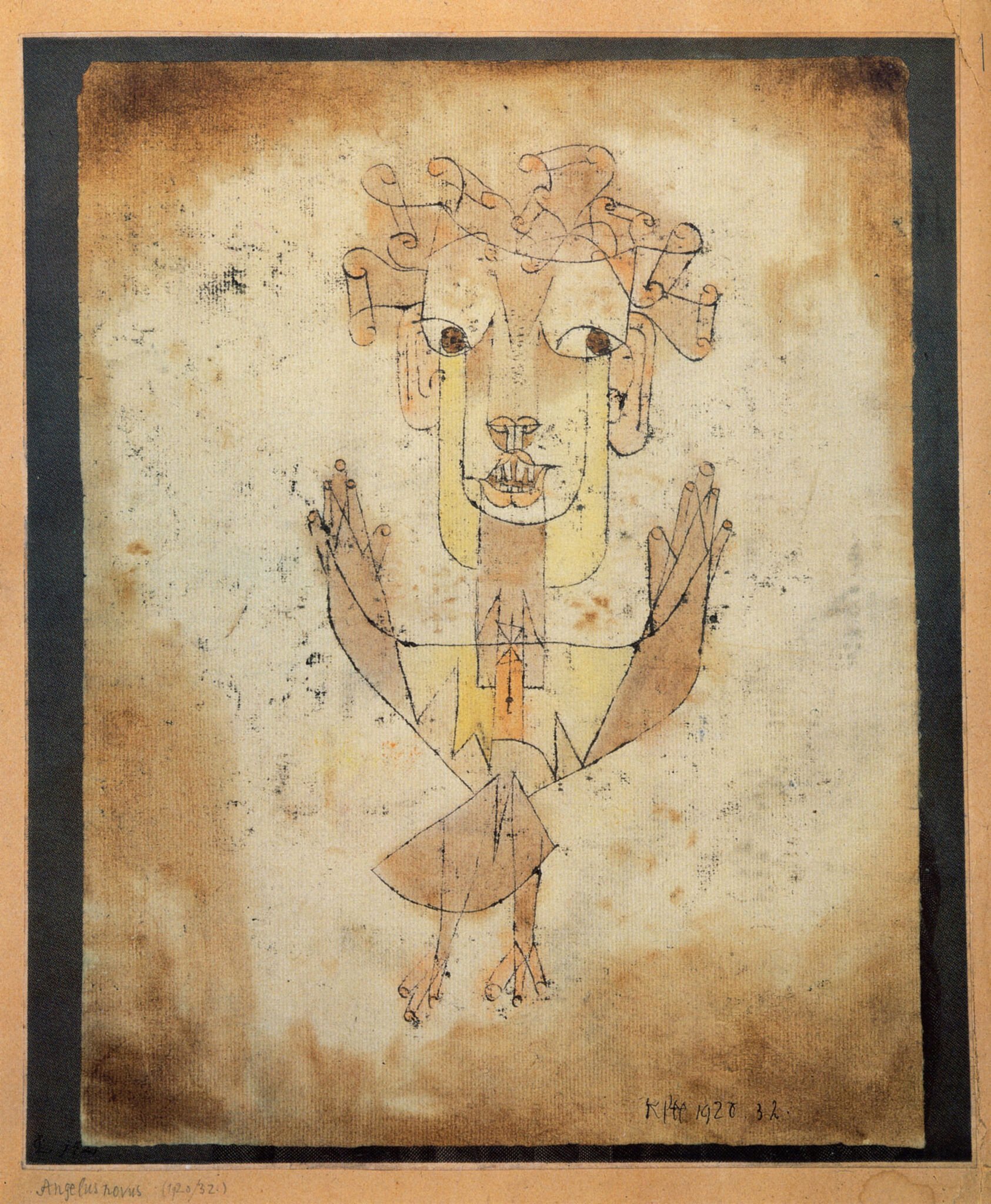
Paul Klee, Angelus Novus, 1920, Oil transfer & watercolor on paper, the Israel Museum, Jerusalem. © 2026 Artists Rights Society (ARS), New York.

Angelus Novus (1920), on loan from the Israel Museum, Jerusalem, is a mothlike apparition that has taken flight through its afterlife as something of a cultural icon. Purchased by Walter Benjamin in 1921, the work inspired the German Jewish philosopher of the Frankfurt School to call it the “Angel of History.” In his “Theses on the Philosophy of History” of 1940, Benjamin writes of this figure,

His face is turned toward the past. Where we perceive a chain of events, he sees one single catastrophe that keeps piling wreckage upon wreckage and hurls it in front of his feet. The angel would like to stay, awaken the dead, and make whole what has been smashed. But a storm is blowing from Paradise; it has got caught in his wings with such violence that the angel can no longer close them. The storm irresistibly propels him into the future to which his back is turned, while the pile of debris before him grows skyward. This storm is what we call progress.

Months after writing these lines, Benjamin was himself caught in the whirlwind. As he attempted to flee over the Pyrenees from Vichy France to Spain, he committed suicide after his arrest at Port Bo. Before his failed escape, Benjamin entrusted this drawing to Georges Bataille by hiding it in Paris’s Bibliothèque nationale, where Bataille was employed. When he was able to retrieve it, Bataille passed it to Theodor W. Adorno, who sent it on to Gershom Scholem in Jerusalem per Benjamin’s wishes.

As a postscript to these fraught iterations, the arrival of this work in New York for the current exhibition was delayed by Iran’s bombardment of Israel. At the time of the exhibition opening, the work could not travel to the airport for transport, at least to the satisfaction of its insurers. So it has been represented here at first by facsimile. What was meant to be the highlight loan of this exhibition took on additional meaning for the Jewish Museum and its director James S. Snyder—who, from 1997 through 2018, was the head of the Israel Museum.

Klee’s art aligned him at times with Dadaism, Expressionism, and Surrealism. Still, he was not an obvious adherent to any one group. “The Munich expressionists laid claim to him, the Zürich Dadaists hailed him, and to the French surrealists, he was a kindred spirit,” writes Klein.

In 1921, Klee joined the Bauhaus as an instructor. He taught there for ten years, following the school through its 1925 move from Weimar to Dessau. During his demonstration lectures, it is said he painted with his left hand while writing with his right. That same decade his art toured the United States along with work by Wassily Kandinsky, Lyonel Feininger, and Alexej von Jawlensky as part of Die Blaue Vier (The Blue Four). As moma’s Alfred Barr noted in 1930: “Nothing is so astonishing to the student of Klee as his infinite variety.”

By the early 1930s, Klee had left his Bauhaus post, was facing down Nazis, and had begun to show the degenerative effects of fatal scleroderma. In his work, his gossamer line became thicker and murkier. His output intensified and his symbolism became more explicit as he painted through the catastrophe. Mask: Red Jew (Maske Roter Jude) and Your Ancestor? (Dein Ayn?), both 1933 works on paper from private collections, leave little doubt as to the state of affairs. Revolution of the Viaduct (Revolution des Viadukts) (1937, Hamburger Kunsthalle), the painting that appears on the cover of the exhibition catalogue, turns Nazi marches into jackbooted abstractions. Meanwhile Struck from the List (Von der Liste Gestrichen) (1933, Zentrum Paul Klee, Bern), with a black X slashed across a face, becomes his latest self-portrait as Klee dedicated himself to “serve Beauty by drawing her enemies.”

Still, he found time to take flight. A series of angels, from 1939 and 1940, make up the final series in the exhibition—here, transformed into the avenging angels of war.

  1. “Paul Klee: Other Possible Worlds” opened at the Jewish Museum, New York, on March 20 and remains on view through July 26, 2026. 
In Art, James's Publications, New York Tags Paul Klee, Jewish Museum, The New Criterion
Comment

X-Ray Visionary

April 8, 2026 James Panero

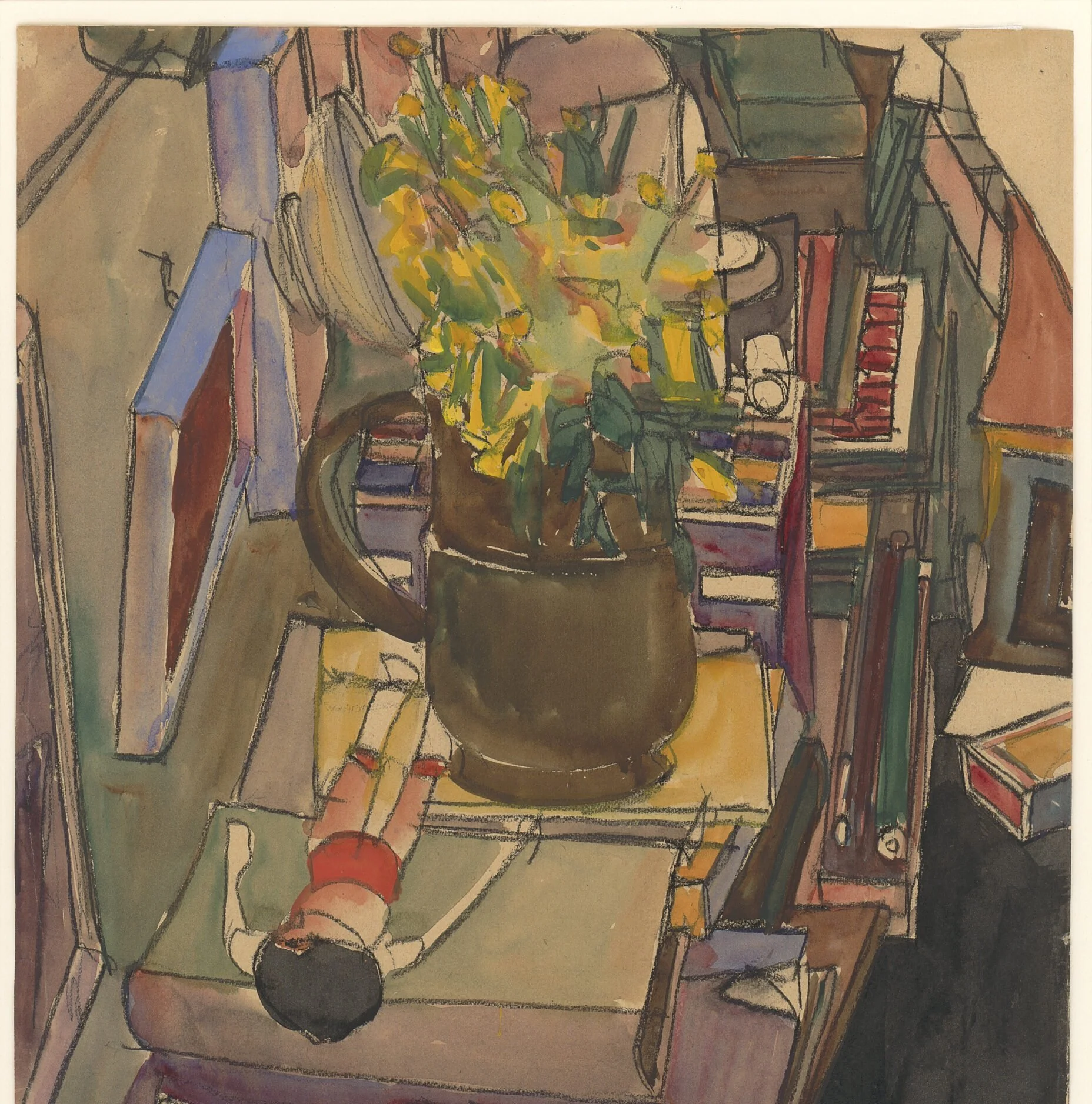
Egon Schiele, View of the Artist’s Studio, 1910, Watercolor, gouache & black crayon on paper, Private collection.

THE NEW CRITERION, April 2026

X-ray visionary

On “Egon Schiele: Portrait of Dr. Erwin von Graff,” at the Neue Galerie.

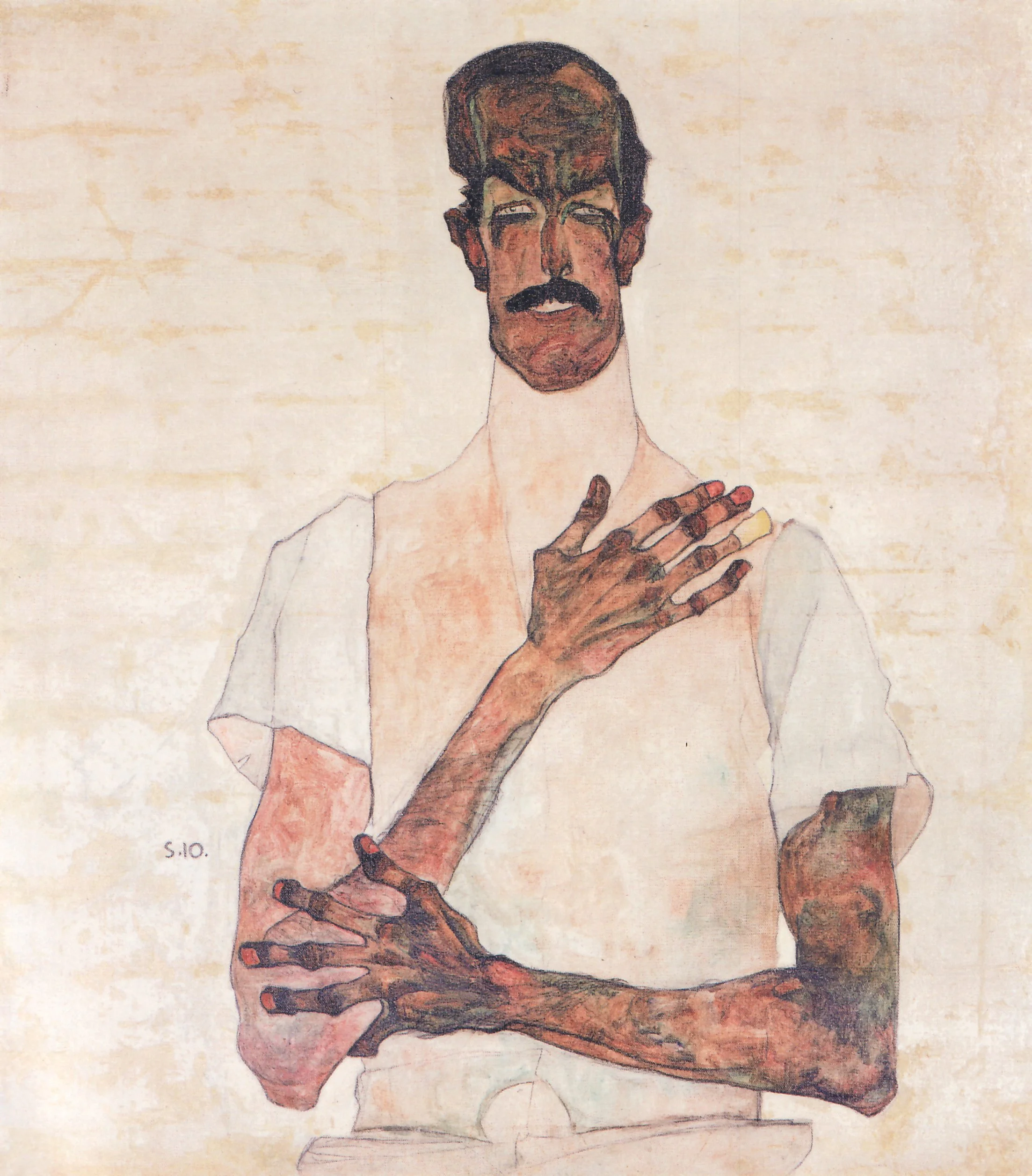
The portraits of Egon Schiele (1890–1918) really get under the skin. “Skinned hares” is how Schiele’s model Liliana Amon (1892–1966), in fact, described his figures in her autobiographical roman à clef, Barrières, some two decades after the artist’s untimely death. “That can’t be! These people have no skin,” the book declares, concluding, “Egon saw the world in a special way; he saw it, so to speak, under the skin, and painted in green, blue, and red.”

Just how the Austrian artist went from painting reserved landscapes at the Akademie der bildenden Künste in Vienna, where he had been accepted in 1906 at the age of sixteen, to the flayed figures of his final decade is now the focus of a small but convincing exhibition at the Neue Galerie.1 Amon is the catalyst for the story. Living with the young artist, pregnant with another man’s child, she connects through Schiele with an obstetrician who takes her on as a charity case. That doctor is Erwin von Graff, a surgeon and gynecologist twelve years older than Schiele and the focus of the exhibition. A champion of the promising artist, Graff becomes a subject for a now well-known portrait and a conduit for an unsparing new line of subject matter for Schiele. With forty works from 1910 to 1918 centered around the Graff portrait, a sizable oil on canvas that lends its name to the title of this exhibition, these results are now gathered together in a one-room gallery off the second-floor permanent collection. The show has been organized by Renée Price and Janis Staggs, the museum director and curatorial director, respectively, of the Neue Galerie.

The Portrait of Dr. Erwin von Graff (1910), listed as coming from a private collection as well as being part of the Neue’s “extended” collection, makes frequent house calls to Eighty-sixth Street and Fifth Avenue. We last saw it in “Living Landscapes,” the Schiele exhibition I reviewed in these pages a year ago (see “Schiele’s living dead,” January 2025). The portrait has appeared some half dozen times on the walls of the Neue Galerie since Ronald S. Lauder opened his museum for German and Austrian art in 2001. Its image is unsettling, even confounding, but recent research into Schiele as well as the life of Dr. Graff now paints a newly penetrating picture of the arresting work, the output that surrounded it, and the figure it portrays. This show is a “portrait” in more ways than one.

Egon Schiele, Portrait of Dr. Erwin von Graff, 1910, Oil on canvas, Private collection.

The painting first presents to us as an affliction of unknown origin. The gaunt doctor stands straight, staring back at us, in front of what we might take to be a wall of glazed white hospital tile. The atmosphere is clinical and blinding. The light of the painting washes out his short-sleeve surgical shirt and vest and nearly everything else surrounding him in white. Against the glare, what we see is Graff’s dark, exposed flesh—his thin face, piercing eyes, furrowed brow, and bony hands holding up his mottled right arm as though to keep it sanitary before examination. His fingernails appear to fall from his skin. A bandage is wrapped around the end of his right ring finger.

What are we to make of this skin? The blistered arms and cut finger? Is this a trustworthy doctor? Is this even sanitary? Writing about the painting in the 1970s, the Schiele scholar Alessandra Comini suggested the Graff appears as the “shrunken-headed cadaver in a state of rigor mortis,” his bandage a “grim joke.”

Graff seems burned, even irradiated. New research suggests that he was. Graff is now known to have experimented with the then-new technology of the X-ray at a time before the effects of its long-term use were well understood. Exposed to high doses of radiation, like other doctors and scientists of his time, he developed radiodermatitis. The effects of this skin condition can be closely matched to the scorched appearance in his portrait.

Now at the Neue, two studies for the portrait appear alongside the final painting, both here from private collections—one a trio of head studies in profile in charcoal on paper, the other closer in composition to the painting in pencil, charcoal, and wash on paper. Both studies are more academic and far less expressionistic than the final work. In the doctor’s burnt limbs, we can then say that Schiele grasped his future. Moving beyond the sentiment of the Jugendstil and his role model Gustav Klimt, with his luxuriant emphasis on surfaces, Schiele looked instead to the subcutaneous depths of modern life.

From here on out, this exhibition argues, Schiele’s portraits would be peeled raw. Through the clinical window provided by Graff, Schiele found a new direction for his own artistic experiments. “Schiele really came into his own as an artist in 1910, the year he completed the portrait of Dr. Erwin von Graff,” says Price, who views the painting as “one of the most important works in the extended collection of the museum.” She continues: “This is where Schiele really becomes Schiele.”

As Schiele became Schiele, Graff became a key patron and protector. It was a connection that continued through the day of the artist’s death eight years later. Graff, to start, saw Amon through to a healthy birth. He also arranged for her child’s adoption while convincing her to move out of the artist’s studio. As Schiele gave his portrait to the doctor as an expression of his gratitude, their relationship extended beyond the indigent young mother. Through a special arrangement, Graff also provided Schiele with access to other expectant mothers and newborn infants within his clinical orbit—subjects that make up most of the remaining works in this exhibition.

We can only speculate as to the exact nature of how Schiele encountered these figures and gained their acceptance as models, often in radically exposed and vulnerable positions. Neither Graff nor Schiele ever detailed the circumstances of their collaboration. Perhaps Schiele followed Graff on his rounds or took up a position in his operating theater. The results were not the remote clinical perspective we find in, say, Thomas Eakins’s Gross Clinic. Instead, we encounter models who appear close-up, cropped, and intimately engaged with the artist.

We know Schiele composed with swift intensity. Over his brief ten-year career, he created an astonishing three hundred paintings and three thousand works on paper. A few dashed lines of his models in pencil, crayon, or charcoal on paper could be filled in later with watercolor. For his unsparing observations, he drew on whatever inexpensive media was at his disposal. Crumpled brown paper appears in several works. He further cropped his figures in harsh and unsparing perspectives, exposing them in a new light. Confronted by naked and contorted bodies, Schiele employed his own penetrating vision.

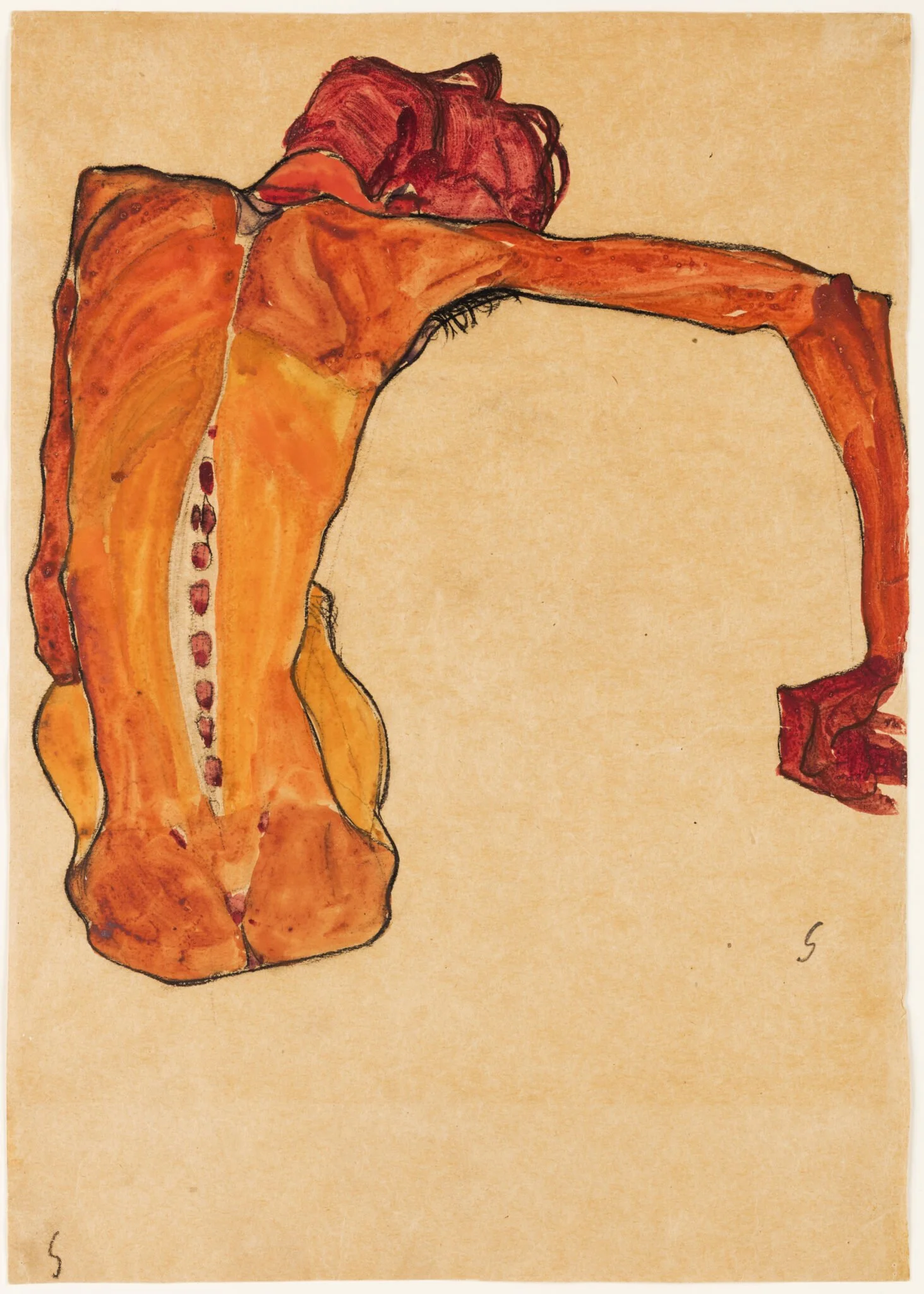
His Newborn Baby of 1910, in gouache, watercolor, and black crayon on paper, here from an anonymous lender, serves as an example of Schiele’s new perspective on the human form. The baby twists on his back to the point where his head is out of the frame of the composition. Close examination of the paper reveals how subsequent owners attempted to fold and matte the work so that it would appear more centered. The Neue exhibition suggests that Schiele intended the work to be off-center. Seated Male Nude with Extended Arm, a watercolor, gouache, and black crayon on paper from the Neue Galerie collection, is similarly disjointed, with its twisted right arm, bent head, and brown skin that appears to tear away from the spine. So too is Pregnant Woman (1910), from an anonymous lender, with her green face and belly disconnected from her hands and feet.

Egon Schiele, Seated Male Nude with Extended Arm, 1910, Watercolor, gouache & black crayon on paper, Neue Galerie. Photo: Hulya Kolabas.

The results of Schiele’s renderings are unsettling and often off-putting. Our initial reaction can be to tie the hospital gown and quickly shut the door. In all, some twelve drawings of pregnant women can be ascribed to the Graff clinic, along with Schiele’s portraits of newborns, sick women, and stillbirths.

Today these can seem sensationalist, exploitative—and probable evidence of a hipaa violation. In his time, Schiele connected his vision to the contorted forms of the Northern Gothic and its symbols of life, death, and renewal. In his penetrating stare, the flesh of a man, the bark of a tree, and the rooftops of a town might all call for mortification.

In the irradiated figure of Graff, Schiele also saw a modern figure for his own salvation. The catalogue for this exhibition, written by Elisabeth Dutz, the chief curator of the graphic-art collection at the Albertina Museum in Vienna, makes a deep study of Graff and documents his long career in Austria and the United States. An auxiliary doctor at Vienna’s Second University Women’s Hospital at the time of his first acquaintance with Schiele, Graff became an accomplished gynecologist and surgeon. He was also a cellist, a handball player, and someone who could prepare an “exquisite Italian risotto,” according to Dutz. He spent time teaching at the University of Iowa and maintained an office on New York’s Park Avenue. A comprehensive list of his publications and lectures from 1901 through 1939 give some indications of his fields of expertise, concluding with papers on the “Etiology of Prolapse,” “Bilateral Uretreovaginal Fistula: Successful Implantation of Both Ureters into the Bladder Seven and Eleven Months Following Total Hysterectomy,” and “Tubal Sterilization by the Madlener Technique.”

Despite these professional accomplishments, it was Graff’s visionary relationship with Schiele that today most defines him for us—a fact that Graff himself seems to have recognized as he collected the artist’s work, brought him into the trust of his patients, and attended to Schiele’s own life and death.

One of the final objects in this exhibition is Schiele’s death mask. A victim of the flu pandemic of 1918, the artist died three days after watching his sick and pregnant wife pass away. One of his last acts was to draw his fevered wife on her deathbed. Days later, just hours before Schiele’s own demise, Graff paid the artist a house call, most likely to administer a palliative dose of morphine. Schiele’s final vision was of the doctor who first inspired him eight years before.

  1. “Egon Schiele: Portrait of Dr. Erwin von Graff” opened at the Neue Galerie, New York, on February 12 and remains on view through May 4, 2026. 

In Art, James's Publications, New York Tags Egon Schiele, Neue Galerie
Comment

Winter journey

April 8, 2026 James Panero

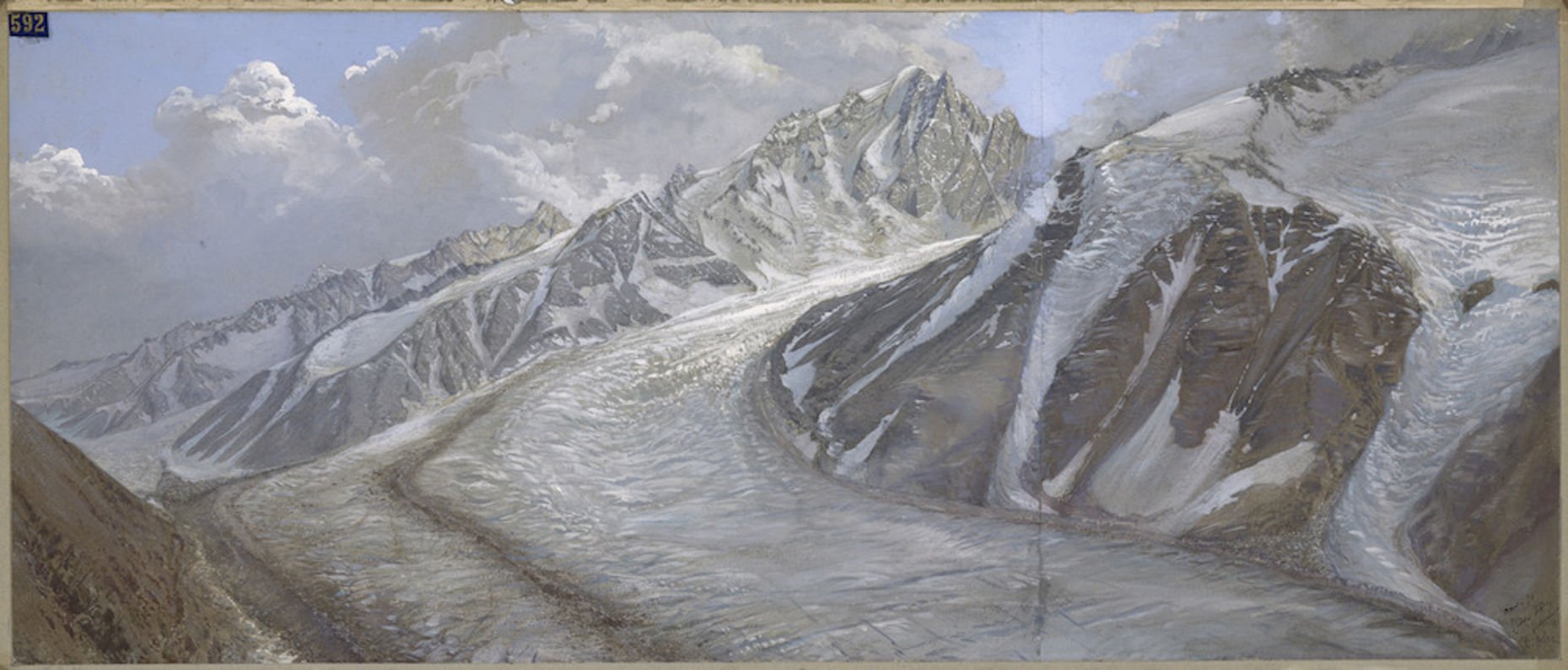
Viollet-le-Duc, Glacier du Bois from above Chamonix, 1874, Pencil, ink & watercolor on paper, Médiathèque du patrimoine et de la photographie, Charenton-le-Point, France.

THE NEW CRITERION, MARCH 2026

Winter Journey

On The Winter Show, Sotheby’s “Masters Week,” Master Drawings New York & Viollet-le-Duc

You can correlate your barometer to The Winter Show. Whenever this annual antiques, art, and design fair appears for its weeklong run at the Park Avenue Armory, be assured a snowstorm is in the forecast. Its seventy-first season was no different.1 Fortunately, this storied fair still offers up some warmth for the cold spell.

Over the past few years, I have lamented the dilution of what had been known from 1955 until yesterday as the Winter Antiques Show (see my “Brown in town” in The New Criterion of March 2024). Founded by the folk-art dealers John Bihler and Henry Coger as a fundraiser for the East Side House Settlement, the fair has gradually moved away from what was once a focused exposition of American art and antiques to become more modern and international. The end result can now seem like a watered-down presentation of high-end curios, knickknacks, and anything-goes. As I noted two years ago, much like grandma’s cherished credenza, the word “antique” was even kicked to the snowbound curb and dropped from the fair’s title.

The organizers behind this deaccession are not entirely to blame. The market for Americana has been a central victim of our cultural amnesia and ritualistic self-loathing. For the afflicted, nothing must be quite so triggering as the chimes of grandpa’s grandfather clock. The best we might hope for in the younger set is that they toss some old gimcrack into their modern and contemporary mix.

Such was the notion behind this year’s “private study of an imaginary young collector.” The “immersive installation” (really, just another booth) curated by the art advisor Patrick Monahan presented a mash-up of works from twelve dealers that blended “objects across time periods and cultures—from Classical antiquities to contemporary ceramics.” Another such initiative was a display of “The American Chair: 250 Years of Form.” With eighteen chairs stacked in two three-by-three grids, from Shaker to Saarinen, the organizers were desperate to proclaim that diversity is our bench.

Fifty years ago, at the time of the U.S. bicentennial, interest in American art and antiques reached a high point. The same should be expected this year. Fortunately, at least some of the exhibitors at The Winter Show read the semiquincentennial memo. Elie Nadelman and Paul Manship, two exuberant American sculptors from the first half of the twentieth century, were front and center at Bernard Goldberg Fine Arts. Mixed in among Nadelman’s photographs and drawings, his Two Circus Women (ca. 1928–29), collected from the artist’s Riverdale estate, might have been familiar to balletgoers. The smooth, white-chocolate figures in papier-mâché and plaster, fused as though melted together in a giant pocket, served as a model for one of the two monumental enlargements made posthumously in Carrara marble to decorate the promenade of Lincoln Center’s New York State (David H. Koch) Theater. Meanwhile, Manship’s dynamic bronze Actaeon (transformed by Diana into a stag and pursued by his own hounds) and Manship’s storks and herons from the 1920s and ’30s remind us of the mythic range of this great sculptor beyond his Rockefeller Center Prometheus.

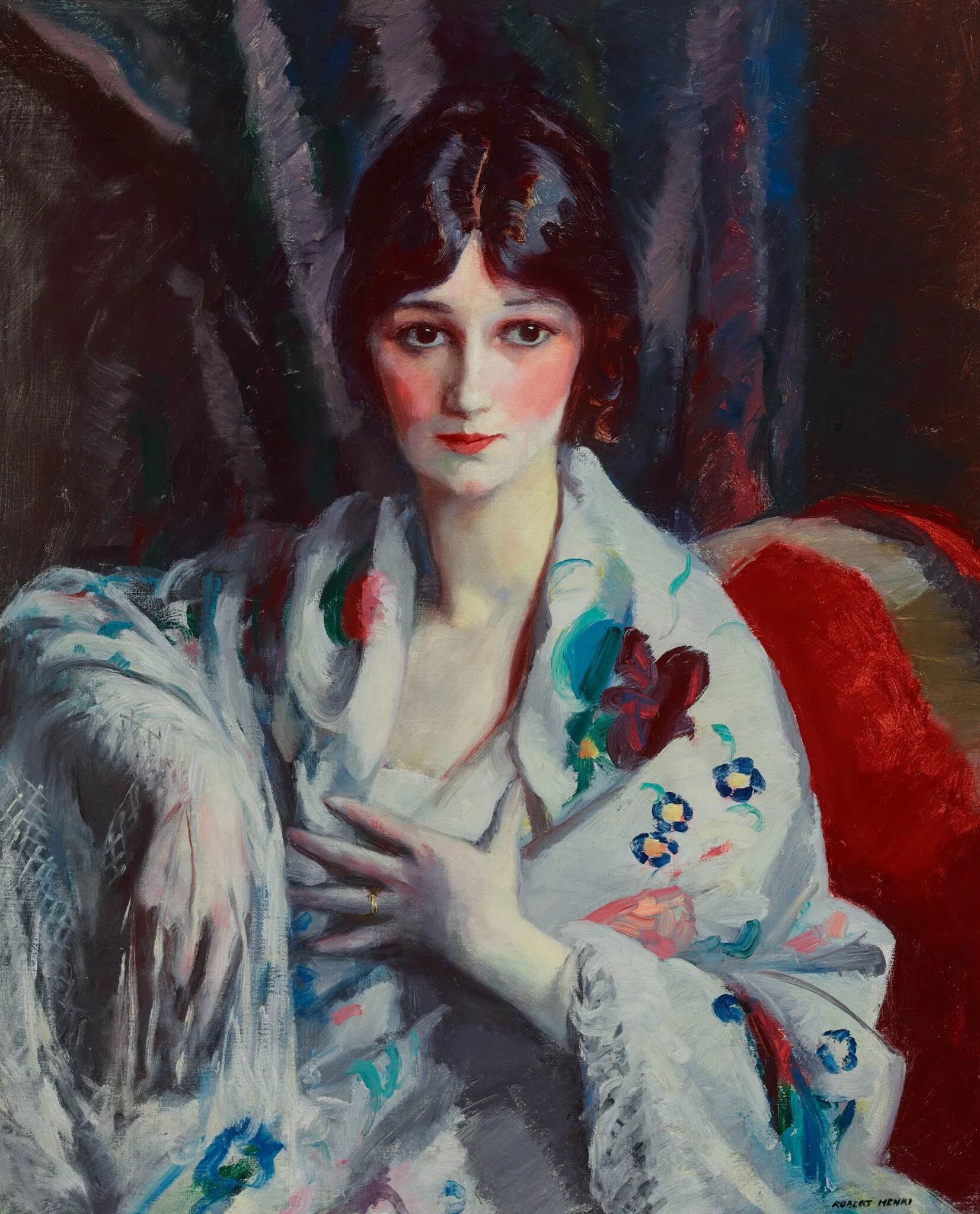
Robert Henri, Celestine, 1920, Oil on canvas, Avery Galleries.

Elsewhere a stoic bust of George Washington by the studio of Jean-Antoine Houdon watched over the Old Masters at Robert Simon Fine Art. There were several Americana Easter eggs decorating the displays at Hirschl & Adler. A smart presentation of “American Game Boards c. 1890–1940” revealed the modernist sensibilities behind checkers and parcheesi. Debra Force Fine Art featured Richmond Barthé’s dynamic figure Inner Music (ca. 1956) next to Milton Avery’s limpid watercolor portrait Artist by the Sea (1945). Jeffrey Tillou Antiques presented Anna Vaughn Hyatt Huntington’s Yawning Tiger (cast ca. 1917) alongside Murdoc Indian dolls from Northeastern California (ca. 1860–75). Meanwhile, portraits by Robert Henri adorned more than one booth; Henri’s Celestine (1920) at Avery Galleries was a highlight.

With an extra-long run—a notorious marathon for exhibitors—The Winter Show straddles the timing of the American-art auctions and the Old Master sales. This year, Sotheby’s brought its “Masters Week” auctions from York Avenue to Madison and its new headquarters at the old Whitney.

Last fall, for its inaugural sales at the venue, I was among the cast of thousands that flocked to the opening of Sotheby’s Breuer showroom. With lines wrapping around to Park Avenue, the new location certainly succeeded in bringing the auction season to the city’s broader consciousness. As a showcase venue with significantly less square footage than Sotheby’s former factory floors on York Avenue, however, the opening display also revealed the squeeze of the new site.

“For things to remain the same, everything must change,” wrote Giuseppe Tomasi di Lampedusa in his 1958 novel The Leopard. The same goes for today’s art market. With offices now offsite, Sotheby’s staff can no longer float between desk and showroom. Gallery walls must be torn out overnight to create the auction floor. Due to space constraints, minor works up for auction might be demoted to display at the York Avenue offices—a scarlet letter for sales that art advisors now try to preclude in their contracts. And even with these many contingencies, Sotheby’s Breuer still felt overstuffed. Ample room might have been cleared out for the top-line Lauder sales, but lesser works were packed floor to ceiling in a warren of tight passageways amid the building’s increasingly cramped upper floors.

With expectations diminished, however, I was surprised how well the 2026 “Masters Week” went off at the Breuer last month.2 The auction house must have learned a lesson or two from the fall. Works on paper, which I expected to be relegated to the Breuer attic, appeared lower down in prime real estate. Smaller works were still arranged salon-style but now in intelligent groupings, which helped to demonstrate how collections hang together. The presentation overall lived up to the promise of bringing the auction house from bedpan alley to a block from Museum Mile. Here is a new venue with ready access to significant work in constant rotation on free display—and free, moreover, of the turgid mandates of the museum world. It can even be yours, if the price is right.

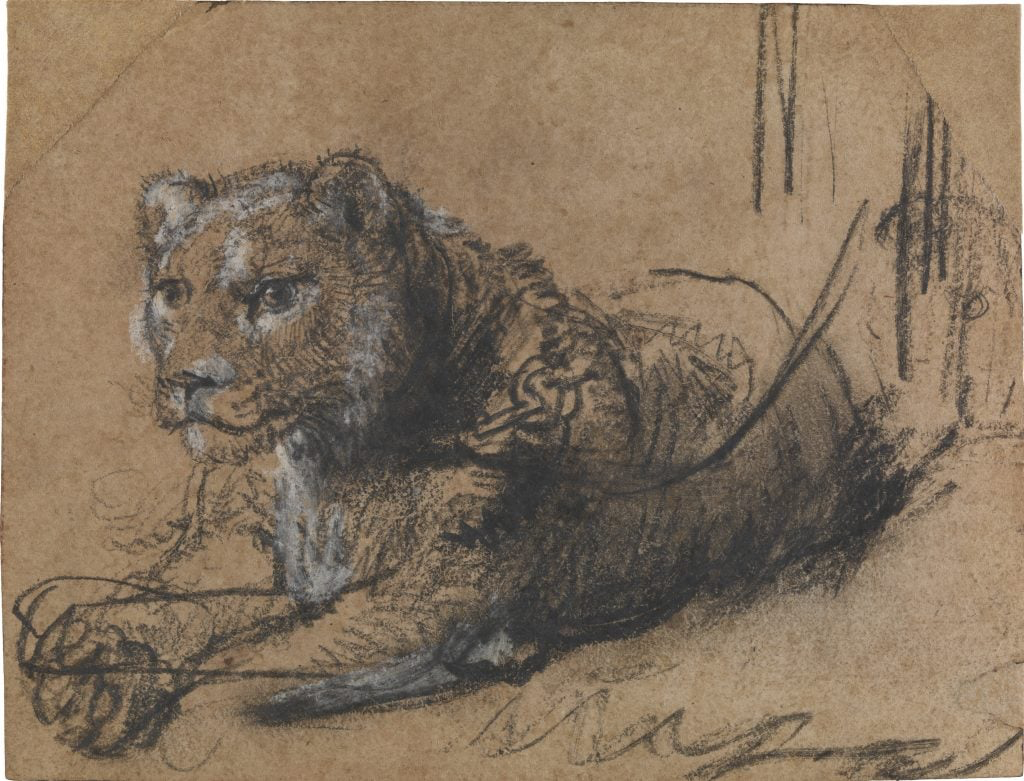
Sotheby’s pegged this “Masters Week” to a few showstoppers: Antonello da Messina’s lachrymose double-sided Ecce Homo; Saint Jerome in Penitence (ca. 1460–65); a remarkably modern-looking Mummy Portrait of a Man from Roman Egypt (ca. late first century A.D.); Jean-Honoré Fragonard’s expressive Head of a Bearded Man (ca. 1770); and Rembrandt’s Young Lion Resting (ca. 1638–42), a small work on paper billed as “the most important drawing by the artist to appear at auction in half a century.” That final work came from the Leiden Collection, which Karen Wilkin covered in these pages in December. The collector Thomas S. Kaplan had put the piece up for auction to benefit Panthera, his nonprofit dedicated to the conservation of wild cats (with an auction-house estimate of fifteen to twenty million dollars).

Rembrandt, Young Lion Resting, ca. 1638–42, Black & white chalk on paper.

There was much here to catch the eye beyond the headline sales in the few days it was all on view. An arrangement of elegant female figures had us in a game of cherchez la femme, in particular John William Godward’s stunning profile portrait Cleonice (1913). Jean-Léon Gérôme’s haunting and tender Madeleine Juliette Gérôme avec ses Poupées (ca. 1883), sun-kissed interiors by the Danish painter Peter Ilsted, and several satisfying Corots rounded out the auction of nineteenth- and twentieth-century European art. A selection of charming works by lesser-known lights to be sold online revealed the deep bench of nineteenth-century European painters that few museums would now choose to exhibit but which deserve renewed attention. For its auctions of “Master Painting and Sculpture from Four Millennia,” Sotheby’s featured several alluring standouts, such as its seventeenth-century Portrait of Barbara Urslerin van Beck—a Lombard School depiction of Europe’s most famous “bearded lady.” An auction of works on paper from the collection of the late Diane A. Nixon proved how a dedicated collector could still amass a significant collection of master drawings over just the past few decades.

With many attractions, it’s appealing to consider what most strikes your own fancy. As for me, I would have been happy to walk away with Pietro Paoletti’s seven shadow boxes of plaster casts. These early nineteenth-century travel souvenirs preserved the sights of the Grand Tour in cameo relief from the days before picture postcards and the iPhone selfie.

Timed to the winter auctions—“Masters Week” at Sotheby’s, along with the pendant “Classic Week” at Christie’s—Master Drawings New York comes each year as a highlight of highlights.3 Rather than taking over a single venue, this decentralized fair presents thirty-six dealers partnering together in a weeklong presentation spread across New York’s specialized Upper East Side galleries. Over the last decade, this loose confederation has transformed into a must-see destination for curators as well as a singular access point into the Old Masters for scholars and collectors. It can also turn the marathon of this cultural season into a decathlon event. You hurdle over snowbanks, wind-sprint up townhouse stairs, and elbow out your favorite curator for your own close-up look at what is on view. To see it all might not be impossible but is still unlikely unless you have freed up the full week of the run. Better to print out the street map of exhibitors and pick a few you know well along with a selection of the less familiar.

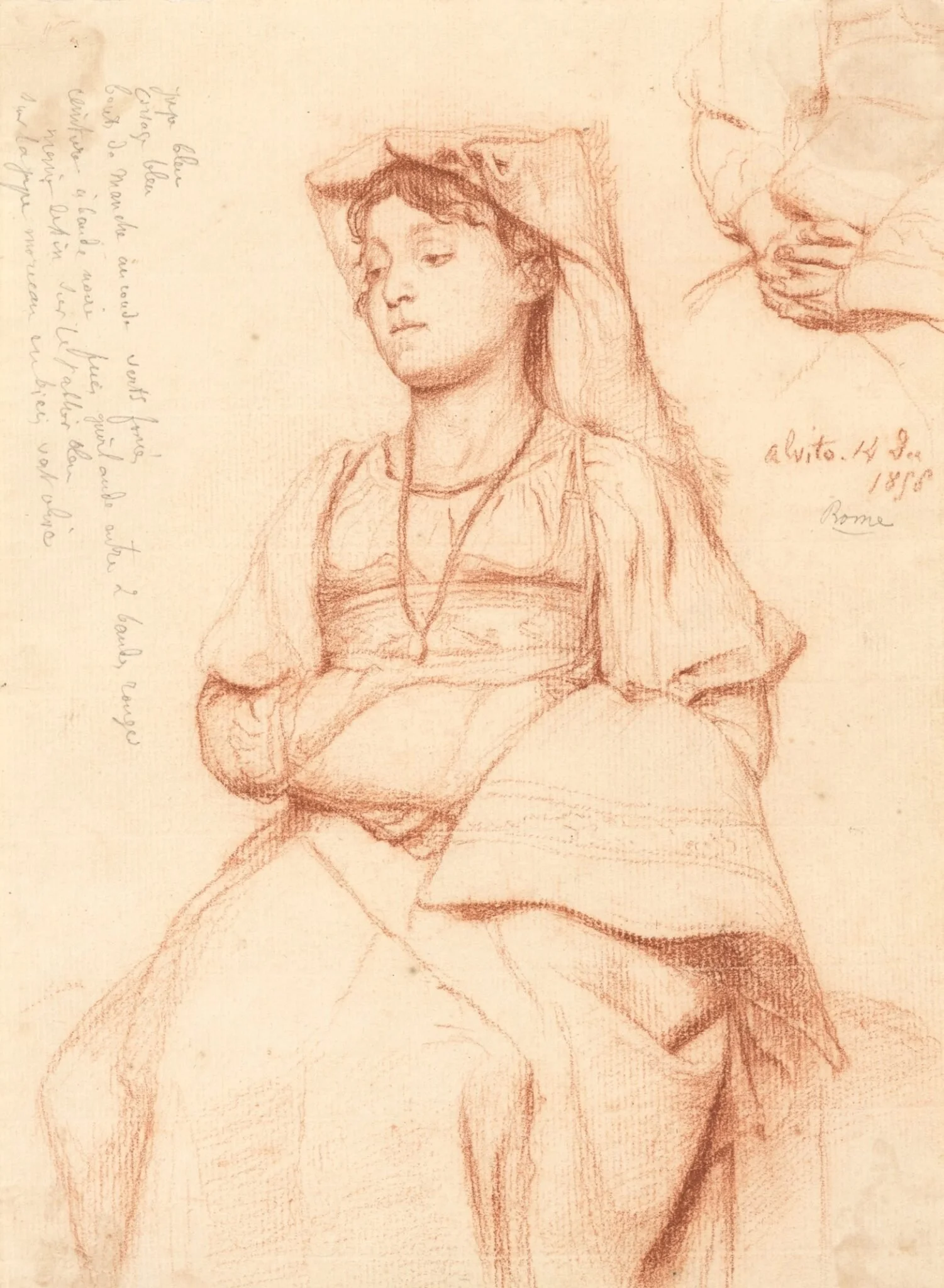
This year at London-based Guy Peppiatt Fine Art, on view at Arader Galleries, the selection of cartoons by Edward Lear were particularly enjoyable. So too Edward Burra’s Dancing Party. At Nicholas Hall and W. M. Brady & Co., Bernardo Castello’s drawing, Genoese Arriving in Jerusalem, warmed my irredentist heart. Paris-based Marty de Cambiaire Galerie, on view at Gerald Peters Gallery, featured the red-chalk Portrait of an Italian Girl, now confirmed to be an early drawing by Edgar Degas.

Edgar Degas, Portrait of an Italian Girl, 1856–57, Red chalk on paper, Marty de Cambiaire.

At Rome-based Miriam di Penta Fine Arts, on view at Robert Simon Fine Art, Leonor Fini’s expressive pen-and-ink portraits were hard to beat. Meanwhile, across the floor at Robert Simon, I was again delighted to see Anthony Baus’s contemporary drawing Manhattan Arch quietly added in the mix, a new master among the old.

London’s Abbott & Holder, on view at Kate Oh Gallery, featured two special collections among its selection of British works on paper. The first was the study collection of the late David Bindman, a professor of art history at University College London. The second: devastating sketches of the Dachau mortuary, crematorium, and gas chamber, recorded just a day after its American liberation in 1945, by Brian Stonehouse, a British artist and Nacht und Nebel prisoner who had been held at the death camp.

Last year at this time, with a show of European master drawings on view at the Wadsworth Atheneum, we saw how Masters Week serves to inspire serious exhibitions farther afield (see my “Good on paper” in The New Criterion of March 2025). This year, the great collateral benefit is “Viollet-le-Duc: Drawing Worlds” at the Bard Graduate Center Gallery, on Manhattan’s Upper West Side.4

If Eugène-Emmanuel Viollet-le-Duc (1814–79) had only overseen the mid-nineteenth-century restoration of Paris’s Notre-Dame, we would say Dayenu. If he had only renovated and reconstructed Vézelay Abbey, the Basilica of Saint Denis, Sainte-Chapelle, Château de Roquetaillade, and the medieval city of Carcassonne—Dayenu! But Viollet-le-Duc was also an astonishing illustrator, right up there with the greats of his age. The hundred and fifty works on paper, here mostly on loan from the Médiathèque du patrimoine et de la photographie, a department of the French Ministry of Culture, will be revelatory even to those who know Viollet-le-Duc well.

Spearheaded by the cocurators Barry Bergdoll and Martin Bressani, this first major U.S. exhibition of the French architect, artist, and master planner brings together his remarkable studies of Notre-Dame to prove just how much of the Gothic structure reflects his nineteenth-century interventions—now mostly restored after the devastating 2019 fire. The exhibition also collects his many mountain landscapes and imaginative historical reconstructions.

Following the upheavals of the French Revolution, Viollet-le-Duc set his life’s mission to make France beautiful again. In his valoration of the medieval, he saw the true face of the French soul. It is regrettable that this exhibition feels the need at moments to speculate on the “deep structures” of “climate and race.” A thinly argued section on his racial preferences feels like another poststructural prosecution of greatness. His views on universal suffrage or the gold standard, or whatever, may not accord with our contemporary sensibilities either. C’est la vie. At least his accomplishments on paper speak for themselves, not to mention his singular legacies in brick and stone.

  1. The Winter Show was on view at the Park Avenue Armory, New York, from January 23 through February 1, 2026. 

  2. “Masters Week” was on view at Sotheby’s, New York, from January 30 through February 4, 2026. 

  3. Master Drawings New York was on view on the Upper East Side from January 30 through February 7, 2026. 

  4. “Viollet-le-Duc: Drawing Worlds” opened at the Bard Graduate Center Gallery, New York, on January 28 and remains on view through May 24, 2026. 

In Art, New York Tags Winter Antiques Show, Masters Week, Bard Graduate Center
Comment
← Newer Posts Older Posts →

POWERED BY SQUARESPACE